
 Call us :
  Mail us to:


 English
 中文简体
中文简体

Product Knowledge
Why Inorganic Composition Changes the Rules for Cleanroom Wall Systems
Most conventional wall panel materials — PVC, melamine-faced boards, even some fiber-cement composites — rely on organic binders, resins, or cellulose-based substrates. Under prolonged exposure to elevated temperatures, humidity cycling, or aggressive chemical cleaning agents, these organic components gradually degrade, releasing volatile organic compounds (VOCs) and creating microscopic surface irregularities that harbor microbial colonies. Inorganic crystal panels sidestep this entire degradation pathway. Because the matrix is fully inorganic, there is no carbon-based backbone to oxidize, hydrolyze, or off-gas. This is especially consequential in ISO Class 5–7 cleanrooms, where outgassing directly affects particle counts and can compromise sensitive semiconductor processes or cell-culture environments.
The practical implication extends to cleaning protocols. Facilities using organic-core panels must often restrict disinfectant concentrations to protect the substrate, limiting their microbiological control options. With a fully inorganic panel surface, aggressive sporicidal agents — including sodium hypochlorite at high concentrations, hydrogen peroxide vapor, and quaternary ammonium compounds — can be applied at full working strength without concern for surface attack, swelling, or delamination.
Fire Performance Classifications and What They Actually Mean in Practice
The term "fireproof" is frequently misused in construction product marketing. Regulatory frameworks such as EN 13501-1 (Europe) and ASTM E84 / NFPA 285 (North America) classify materials on a spectrum of fire reaction and fire resistance — two fundamentally different properties that are often conflated.
Fire Reaction vs. Fire Resistance
Fire reaction describes how a material contributes to the initiation and spread of a fire — measured by ignitability, flame spread, heat release rate, and smoke production. Fire resistance describes how long a complete building assembly (wall, floor, or ceiling) can maintain structural integrity and prevent flame or heat transmission when exposed to a standardized fire. A panel material may excel at fire reaction (not igniting or spreading flame) while an assembly using it may still require additional fire-resistance-rated construction to meet compartmentalization requirements.
| Classification | Standard | What It Measures | Typical Requirement for Cleanrooms |
| A1 / Class A | EN 13501-1 / ASTM E84 | Non-combustible, negligible heat release | Required for pharma GMP Grade A/B areas |
| B / Class B | EN 13501-1 / ASTM E84 | Very limited contribution to fire | Acceptable in many semiconductor fabs |
| FR / Smoke Index | NFPA 285 | Flame propagation in multi-story assembly | Critical for curtain-wall or multi-floor installs |
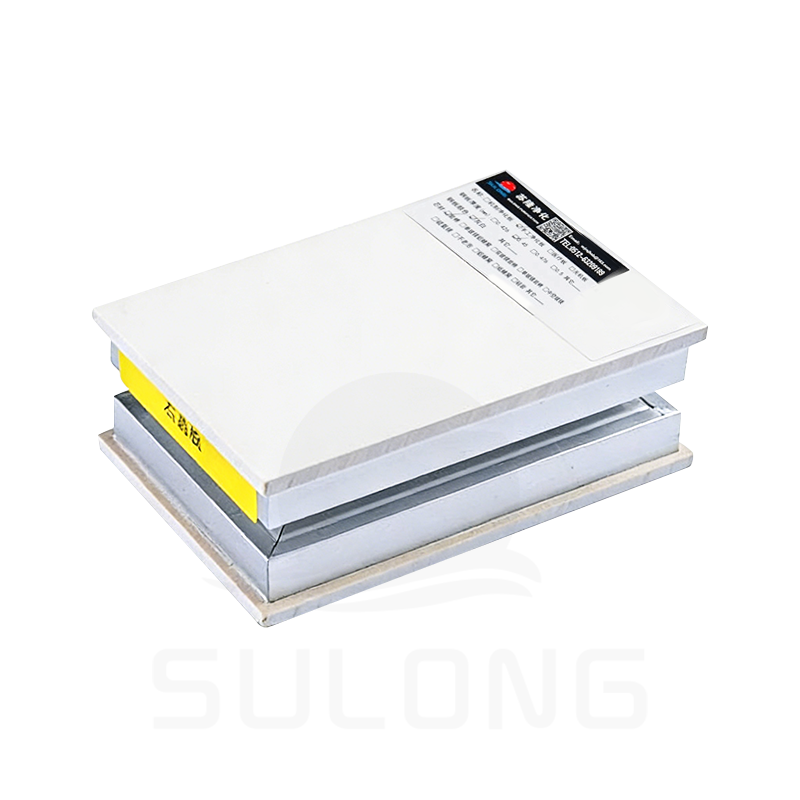
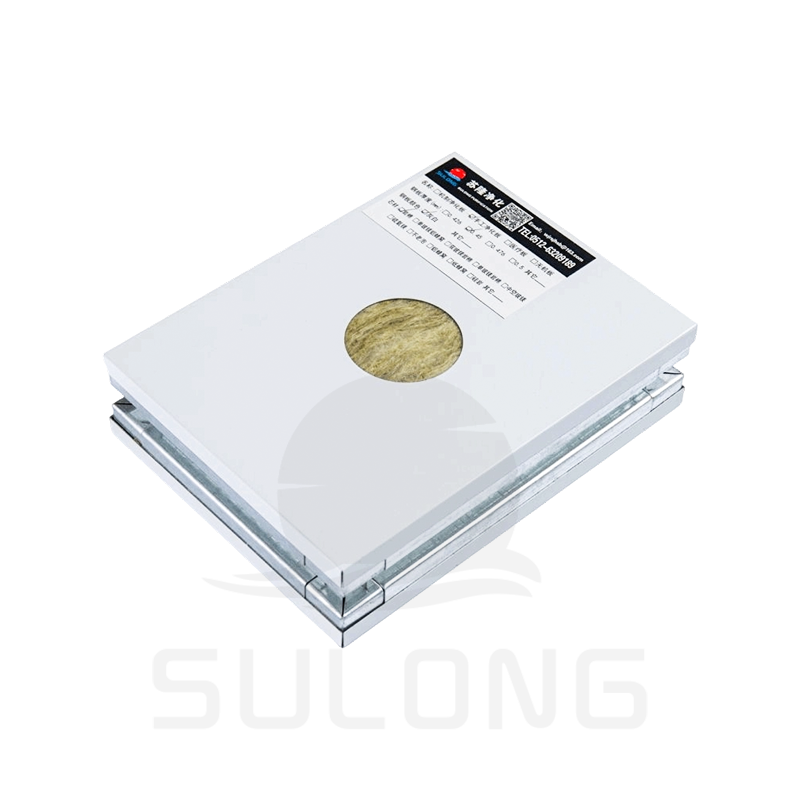
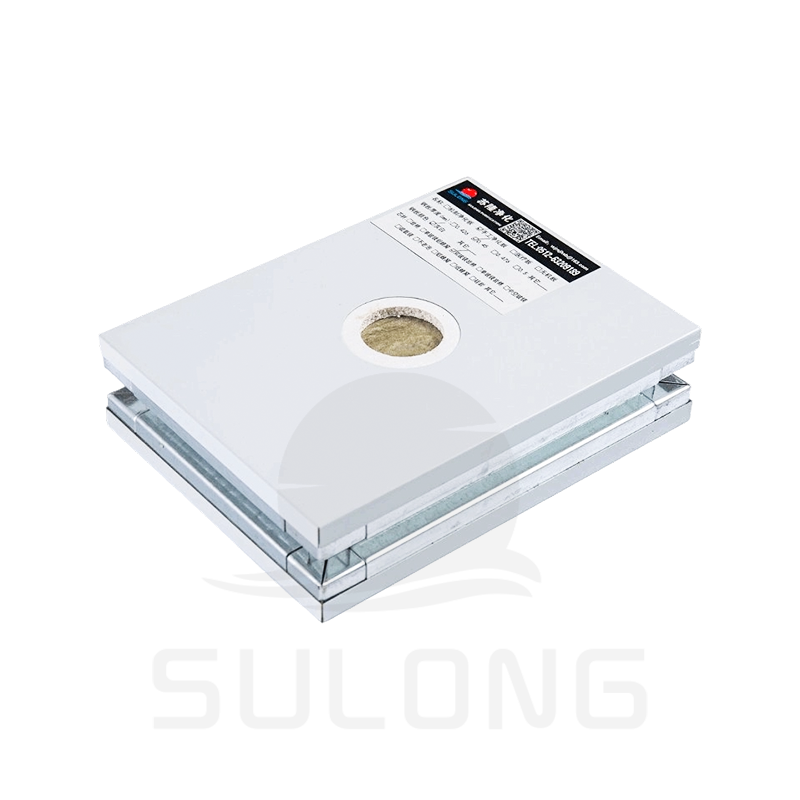
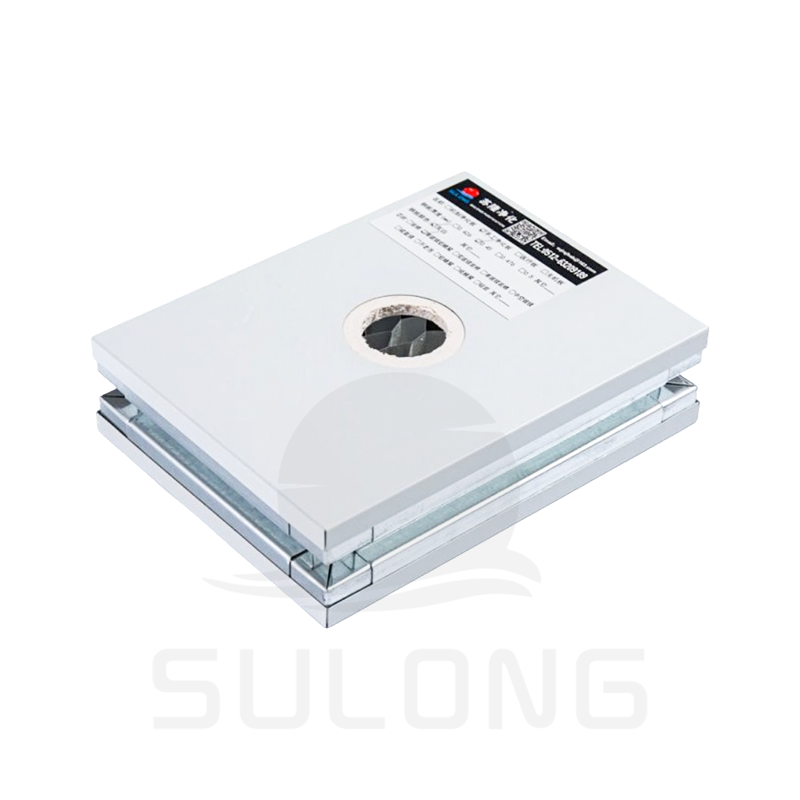
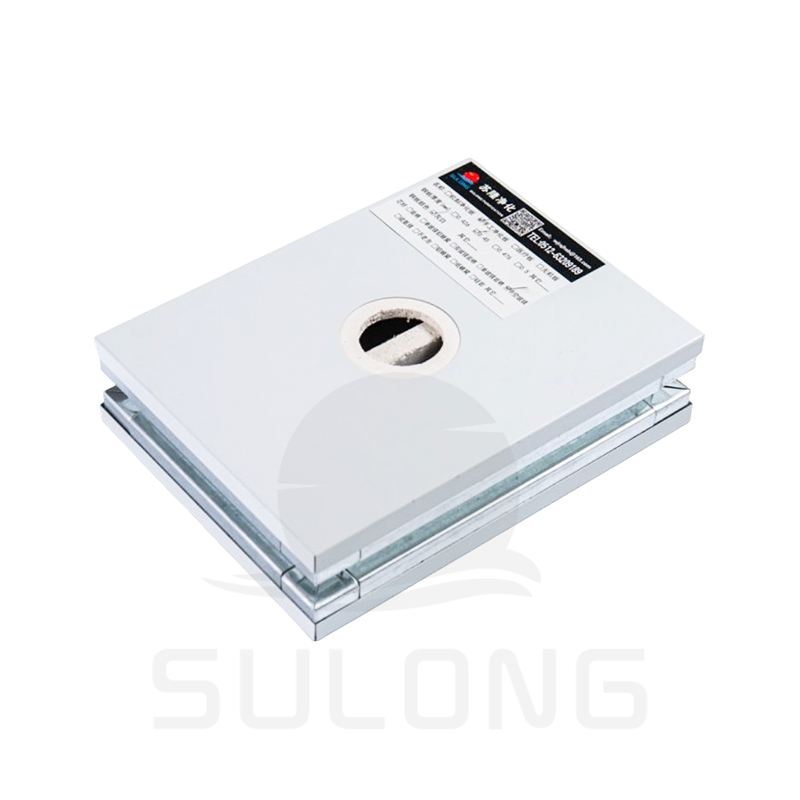
Our inorganic SPC Stone Crystal Panel are engineered to achieve A1-level fire reaction performance — the highest tier under European classification — producing no burning droplets, negligible smoke, and zero flaming in standard cone calorimeter and SBI (Single Burning Item) tests. For facilities that must demonstrate regulatory compliance to insurance underwriters or government inspection bodies, this classification significantly simplifies documentation.
Dimensional Stability Under Hygrothermal Cycling: The Engineering Behind It
Wall panels in operating cleanrooms, food-processing areas, or pharmaceutical facilities experience repeated cycles of temperature and humidity change — from sterilization procedures, HVAC fluctuations, and seasonal shifts. Materials with high hygroscopic expansion coefficients or significant thermal expansion differentials between face and core will eventually exhibit edge-lifting, joint-gap opening, or surface waviness. These are not merely aesthetic issues; open joints become particle traps and microbial harborage sites that defeat the purpose of a controlled environment.
Inorganic crystal panels maintain dimensional stability because the crystalline mineral matrix has an extremely low moisture absorption rate — typically below 0.3% by mass — and a thermal expansion coefficient closely matched to standard steel or aluminum framing systems. This compatibility minimizes differential movement at panel-to-frame interfaces, preserving the integrity of sealant joints over a service life measured in decades rather than years. For designers specifying large-format panel runs exceeding 3 meters in continuous length, this stability allows tighter joint tolerances without the need for excessive expansion gap allowances that would otherwise complicate cleanroom sealing strategy.
Cleanroom Compatibility: Surface Roughness, Particle Generation, and Electrostatic Behavior
Three surface-level properties determine whether a panel material is genuinely cleanroom-compatible or merely marketed as such: surface roughness (Ra value), particle generation tendency, and electrostatic charge accumulation.
Surface Roughness
A lower Ra (arithmetic mean roughness) translates directly to fewer sites where particles can mechanically lodge and resist removal by wiping or air-jet cleaning. Smooth inorganic surfaces with Ra values below 0.8 µm are preferred for ISO Class 6 and above. Porous or micro-textured finishes common in some decorative panels may register acceptable visual smoothness but retain contamination at the microscale.
Particle Generation
Organic-core panels with thin laminates can shed microparticles as the laminate flexes, scuffs, or ages. A fully inorganic, homogeneous panel face eliminates this delamination-based particle source. Mechanical abrasion testing (e.g., Taber abrasion per ASTM D4060) on inorganic crystal surfaces shows markedly lower mass loss compared to polymer-faced boards, confirming reduced particle generation over the panel's service life.
Electrostatic Charge
In semiconductor fabs and electronics assembly areas, electrostatic discharge (ESD) can damage wafers and sensitive components. Many high-gloss polymer panels accumulate triboelectric charge during cleaning. Inorganic mineral surfaces exhibit lower static charge generation and dissipate charge more readily, reducing the need for additional antistatic treatments or grounding straps on panel systems.
Moisture Management in High-Humidity and Wet-Process Environments
Food-processing lines, pharmaceutical washing bays, and hospital wet rooms impose moisture demands that most construction panels were never designed to meet continuously. The failure mode is predictable: water migrates through surface imperfections or cut edges, saturates the core, promotes swelling and fungal colonization, and ultimately causes structural bond failure. Remediation typically requires full panel replacement rather than spot repair, resulting in facility downtime that can run into hundreds of thousands of dollars per day in production-critical environments.
The moisture resistance of our SPC Stone Crystal Panel derives from the material's crystalline structure rather than from surface sealants or edge treatments — meaning protection is not dependent on installation quality at the panel perimeter. Even if a cut edge is exposed due to a penetration or field modification, the inorganic substrate does not absorb standing water, and there is no organic core to support fungal or bacterial growth. For facility managers specifying panels for zones that will be hosed down daily with warm water and detergent, this inherent resistance removes a significant long-term maintenance variable.
Key Selection Criteria When Specifying Panels for Regulated Industries
When evaluating wall and ceiling panel systems for cleanrooms, pharmaceutical suites, or food-grade production areas, procurement and facilities teams should move beyond vendor data sheets and request verification against the following criteria:
- Third-party fire reaction test reports (EN 13501-1 or ASTM E84) with full test assembly description, not just rating claims.
- Moisture absorption test data per ISO 62 or equivalent, specifying both short-term (24-hour immersion) and long-term equilibrium absorption values.
- VOC emission certification (e.g., GREENGUARD Gold or AgBB) for enclosed cleanroom environments where air recirculation amplifies off-gassing impacts.
- Surface Ra measurements from accredited metrology labs, particularly if panels will be used within ISO Class 6 or cleaner environments.
- Chemical resistance compatibility list covering disinfectants and process chemicals in use at the specific facility — not a generic resistance chart.
- Confirmation of whether the listed properties apply to the full panel thickness or only to the surface layer, as some laminated products qualify the face material independently from the overall composite.
We recommend requesting physical samples for on-site chemical soak testing with your facility's specific cleaning agents before finalizing specification — a step that eliminates surprises during validation and commissioning.
Installation Considerations That Affect Long-Term Hygienic Performance
Even panels with superior material properties can underperform if installation practices create contamination pathways. The most common installation-related failure points in hygienic environments are not the panels themselves but the transitions, penetrations, and jointing systems used around them.
Joint and Cove Design
Square butt joints sealed with silicone are the default in many fit-outs, but silicone is susceptible to mold colonization over time, particularly in high-humidity environments. Specifying antimicrobial-grade silicone sealants (silver ion or IPBC-based biocide formulations) in panel joints, or better yet, designing coved aluminum extrusion transitions at wall-floor and wall-ceiling intersections, substantially reduces this risk. Coved corners also eliminate the right-angle recess where debris accumulates during wet-cleaning operations.
Penetration Management
Utility penetrations through cleanroom walls — conduit, pipe sleeves, cable trays — create moisture ingress and particle pathways if not properly sealed and collared. Gasketed escutcheon plates with a continuous foam seal against the panel face, combined with a bead of compatible sealant at the penetration core, maintain both hygienic integrity and the air pressure differential that controlled environments depend on.
Adhesive and Mechanical Fixing Compatibility
Not all construction adhesives are chemically compatible with inorganic substrates. Solvent-based contact adhesives formulated for PVC panels may not achieve adequate bond strength on mineral surfaces. Consult the panel manufacturer's approved adhesive list before specification, and verify that mechanical fixing systems (screw anchors, toggle bolts) use corrosion-resistant fasteners appropriate for the ambient humidity level of the installation zone.


