 Home / News / Industry News / Cleanroom Windows & Insulated Glass Doors: A Complete Specification Guide
2026-04-16
Selecting the right glazing components for a controlled environment goes well beyond ordering standard commercial windows and doors. Cleanroom windows and doors must meet overlapping demands: maintain airtight pressure boundaries, survive repeated chemical disinfection, support visual monitoring of operations inside, and contribute zero contamination to the space they enclose. Getting these specifications right at the design stage prevents expensive corrective work after facility qualification — and understanding the engineering behind each product type is the most reliable way to make informed decisions.
Content
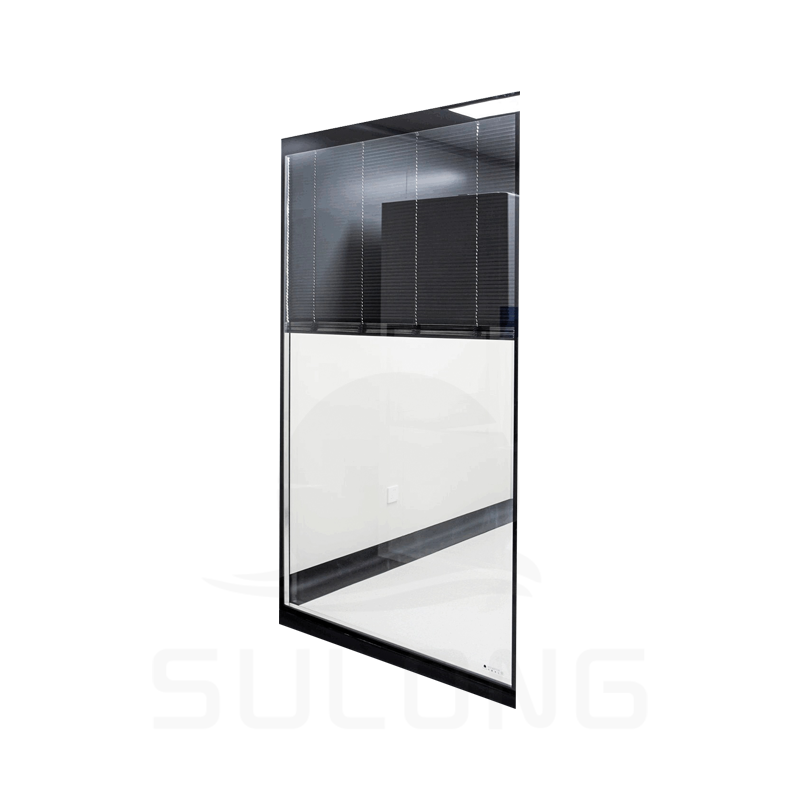
Cleanroom windows are available in three primary frame materials — aluminum alloy, stainless steel, and one-piece formed steel — and in two corner geometries: rounded and square. All configurations use double-glazed construction, which is a fundamental requirement rather than an optional upgrade. The sealed air cavity between the two glass panes prevents interior condensation by reducing the surface temperature differential, and it provides the acoustic damping needed in vibration-sensitive production environments.
Aluminum alloy frames are the most widely installed option. Their anodized surface resists oxidation and sheds very few particles under normal conditions. The trade-off is moderate chemical resistance — repeated exposure to strong alkaline disinfectants can degrade the anodizing layer over time. For cleanrooms using aggressive cleaning protocols, particularly in pharmaceutical manufacturing, this becomes a meaningful lifecycle cost factor.
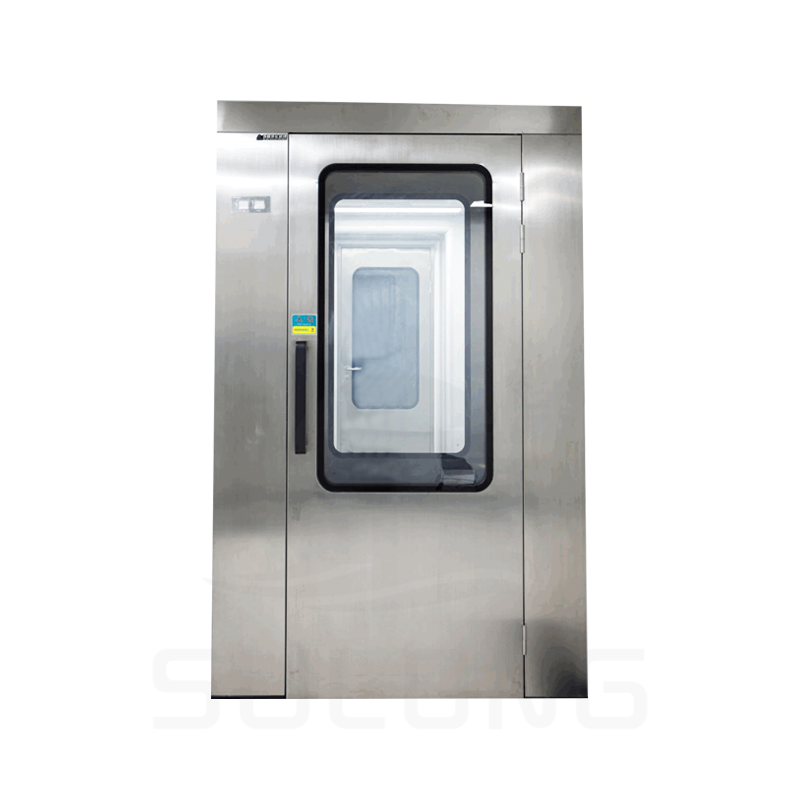
Stainless steel frames, typically 304 or 316L grade, handle chemical exposure far better and are the preferred choice in high-humidity zones or spaces subject to daily wet-cleaning. Their higher density adds weight to the installation, but in ISO Class 5 or cleaner environments, the ability to withstand stringent sanitization cycles without surface compromise justifies the premium. One-piece formed steel frames take contamination control a step further by eliminating the welded joints and assembled corners found in conventional frames. Those junction points are potential sites for microbial harboring and particle accumulation — removing them reduces cleaning complexity and simplifies audit documentation in GMP-regulated facilities.
Corner geometry affects more than appearance. Rounded corner windows are standard in pharmaceutical and biotech environments because 90-degree square corners cannot be cleaned flush with standard tools, allowing residue to accumulate at the junction. EU GMP Annex 1 explicitly recommends smooth, coved transitions in cleanroom surfaces to eliminate contamination traps — a principle that applies directly to window frame geometry. Square corner windows remain appropriate for non-regulated spaces such as electronics fabs or food processing cleanrooms, where cost efficiency and standardized panel sizing take priority.
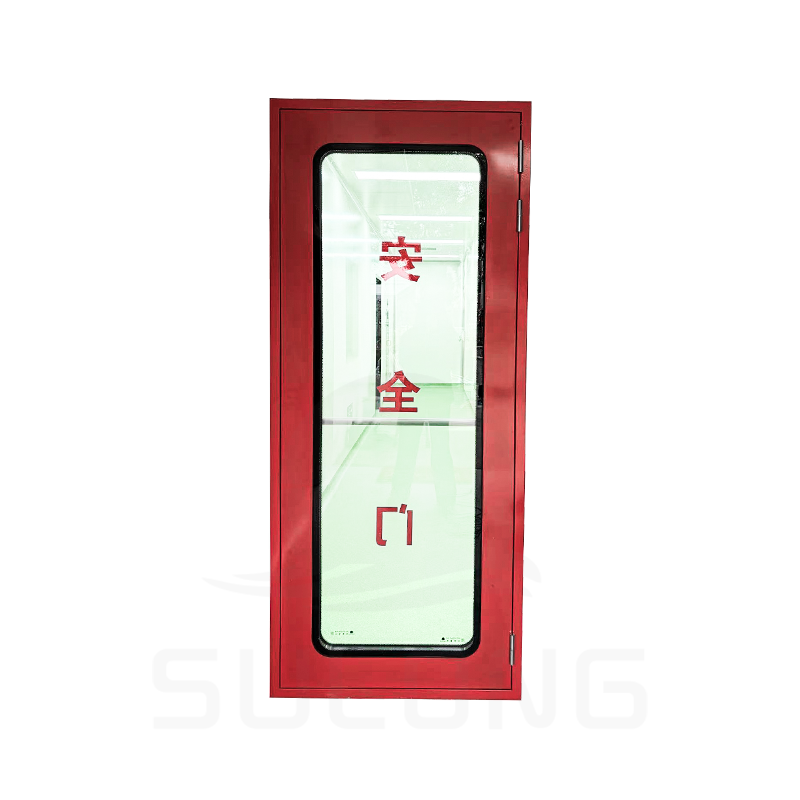
The center-mounted insulated glass cleanroom door is a specific door configuration designed to address a structural challenge common in modular cleanroom systems: how to install a glazed door panel in a wall assembly without compromising the wall's pressure boundary or requiring a heavy, deep frame profile that interrupts the flush interior surface.
In a center-mounted design, the door panel is positioned at the midpoint of the wall thickness rather than flush to one face. This centering serves two purposes. First, it distributes the door's weight and operating forces symmetrically, reducing stress on the pivot hardware and minimizing warping risk over the door's service life. Second, it allows the frame to integrate with both wall faces simultaneously, creating a continuous seal surface on the interior side that sits level with the adjacent wall panels — a requirement for easy cleaning and for compliance with surface finish standards in classified spaces.
The insulated glass component follows the same double-pane logic as cleanroom windows. Thermal performance is critical at door positions because door frames experience more temperature cycling than fixed wall panels — every door opening introduces ambient air from adjacent corridors, and the frame must recover without producing condensation on interior surfaces. The insulating air cavity maintains glass surface temperatures above the dew point even during frequent door operation in facilities where the cleanroom runs at significantly lower temperatures than surrounding areas.
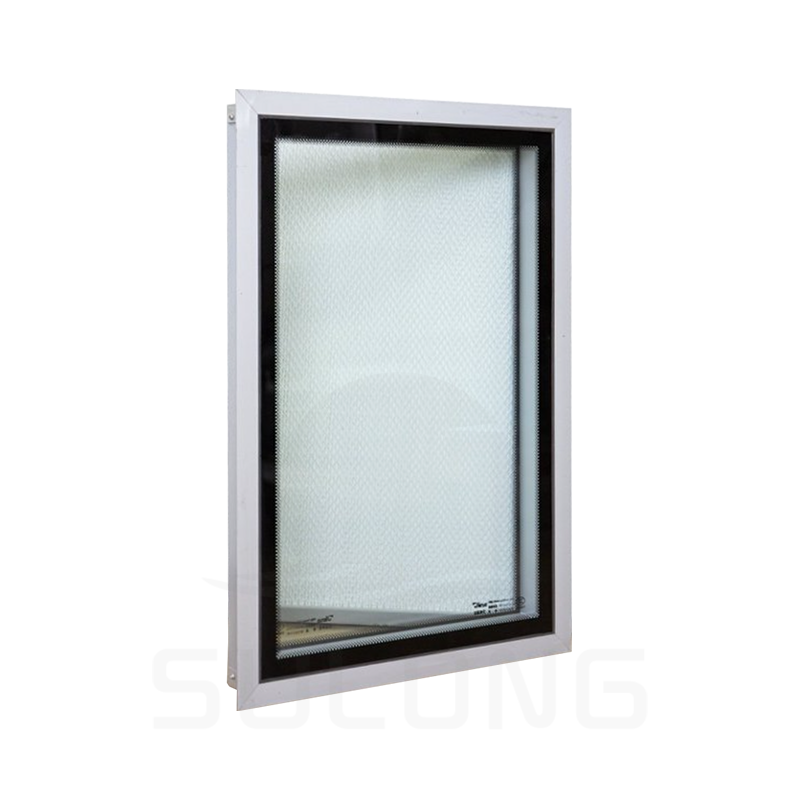
Both cleanroom windows and center-mounted insulated glass cleanroom doors depend on multi-layer sealing systems to maintain room classification. A single-gasket seal at the frame perimeter is not sufficient for sustained performance under pressure differential cycling. The industry standard practice uses a primary structural sealant at the glass-to-frame interface and a secondary compressible gasket at the frame-to-wall interface — two independent sealing lines so that minor degradation in one layer does not immediately breach the cleanroom boundary.
Sealant selection at installation has long-term consequences that are frequently underestimated. Standard acetic-cure silicones off-gas acetic acid during curing, which corrodes stainless steel fasteners and introduces volatile organic compounds into sensitive environments. Neutral-cure silicone must be used at all cleanroom window and door perimeter joints. It should also be allowed to cure fully — 24 to 72 hours depending on ambient humidity and temperature — before the facility's HVAC system is activated. Air movement during curing creates surface defects in the sealant bead that become particle sources and potential leak paths.
For door seals specifically, the bottom sweep and perimeter gasket compression must be verified at installation and rechecked after the first 30 days of operation. Door hardware settles under load, and gasket compression depth changes as pivot mechanisms wear in. Documenting the initial compression depth provides a baseline for future maintenance — when the gap grows beyond specification, the gasket can be replaced before it causes a classification excursion rather than after a failed requalification test.
Procurement and engineering teams specifying cleanroom windows or center-mounted insulated glass cleanroom doors for a new or retrofit project should confirm the following before finalizing orders:
The following table summarizes the key performance differences between the three cleanroom window frame materials to support specification decisions across different facility types:
| Frame Type | Chemical Resistance | Particle Risk | Crevice / Joint Risk | Typical Application |
|---|---|---|---|---|
| Aluminum Alloy | Moderate | Low | Low–Moderate | Electronics, general ISO 7–8 |
| Stainless Steel | High | Very Low | Low–Moderate | Pharma, biotech, ISO 5–7 |
| One-Piece Formed Steel | High | Very Low | Very Low (seamless) | GMP-regulated, audit-critical facilities |
The same material logic applies when specifying the frame of a center-mounted insulated glass cleanroom door. Door frames endure more mechanical stress than fixed window frames due to repeated opening cycles, but the contamination control criteria — chemical resistance, surface smoothness, joint elimination — remain identical. Specifying different materials for doors versus windows in the same cleanroom creates inconsistency in cleaning protocols and complicates maintenance records, so aligning both to the same material standard from the outset simplifies long-term facility management considerably.

Follow Us:
 Call us :
  Mail us to:


 English
 中文简体
中文简体