 Home / News / Industry News / The Practical Guide to Handmade Sandwich Panels: What They Are and How to Use Them
2026-04-30
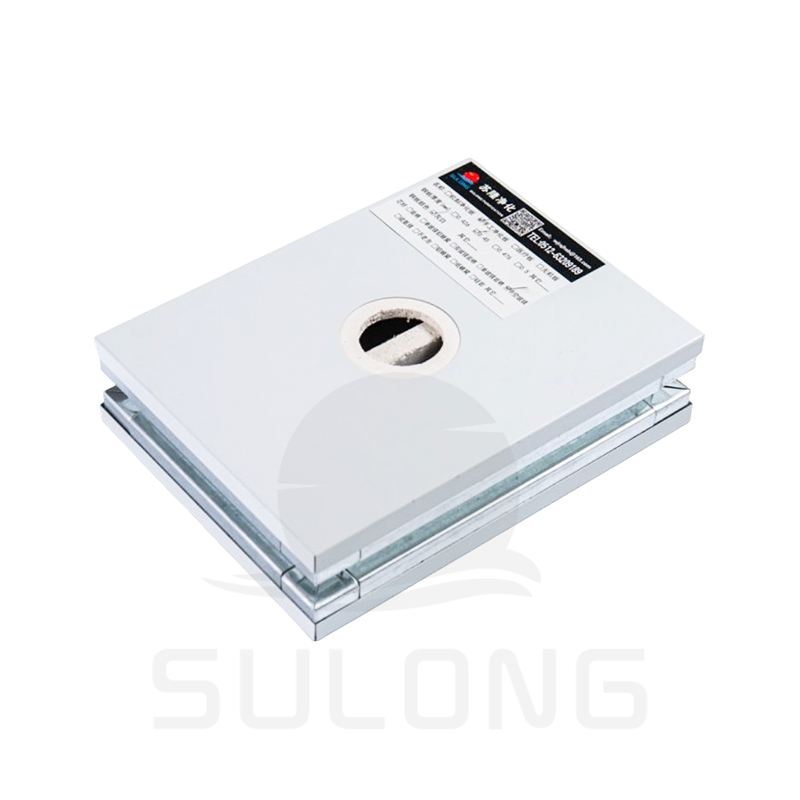
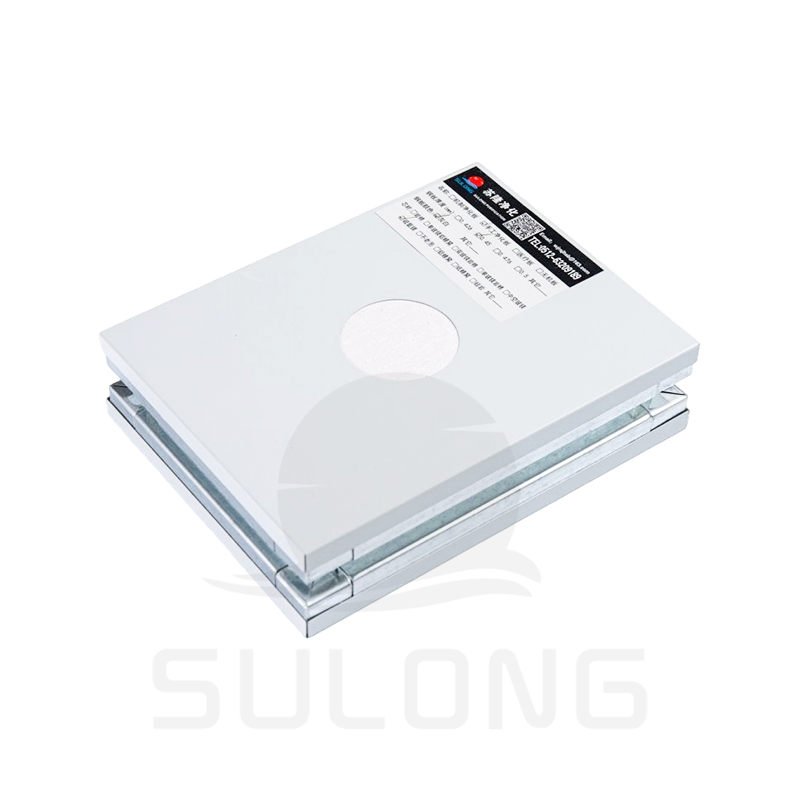
Sandwich panels are one of the most efficient structural and insulating solutions in modern construction and manufacturing — but you don't always need a factory to make one. Handmade sandwich panels, fabricated manually using adhesive bonding, basic tooling, and carefully selected materials, are increasingly being used for cold room construction, prefab shelters, exhibition booths, camper van conversions, acoustic enclosures, and custom architectural projects. This guide walks through the materials, process, performance expectations, and practical limitations of making sandwich panels by hand.
Content
A sandwich panel — whether factory-produced or hand-fabricated — is a three-layer composite structure: two rigid or semi-rigid facing sheets bonded to a lightweight core material. The facing sheets carry tensile and compressive loads, while the core provides shear stiffness, thermal insulation, acoustic damping, or a combination of all three. The "sandwich" geometry allows the structure to achieve stiffness-to-weight ratios far superior to a single solid sheet of any of the component materials.
Factory-produced sandwich panels use continuous press lines or injected foam under controlled temperature and pressure, achieving consistent bond quality and dimensional accuracy at high speed. Handmade or DIY sandwich panels use manual lamination: adhesive is applied to the core and/or facing surfaces, the layers are aligned and pressed together using clamps, dead-weight loading, or a vacuum bag, and the assembly is allowed to cure at ambient or slightly elevated temperature.
Hand fabrication makes practical sense when:
What handmade panels trade away, compared to industrial ones, is consistency and maximum structural performance. Bond strength is highly sensitive to surface preparation and adhesive selection, and without a press, bond-line thickness variation is harder to control. Understanding these trade-offs upfront will determine whether hand fabrication is appropriate for your specific application.
The core is the defining component of a sandwich panel — it determines insulation value, weight, compressive strength, and bondability. Selecting the right core for your hand-fabricated panel depends on the panel's primary function.
EPS is the most widely used core for handmade insulated sandwich panels. It is inexpensive, widely available in sheet form, easy to cut with a hot wire or fine-tooth saw, and bonds reliably with polyurethane adhesives. Typical densities for panel cores range from 15 to 30 kg/m³, with thermal conductivity values of approximately 0.033–0.038 W/m·K. EPS is not suitable for applications with sustained moisture exposure unless the facing fully encapsulates it, as it absorbs water over time and loses insulation value. It also has limited compressive strength — not appropriate where concentrated point loads are expected on the panel surface.
XPS offers better moisture resistance and higher compressive strength than EPS, making it a preferred core for floor panels, cold room floors, and applications with intermittent water exposure. Its closed-cell structure resists capillary water absorption. Thermal conductivity is slightly better than EPS at 0.030–0.034 W/m·K. The smooth skin of XPS requires mechanical scuffing or chemical etching before adhesive application to achieve reliable bond strength — a step that is frequently skipped and is a leading cause of delamination failure in homemade panels.
Polyisocyanurate (PIR) and polyurethane (PUR) rigid foam boards provide the best thermal performance per unit thickness among common core materials, with thermal conductivity values as low as 0.022–0.026 W/m·K. PIR has superior fire resistance compared to EPS and XPS. Pre-cut PIR boards are the core of choice for high-performance cold storage panels. They bond well with PU adhesives and most two-part epoxy systems. The main limitation for hand fabrication is cost — PIR boards are significantly more expensive than EPS of equivalent thickness.
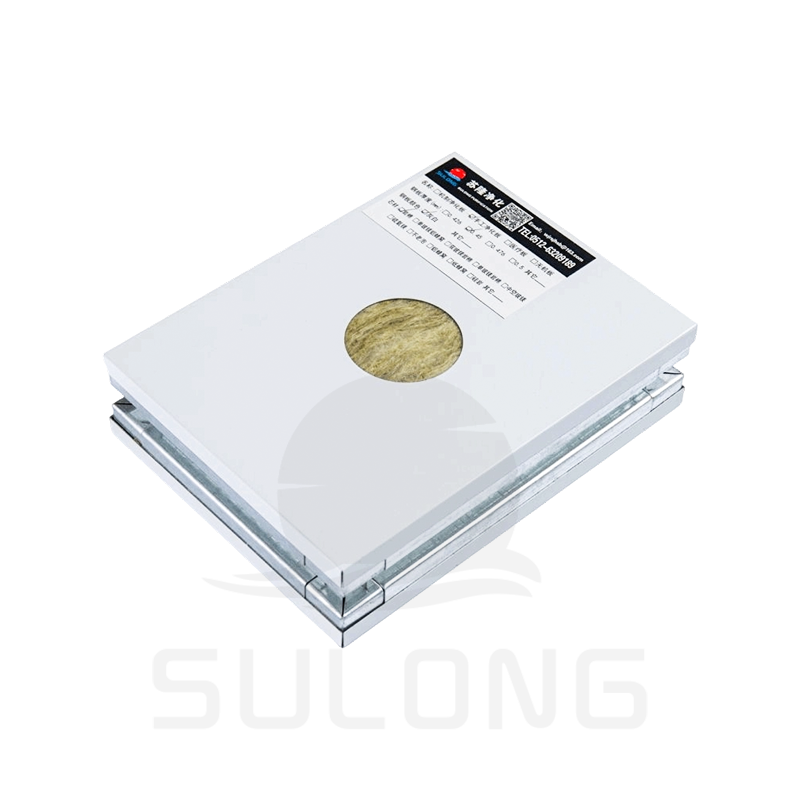
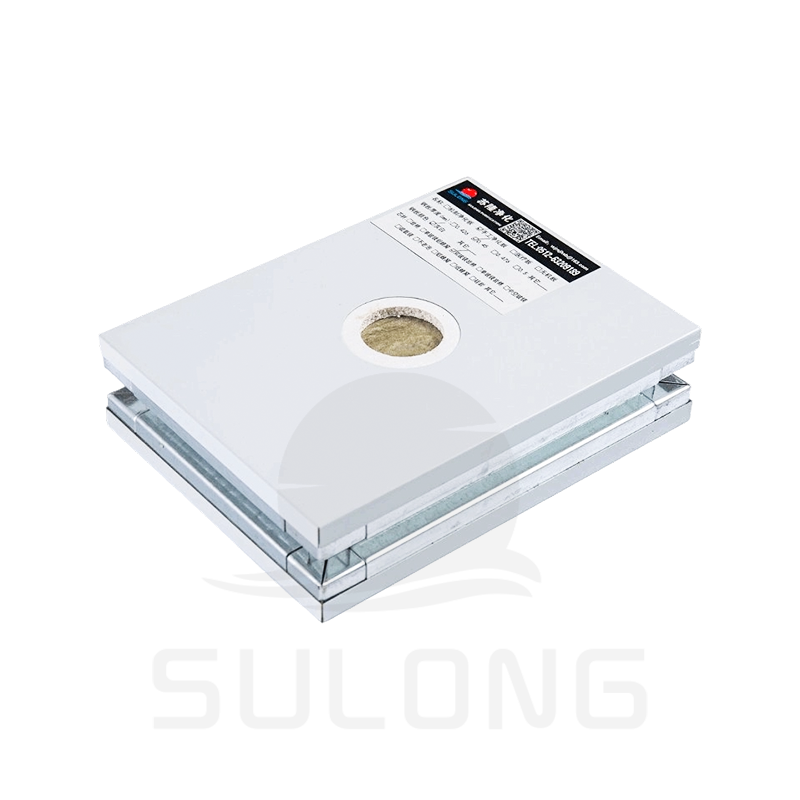
Mineral wool cores are used where fire performance and acoustic insulation are priorities. Unlike foam cores, mineral wool is non-combustible and provides excellent sound absorption. However, it is significantly heavier, has lower structural contribution to the panel, and requires careful adhesive selection because many standard PU adhesives do not bond reliably to fibrous mineral surfaces without a facing layer pre-bonded directly to the mineral wool slab. Mineral wool-cored handmade panels are technically feasible but require more process control than foam-cored panels.
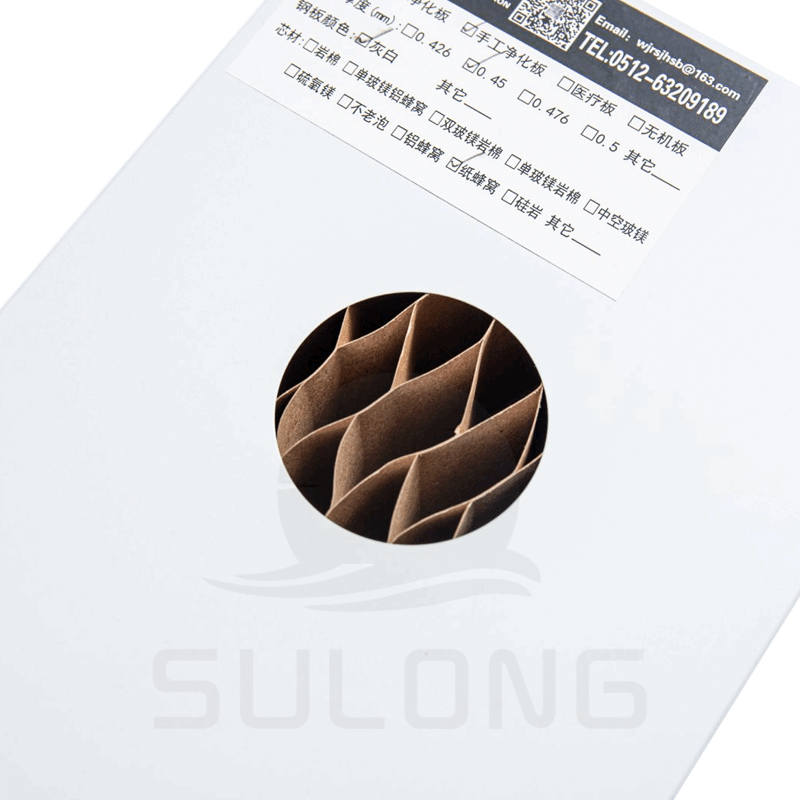
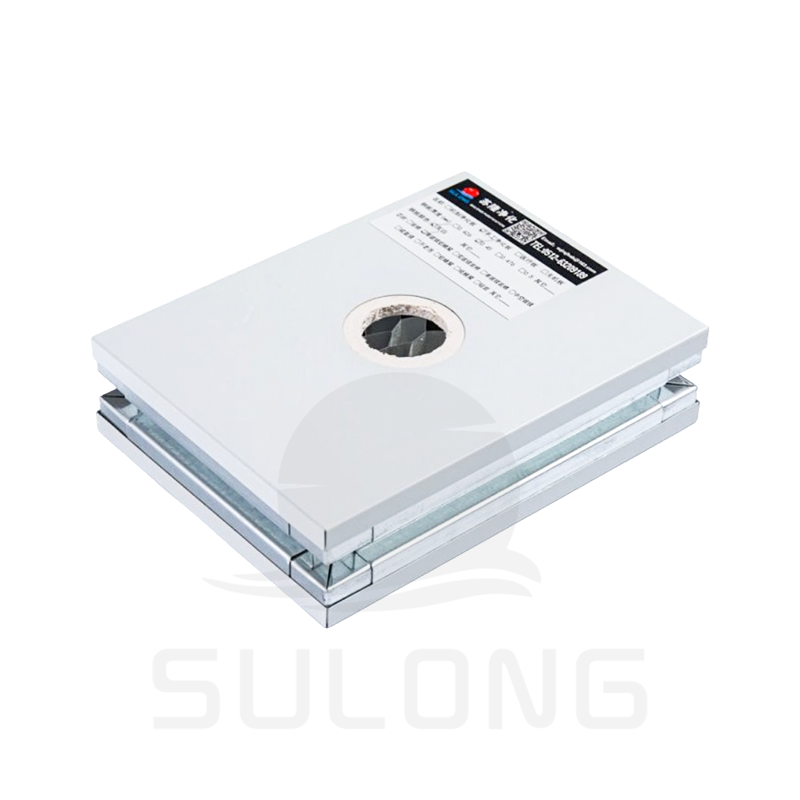
Paper, aluminum, or polypropylene honeycomb cores are used where the highest possible stiffness-to-weight ratio is needed — aerospace interiors, exhibition displays, furniture, and lightweight structural panels. Honeycomb cores are more challenging to work with for hand fabrication because the open cell geometry requires the adhesive to bridge the cell walls rather than spread across a full surface. Film adhesives or thixotropic paste adhesives perform better on honeycomb than liquid adhesives, which can wick into the cells and cause uneven bond distribution.
The facings of a handmade sandwich panel provide the structural skins, surface finish, and environmental protection. The choice of facing material affects not only the panel's mechanical and aesthetic performance but also the adhesive system and bonding method required.
| Facing Material | Typical Thickness | Key Properties | Bonding Considerations |
| Galvanized steel sheet | 0.4–0.8mm | High strength, durable, weather-resistant | Requires degreasing; PU or epoxy adhesive |
| Aluminum sheet | 0.5–1.5mm | Lightweight, corrosion-resistant, formable | Surface etch or prime; epoxy preferred |
| FRP (Fiberglass reinforced plastic) | 1.0–3.0mm | Impact resistant, moisture-proof, light | Abrade surface; polyester or epoxy resin |
| Plywood / OSB | 6–18mm | Structural, easy to work, nail/screw-ready | PU construction adhesive; clamp well |
| Cement board / Fiber cement | 6–12mm | Fire-resistant, moisture-resistant, heavy | Epoxy or cementitious adhesive; heavy pressing |
| MDF / Melamine board | 6–12mm | Smooth finish, interior use, low cost | PVA or PU adhesive; clamp uniformly |
A common combination for cold room or insulated wall applications is galvanized steel or FRP facings over a PIR or EPS core — mimicking factory cold room panel construction at small scale. For lightweight partition walls or van conversions, plywood or MDF facings over XPS or EPS deliver a workable, cost-effective result.
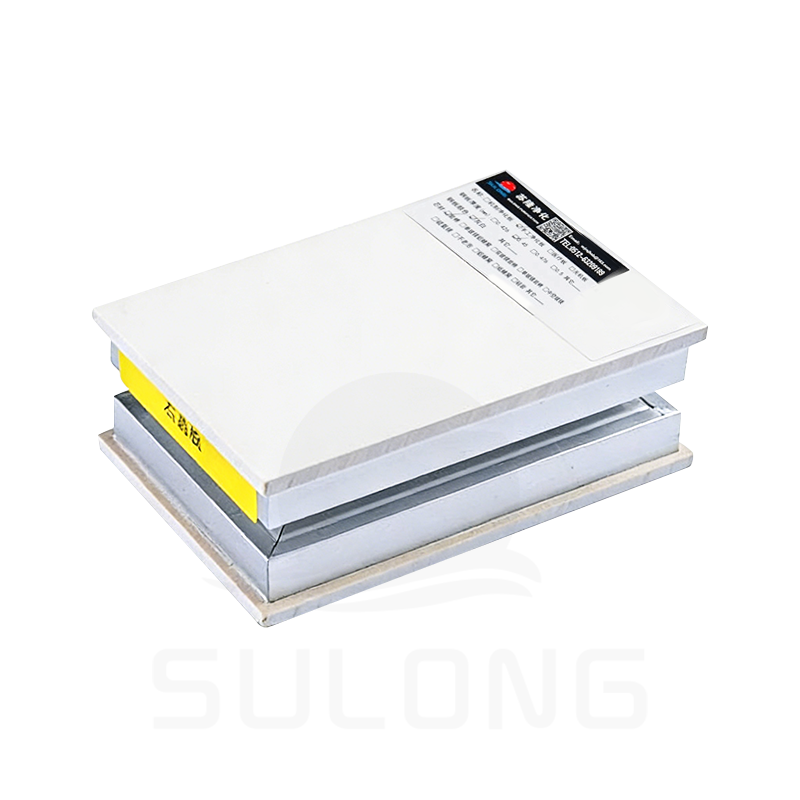
In factory-produced sandwich panels, bond quality is ensured by injection pressure, controlled temperature, and continuous line monitoring. In hand-fabricated panels, adhesive selection and application technique are the primary determinants of whether the finished panel holds together under load. Choosing the wrong adhesive — or applying the right one incorrectly — accounts for the majority of DIY sandwich panel failures.
Single-component PU adhesives are the most commonly used system for handmade insulated sandwich panels. They cure by reaction with ambient moisture and develop high bond strength on foam-to-metal and foam-to-wood interfaces. Application is straightforward — notched trowel or roller — and open time is typically 15–30 minutes at 20°C, giving adequate working time for panel assembly. The main requirement is sustained clamping pressure during cure (minimum 4–6 hours) to prevent foam springback from lifting the facing before the adhesive sets. PU adhesives also foam slightly during cure, which can be beneficial for gap-filling but can create uneven bond-line thickness if not managed with adequate pressing weight.
Two-part epoxy systems offer superior bond strength, especially on metal and composite facings, and are the correct choice for structural panels where maximum peel and shear resistance are required. Epoxies do not foam during cure and produce a consistent, rigid bond line. The trade-off is a shorter pot life (often 20–60 minutes depending on formulation), higher cost, and the need for precise mix ratios. For large panel surfaces, working speed matters — the adhesive must be spread and the panel assembled before the working time expires. Low-viscosity epoxy systems may require the panel to be assembled horizontally and kept level during cure to prevent adhesive migration toward one edge.
Solvent-based or water-based contact adhesives are applied to both surfaces, allowed to flash off until tacky, and then brought together for an immediate bond. This eliminates the clamping requirement — an advantage for large panels or on-site work. However, contact adhesives generally provide lower structural bond strength than PU or epoxy, and alignment cannot be corrected once the surfaces make contact. They are appropriate for non-structural facing applications such as decorative laminates and thin sheet materials over rigid foam, but should not be used as the primary structural adhesive for load-bearing handmade panels.
The following procedure applies to a standard flat panel with rigid foam core and sheet metal or plywood facings. Adjust adhesive type and clamping method for your specific material combination.
The thermal performance of a handmade sandwich panel is determined almost entirely by the core material and thickness. Unlike bond strength — which is process-sensitive — thermal conductivity values are inherent material properties and are achieved regardless of how the panel is bonded, provided the core remains intact and dry.
The table below shows indicative R-values and U-values for common core materials at typical thicknesses used in hand-fabricated panels:
| Core Material | 50mm Thick | 75mm Thick | 100mm Thick |
| EPS (λ = 0.036 W/m·K) | R1.39 / U0.72 | R2.08 / U0.48 | R2.78 / U0.36 |
| XPS (λ = 0.032 W/m·K) | R1.56 / U0.64 | R2.34 / U0.43 | R3.13 / U0.32 |
| PIR (λ = 0.023 W/m·K) | R2.17 / U0.46 | R3.26 / U0.31 | R4.35 / U0.23 |
| Mineral Wool (λ = 0.035 W/m·K) | R1.43 / U0.70 | R2.14 / U0.47 | R2.86 / U0.35 |
Structural performance is more variable. A well-bonded handmade sandwich panel using 0.5mm galvanized steel facings over 100mm EPS will carry distributed loads comparable to a factory panel of similar specification. However, the critical failure mode in hand-fabricated panels is almost always adhesive bond failure rather than core or facing failure — typically initiated at edges, corners, or areas where surface preparation was inadequate. For load-bearing applications, it is prudent to design with a conservative safety factor and to perform destructive peel tests on a sample panel before committing to full production.
Understanding why handmade sandwich panels fail helps you take the right precautions at each stage of fabrication. The following are the most frequently encountered problems and their root causes:
The flexibility of hand fabrication means that custom sandwich panels show up in a wide variety of practical applications, each with specific material and performance requirements:
Small cold rooms, wine cellars, and walk-in freezers built on-site frequently use handmade PIR or EPS core panels with FRP or galvanized steel facings. The panels are fabricated to the exact internal dimensions of the space, avoiding the edge waste and fitting challenges of standard panel sizes. Vapor barriers are critical in this application — all joints must be sealed airtight to prevent moisture condensation within the panel assembly.
Camper van builders frequently fabricate lightweight custom sandwich panels for interior wall and floor linings. A common construction is 3mm plywood facings over 20–30mm XPS core with PU adhesive, shaped to the curved contours of the vehicle interior. The resulting panels provide thermal insulation, condensation management, and a structural substrate for fitting cabinets and fixtures — at a fraction of the weight of solid wood construction.
Prefabricated site offices, guard booths, and temporary accommodation structures are regularly built using hand-laminated sandwich panels for walls and roofs. Steel or FRP facings over EPS or mineral wool cores are assembled on-site, reducing transport weight compared to equivalent solid-wall construction while meeting basic thermal and weather-resistance requirements.
Custom exhibition panels require flat, lightweight, easily finished surfaces that can be painted, laminated, or printed on. Handmade panels using aluminum honeycomb or EPS cores with MDF or aluminum composite facings meet these requirements and can be fabricated in arbitrary sizes and shapes that factory panels don't accommodate.
Acoustic handmade sandwich panels are typically built with a mineral wool or high-density foam core between two mass-loaded facings (heavy plywood, cement board, or sheet lead where high performance is required). The acoustic performance comes from the combination of mass (the facings resist sound transmission) and absorption (the porous core dissipates energy). For generator enclosures, recording booth walls, and industrial noise barriers, custom-sized hand-fabricated panels are often the only practical option.

Follow Us:
 Call us :
  Mail us to:


 English
 中文简体
中文简体