
 Call us :
  Mail us to:


 English
 中文简体
中文简体

Product Knowledge
The Structural Mechanics Behind Honeycomb Panels: Why a Hollow Core Outperforms Solid Alternatives
The counterintuitive strength of honeycomb panels — delivering rigidity that rivals much heavier solid-core systems at a fraction of the weight — is a direct consequence of sandwich beam mechanics. In any flat panel subjected to bending load, the stresses are highest at the outer faces and approach zero at the neutral axis through the panel's midplane. A solid-core panel carries material at the neutral axis that contributes almost nothing to bending resistance while adding dead weight. A honeycomb core repositions material strategically: the thin aluminum cell walls running perpendicular to the panel face resist out-of-plane shear between the two rigid face sheets, while the face sheets themselves carry the tensile and compressive bending stresses where they are highest. The result is a panel whose bending stiffness scales with the cube of its total thickness — doubling the panel thickness increases stiffness by a factor of eight — at a weight penalty far below that of doubling a solid panel.
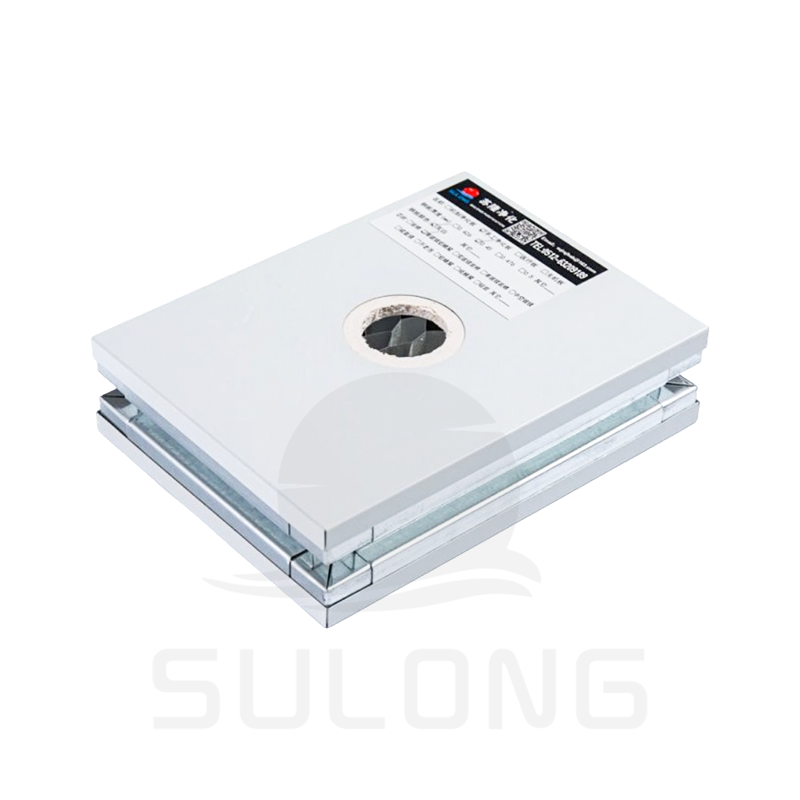
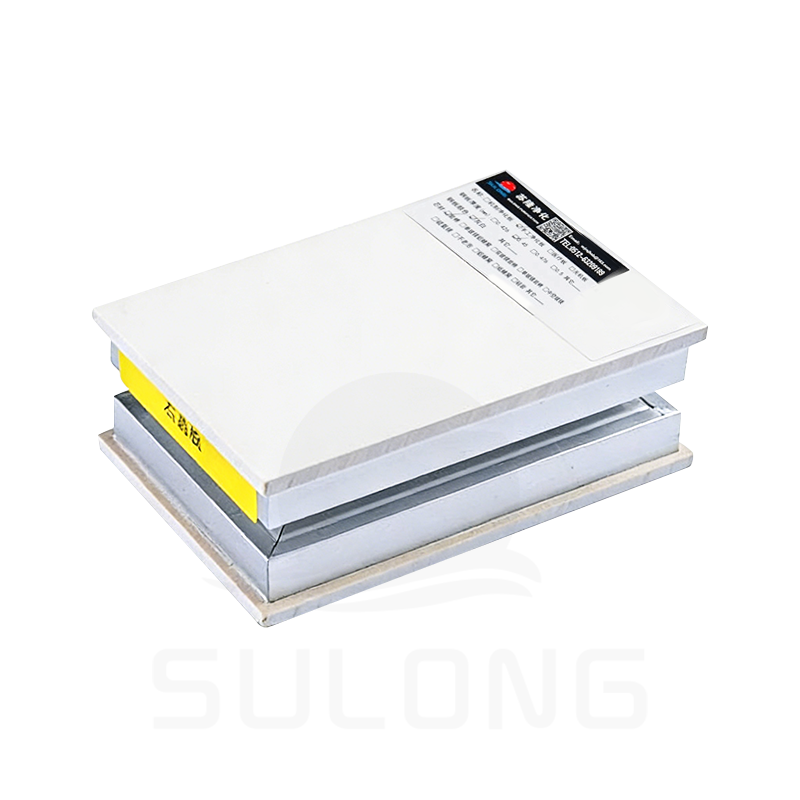
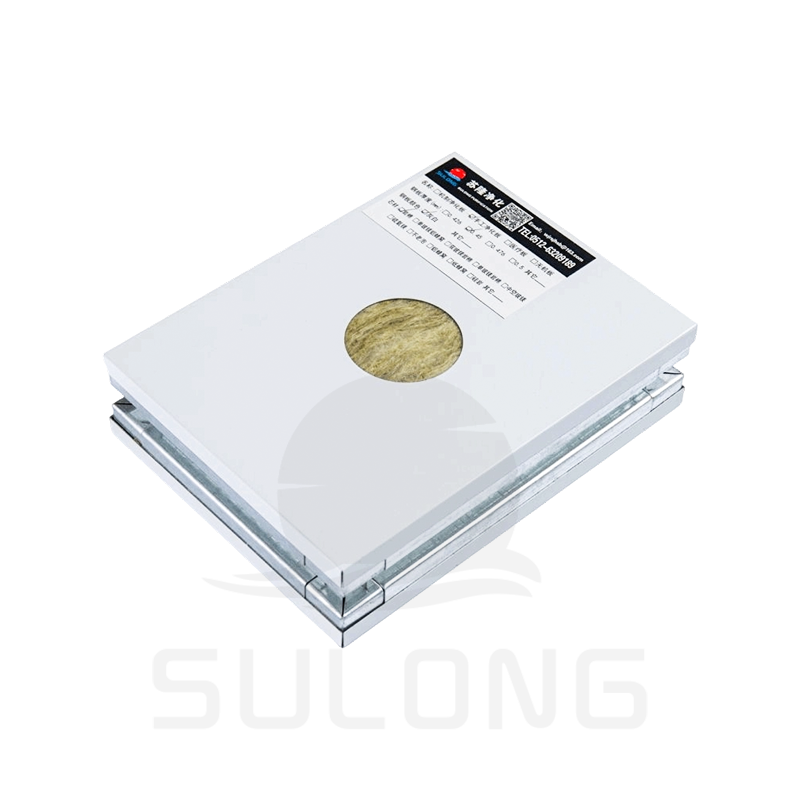
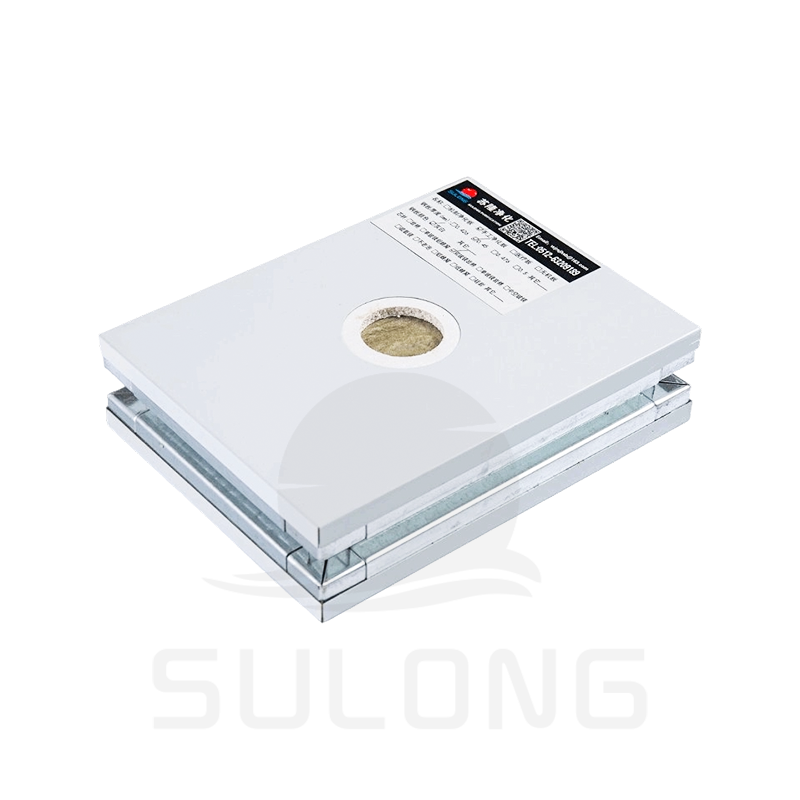
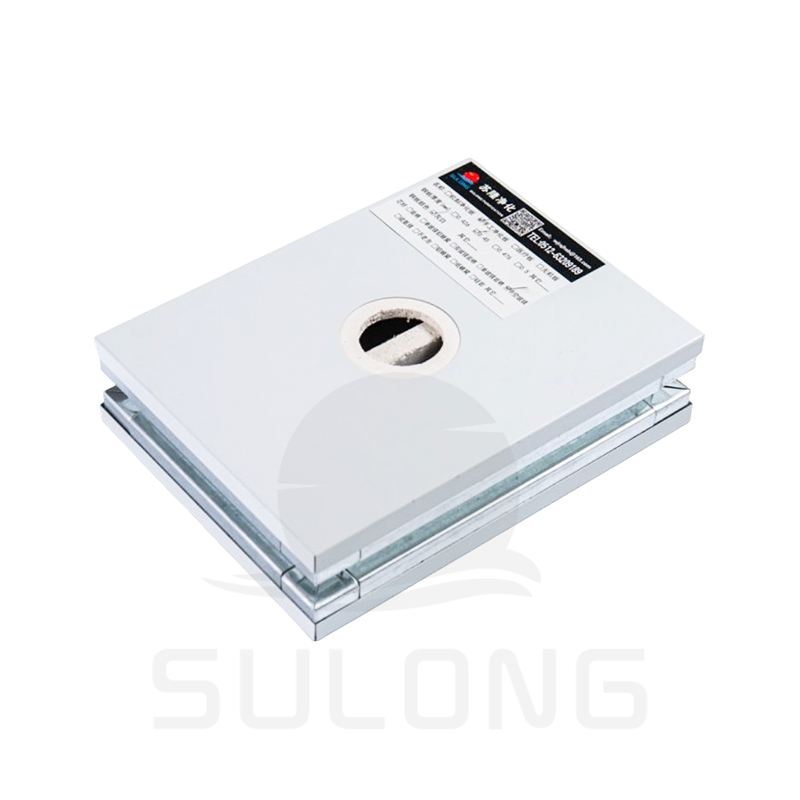
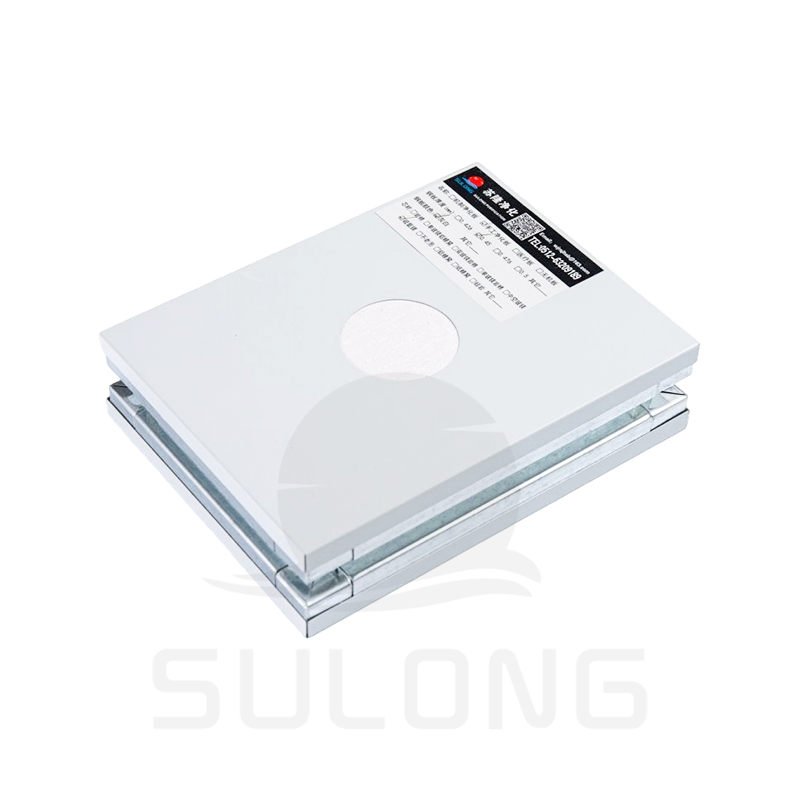
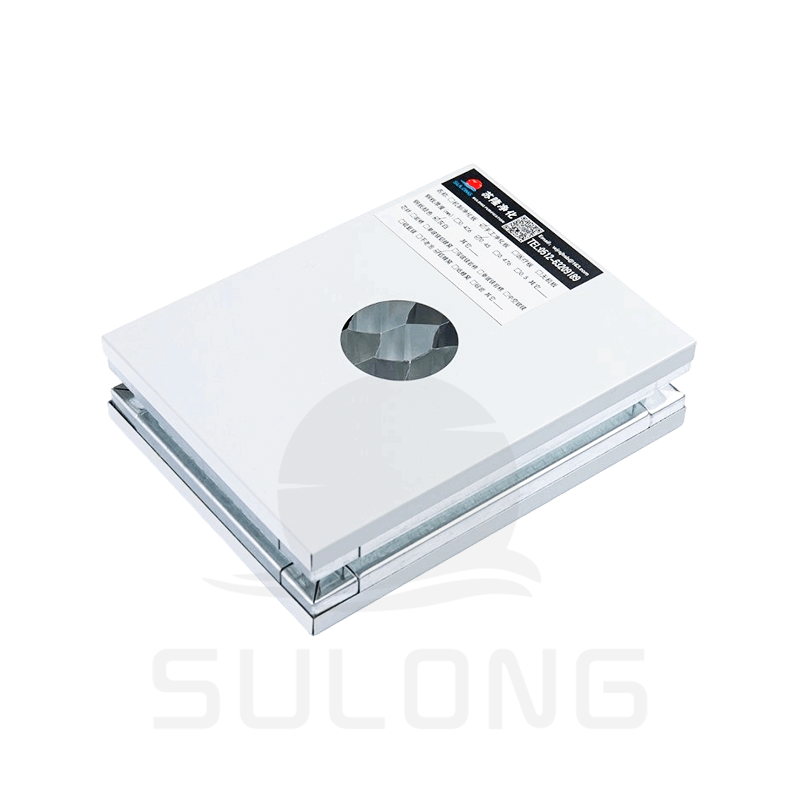
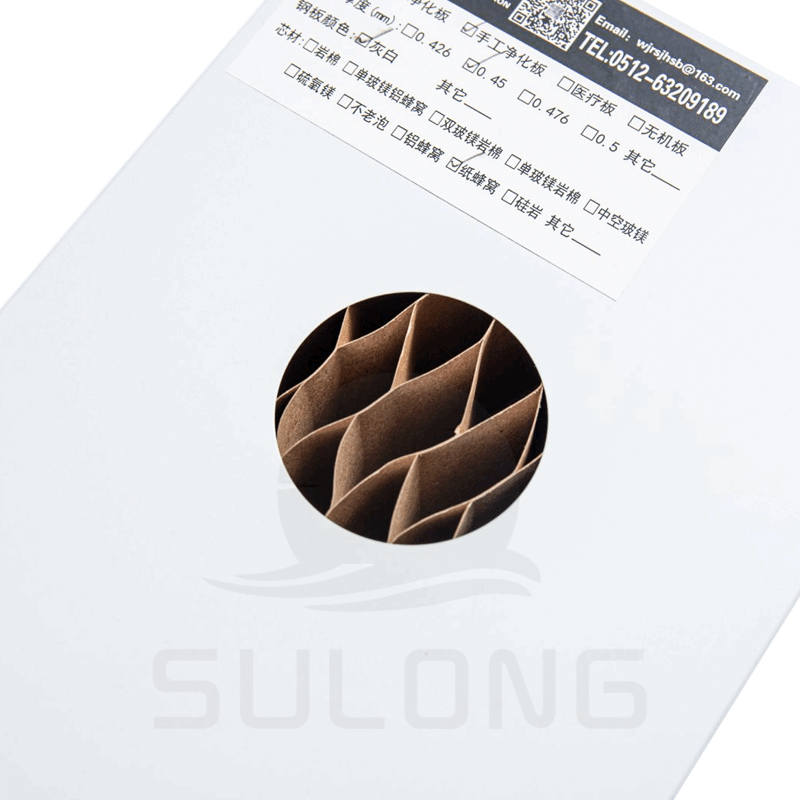
Aluminum honeycomb specifically achieves this with exceptional material efficiency. The hexagonal cell geometry distributes applied loads in three directions simultaneously, making it far more resistant to localized buckling than square or rectangular cell alternatives. Cell size — typically expressed as the inscribed circle diameter, commonly 6 mm, 10 mm, or 19 mm — and cell wall foil thickness together determine the core's shear modulus and compressive strength. Smaller cells with thinner foil are used where surface flatness is critical and distributed load is uniform; larger cells with thicker foil are specified where concentrated point loads or impact resistance is the primary concern. Our handmade single glass magnesium aluminum honeycomb panels are configured to balance these parameters for partition and interior wall applications, delivering a surface flatness and rigidity that remains consistent over the panel's full service life.
Glass Magnesium Board as a Face Material: Performance Properties and What the Chemistry Delivers
Glass magnesium board (also called fiberglass-reinforced magnesium oxide board or MgO board) is produced through a sorel cement reaction: reactive magnesium oxide is mixed with magnesium chloride solution in a controlled molar ratio, cast around woven fiberglass mesh reinforcement layers, and cured at ambient temperature. The resulting composite is non-combustible, dimensionally stable, and significantly harder than gypsum-based boards — Brinell hardness values for quality MgO board typically exceed 45 HB, compared to approximately 20 HB for standard gypsum wallboard. This hardness difference has a direct consequence for partition walls: MgO-faced panels resist surface damage from furniture contact, door edge impacts, and trolley abrasion at a level that gypsum systems require repeated patching to maintain.
The fiberglass mesh embedded within the board serves two functions. Mechanically, it provides tensile reinforcement that prevents brittle fracture propagation — without it, an inorganic cementitious matrix would crack across its full thickness under flexural load. Chemically, alkali-resistant (AR) fiberglass is specified rather than standard E-glass because the alkaline environment of the MgO matrix would otherwise degrade standard glass fibers over time, reducing tensile strength. The quality of the AR fiberglass reinforcement — fiber weight per unit area, mesh aperture, and alkali resistance certification — is a meaningful differentiator between board grades that is not visible to the naked eye but significantly affects long-term panel performance under cyclic load or impact.
Weight-to-Stiffness Ratio in Practice: Handling, Installation Load, and Structural Implications
The practical significance of a high weight-to-stiffness ratio extends well beyond the convenience of lighter site handling, though that alone is meaningful: a 1200 × 2400 mm honeycomb panel at 12–16 kg can be maneuvered by a single installer, while an equivalent solid MgO or fiber cement panel of comparable rigidity would weigh 35–55 kg, requiring two workers and increasing cumulative handling injury risk on large-footprint projects. The more consequential structural implication is the reduced dead load imposed on the building frame and foundations.
In retrofitted partitioning within existing commercial buildings — a common application for interior honeycomb panels — the structural capacity of existing floor slabs and ceiling track fixing points is often a binding constraint. Building codes typically allow partition loads up to a certain linear load (commonly 1.0–1.5 kN/m) to be added without structural recalculation; heavier systems that exceed this limit trigger a formal structural engineer review and potentially costly reinforcement works. Honeycomb panels, at surface weights typically between 8 and 18 kg/m² depending on face sheet thickness and core depth, stay well within standard partition load allowances in most building configurations, avoiding this constraint entirely.
The same weight advantage benefits ceiling panel and overhead partition applications. Horizontal panels spanning between ceiling grid members deflect under their own self-weight; reducing panel mass directly reduces mid-span deflection and the associated risk of grid member distortion or fixing pull-through over time. For large-format ceiling panels in commercial spaces where visible sagging would be aesthetically unacceptable, the aluminum honeycomb core's combination of low density and high flexural stiffness keeps deflection within the L/360 or tighter limits required by specification.
Fire Resistance of Composite Panels: How the MgO Face and Aluminum Core Behave Under Heat Exposure
Fire resistance in a composite panel system is not a single material property but an emergent behavior of the complete assembly under specific fire exposure conditions. For single glass magnesium aluminum honeycomb panels, the fire response involves three distinct material phases acting in sequence as temperature increases from ambient to fire conditions.
MgO Face Sheet Behavior
Glass magnesium board is classified as non-combustible (A1 under EN 13501-1, or equivalent Class A under GB 8624) because its magnesium oxychloride matrix contains no organic carbon-based components that can sustain combustion. Under fire exposure, the board undergoes dehydration — bound water molecules in the oxychloride crystal phases are released as steam, which absorbs heat and delays temperature rise through the panel thickness. This endothermic water release mechanism, analogous to the behavior of gypsum board though at somewhat different temperature ranges, extends the period before the aluminum core reaches its critical temperature. The fiberglass reinforcement within the board retains tensile integrity up to approximately 700°C for AR-glass compositions, preventing premature face sheet fragmentation that would expose the core.
Aluminum Honeycomb Core Behavior
Aluminum melts at approximately 660°C and begins to lose significant structural strength above 200°C. In a fire scenario, the honeycomb core is therefore the thermally vulnerable element in the assembly. However, because the core is entirely enclosed within the non-combustible face sheets and contains no organic material, it contributes no heat of combustion and no smoke generation to the fire event. The practical consequence is that the panel assembly can achieve fire reaction ratings that prohibit flame spread and smoke production — relevant for egress corridor and atrium applications — even though the aluminum core would eventually lose structural integrity at sustained high temperatures. Fire resistance duration ratings (EI30, EI60) for the complete assembly are a function of the face sheet thickness, core depth, and edge sealing detail, and must be verified through standardized furnace testing of the specific panel construction.
Comparing Honeycomb Panels Against Common Interior Partition Alternatives
Specifying interior partition systems involves trade-offs across weight, rigidity, acoustic performance, fire behavior, moisture resistance, and cost. The table below positions aluminum honeycomb panels against the most commonly encountered alternatives in commercial interior construction:
| Property | MgO Aluminum Honeycomb | Gypsum Stud Partition | Solid MgO / Fiber Cement | PVC / Foam Core Panel |
| Surface Weight (kg/m²) | 8–18 | 25–45 | 30–55 | 6–12 |
| Panel Rigidity | Very high | Moderate (stud-dependent) | High | Low to moderate |
| Fire Reaction Class | A1 / Non-combustible | A1 / A2 | A1 | B–E (combustible) |
| Moisture Resistance | Good (MgO face) | Poor (standard gypsum) | Good to excellent | Excellent (surface only) |
| Installation Speed | Fast — no wet trades | Moderate — jointing required | Slow — heavy handling | Fast |
| Impact Resistance | High | Low (gypsum face) | High | Low to moderate |
The combination of non-combustibility, high rigidity, low weight, and fast installation positions MgO aluminum honeycomb panels favorably across most commercial interior specification criteria. The primary trade-off relative to gypsum stud systems is acoustic performance: the mass law dictates that lighter panel assemblies transmit more sound, and a single-leaf honeycomb panel without additional acoustic treatment will not match the sound transmission class (STC) values achievable with a double-leaf gypsum stud wall incorporating acoustic insulation. For partitions where speech privacy or noise control is a primary requirement, specifying acoustic infill within the panel frame or using double-panel configurations with an air gap is necessary to compensate for the reduced mass.
Edge Treatment and Fixing Details: Where Honeycomb Panel Installations Most Commonly Fail
The aluminum honeycomb core, while structurally efficient across the panel face, is mechanically vulnerable at cut edges and fixing points because the thin cell walls offer minimal resistance to concentrated loads applied perpendicular to the cell axis. Failure to address this in installation detailing is the most common source of long-term performance problems in honeycomb panel systems — not the panel face, not the adhesive bond, but the edge and fixing zone.
Edge Banding and Closure Requirements
All exposed or abutting panel edges should be closed with a solid edge insert — typically aluminum extrusion, MgO strip, or timber blocking — bonded into the honeycomb cells before the edge face sheet is applied. This edge closure serves three purposes: it provides a solid substrate for fastener engagement, it prevents the open cell structure from acting as a moisture ingress pathway, and it distributes line loads from door frames, adjacent panels, or perimeter tracks into the full panel cross-section rather than into the unsupported cell tips. Panels supplied without edge closure — common in lower-cost systems — require field-applied edge treatment, which is time-consuming and difficult to execute to the same quality as factory-inserted closures.
Fixing Zones and Load Transfer
Standard self-drilling or self-tapping screws driven into an unsupported honeycomb core will pull through under modest tensile load because there is no solid material for threads to engage. Fixings into honeycomb panels must either pass through a pre-inserted solid zone (blocking or extrusion), engage only with the face sheet and distribute load through a large-diameter washer or backing plate, or use through-bolt configurations with load-spreading plates on both faces. For wall-mounted fixtures — shelves, screens, signage, and equipment brackets — this means pre-planning fixing locations during panel design so that inserts can be factory-located precisely, rather than attempting remedial core filling on site after installation.
- Door frame perimeters should always incorporate full-height solid edge inserts bonded into the panel, as hinge loads impose cyclic shear on the fixing zone that will progressively loosen inadequate fixings.
- Base track connections to floor slabs carry the full lateral wind or impact load of the wall panel; through-bolts with steel backing plates on the honeycomb face are required rather than face-sheet-only screw fixing.
- Ceiling suspension points for horizontal panels must be positioned over panel ribs or edge zones; fixing into open honeycomb between ribs without backing inserts will result in gradual pull-through under sustained dead load.
- Where panels are cut on site to fit irregular openings, the newly exposed cut edge must be sealed and a field-applied edge closure bonded in place before the panel is fixed, not left as open honeycomb against a wall reveal or sealant joint.
Surface Finishing Compatibility: What Can Be Applied Over Glass Magnesium Honeycomb Panels
One of the underappreciated advantages of glass magnesium board face sheets is their broad compatibility with secondary surface finishes, allowing honeycomb panels to be adapted for widely varying interior aesthetics without changing the structural system. However, not all finishing materials bond equally well to MgO surfaces, and applying an incompatible product can result in delamination, efflorescence, or color bleed that is costly to remediate after installation.
Paint adhesion to MgO board is excellent for alkali-resistant primers followed by water-based acrylic or epoxy topcoats. Solvent-based coatings can be used but require confirmation that the solvent does not react with residual chlorides in the board surface. A common specification error is applying standard interior emulsion paint directly over an unprimed MgO surface: the alkaline pH of the board (typically pH 9–11) can saponify the binder in non-alkali-resistant paints, causing chalking and peeling within months of application. Specifying an alkali-resistant primer as the mandatory first coat eliminates this failure mode regardless of the topcoat choice.
Ceramic and porcelain tile installation over MgO-faced honeycomb panels requires cementitious adhesive with confirmed compatibility (some modified cement adhesives with high polymer content achieve adequate bond) and should be restricted to panels with solid edge closures and adequate fixing to structure, since grouted tile adds significant dead load. Flexible adhesive formulations rated for use on boards with potential differential movement are preferable to rigid set adhesives, which can crack at panel joints under thermal cycling. Vinyl and LVT flooring adhesives, laminate systems, and wallcovering pastes are generally compatible with primed MgO surfaces and present no special challenges beyond standard substrate flatness and moisture content requirements.


