 Home / News / Industry News / Cleanroom Windows: What They Are, How They Work, and How to Choose the Right One
2026-04-22
Content
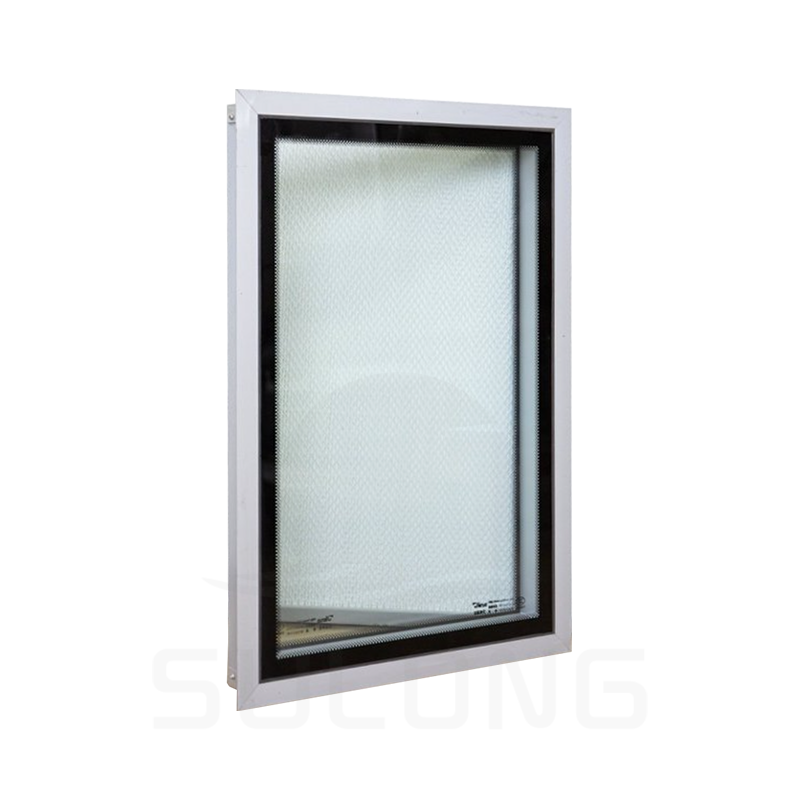
A cleanroom window is not simply a standard commercial or industrial window installed inside a controlled environment. It is a purpose-engineered component designed to meet the strict contamination control, structural, and hygiene requirements of cleanroom construction. The distinction matters because even a minor design shortfall — a protruding frame lip, a porous gasket material, a ledge that collects particles — can compromise the cleanliness classification of the entire room and introduce contamination risks into critical production or research processes.
Cleanroom vision panels and observation windows serve several important functions beyond simply allowing light transmission or visual access. They allow operators, supervisors, and quality personnel to observe activities inside a controlled area without physically entering and potentially compromising the environment. They maintain the physical integrity of the cleanroom partition wall, preserving the pressure differential between adjacent zones. And in modular cleanroom systems, they are structural components whose installation tolerances directly affect the airtightness and particle management performance of the entire enclosure.
The core technical demands placed on a cleanroom window include smooth, flush, non-particle-shedding surfaces on the room-facing side; airtight sealing to prevent uncontrolled air infiltration or exfiltration; frames and glazing materials that do not off-gas volatile compounds; resistance to the cleaning agents and disinfectants routinely used in cleanroom maintenance; and a profile geometry that eliminates horizontal ledges, crevices, and recesses where particles, microbes, or moisture could accumulate.
Cleanroom window designs vary considerably depending on the application, the ISO cleanliness class of the room, the wall system being used, and the operational requirements of the facility. Understanding the available types is the first step in specifying the right product.
Flush-glazed cleanroom windows are the standard choice for ISO Class 5 through ISO Class 8 environments. In a flush-glazed design, the interior face of the glazing sits level with or very slightly recessed from the surface of the surrounding wall panel, with no protruding frame elements or sills on the room-facing side. This flush profile eliminates horizontal surfaces that would collect airborne particles and makes the window easy to wipe down during routine cleaning cycles. The frame is typically integrated into a sandwich wall panel system, with the glazing retained by a slim bead or captured in a routed channel, and sealed with a cleanroom-compatible silicone sealant or EPDM compression gasket around the full perimeter.
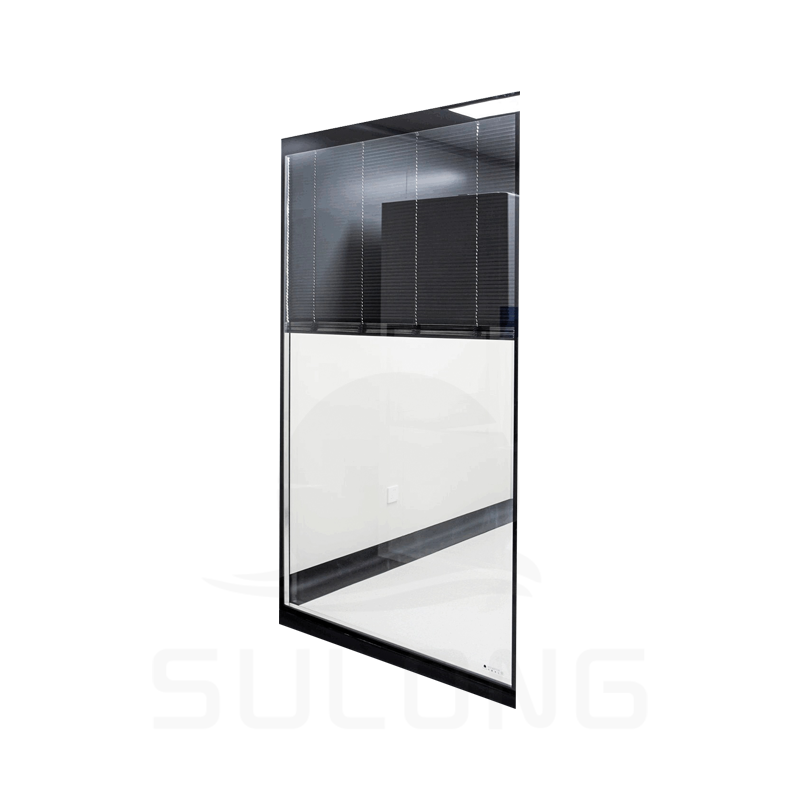
Double-glazed observation windows are used when thermal separation between a cold or temperature-controlled cleanroom interior and the external corridor is required, or when sound attenuation is a priority. The air gap or gas fill between the two panes provides insulation that prevents condensation on the room-facing glass surface — a critical requirement in cold rooms, freeze-drying facilities, and cleanrooms operating below ambient temperature. In pharmaceutical and food production cleanrooms, condensation on window surfaces is a direct contamination and microbial growth risk, making double glazing essential in those thermal conditions.
Pass-through windows — also called transfer windows or interlocking transfer hatches — are functional cleanroom windows that allow small items such as documents, samples, tools, or small components to be passed between adjacent cleanroom zones or between the cleanroom and a corridor without opening a full door. They incorporate an interlocking mechanism that prevents both sides from being open simultaneously, maintaining the pressure differential and contamination barrier between the two spaces. Pass-through windows are commonly used in pharmaceutical manufacturing, laboratory environments, and semiconductor fabs where material transfer needs to be controlled without triggering a full gowning procedure.
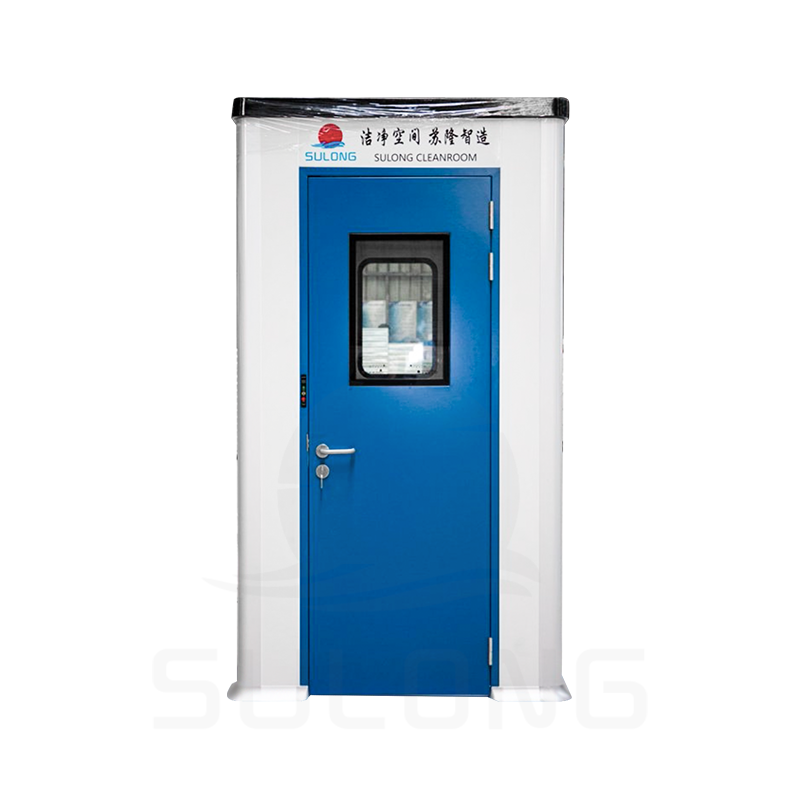
Cleanroom door vision panels serve the same contamination control function as wall-mounted cleanroom windows but must also withstand the mechanical stresses of frequent door operation — impacts, vibration, and repeated flexing of the frame. Door vision panels in ISO-classified environments are typically glazed with toughened safety glass or polycarbonate and set flush with the door face on the cleanroom side. In pharmaceutical and food-grade facilities, the door frame and vision panel assembly must meet the same hygienic design criteria as the wall panels: smooth surfaces, crevice-free joints, and compatibility with high-frequency disinfection protocols.
Specialist cleanroom designs — particularly in pharmaceutical fill-and-finish lines and semiconductor tool bays — sometimes incorporate curved or angled wall sections. Corner vision panels and curved cleanroom windows are manufactured to fit these non-standard geometries, typically using bent or curved toughened glass or formed polycarbonate sheet. They allow operators to maintain line-of-sight to process equipment located at angles that would otherwise require physical entry to inspect, reducing unnecessary cleanroom access events.
The choice of glazing material for cleanroom observation windows affects not only optical clarity and durability but also chemical resistance, particle shedding characteristics, and compatibility with cleanroom cleaning and sterilization processes. The three main options each have distinct advantages and limitations:
| Property | Toughened Glass | Polycarbonate (PC) | Acrylic (PMMA) |
| Optical Clarity | Excellent | Very good | Good |
| Impact Resistance | Moderate (shatters) | Excellent | Moderate (cracks) |
| Chemical Resistance | Excellent | Moderate | Low (solvent-sensitive) |
| Scratch Resistance | Excellent | Low (needs coating) | Moderate |
| Weight | Heavy | Light | Light |
| UV Resistance | Excellent | Good (with UV coating) | Good |
| Particle Shedding | None | Minimal if undamaged | Low if undamaged |
| Typical Use | Pharma, semiconductor, food | High-impact areas, doors | Low-budget, light-duty |
Toughened (tempered) glass is the most widely specified glazing for pharmaceutical and semiconductor cleanroom windows because of its zero particle-shedding surface, excellent resistance to all common disinfectants and cleaning agents, and dimensional stability over time. Polycarbonate is preferred where impact resistance is the priority — such as in door vision panels or areas where equipment may be moved close to the wall. Acrylic is generally not recommended for ISO Class 6 or cleaner environments or in pharmaceutical cleanrooms because of its poor resistance to IPA (isopropyl alcohol), hydrogen peroxide vapor (HPV), and other common disinfection agents, which can cause surface crazing that creates particle generation and cleaning difficulty.
The frame is often the most critical component of a cleanroom window from a contamination control perspective. While glazing material choices are relatively standardized, frame design varies widely between manufacturers and has a significant impact on cleanability, durability, and long-term performance in a controlled environment.
Anodized or powder-coated aluminum is the most common frame material for cleanroom vision panels. Aluminum is lightweight, dimensionally stable, easy to form into the slim, flush profiles required by cleanroom design standards, and compatible with most disinfectants when properly finished. For pharmaceutical cleanrooms, frames are typically finished with a smooth, hard-anodized surface or a pharmaceutical-grade powder coat in white or grey that provides a non-porous, easily wiped surface with no exposed raw metal. Joints between the frame and the surrounding wall panel must be sealed with a cleanroom-grade silicone sealant to eliminate gaps that could harbor contamination.
Grade 304 or 316L stainless steel frames are specified for cleanroom windows in environments with the most demanding hygiene requirements — typically GMP pharmaceutical manufacturing, sterile fill-and-finish lines, and food and beverage production cleanrooms. Stainless steel offers superior corrosion resistance, exceptional durability under repeated chemical disinfection including chlorine-based agents and peracetic acid solutions, and a non-porous electropolished surface that is among the easiest materials to clean and validate for microbial contamination. The downside is cost — stainless steel cleanroom windows carry a significant price premium over aluminum equivalents.
Unplasticized PVC (uPVC) and glass-reinforced polyester (GRP) frames are used in lower-classification cleanrooms, particularly in food processing, nutraceutical manufacturing, and general industrial environments. These materials offer good chemical resistance, are moisture-proof, and are less expensive than metal frames. However, their dimensional stability under temperature cycling is lower than metal, and over time surface degradation can create microcracks that are difficult to clean and may harbor contamination — making them unsuitable for ISO Class 5 or cleaner applications or environments requiring sterilization by HPV or steam.
The ISO classification of the cleanroom directly determines which window specifications are appropriate. Higher ISO cleanliness classes (lower numbers, stricter particle limits) demand more stringent window design, tighter installation tolerances, and more chemically robust materials. Here is a practical guide to how classification maps to window requirements:
| ISO Class | Typical Industry | Recommended Glazing | Frame Material | Key Design Requirement |
| ISO Class 4–5 | Semiconductor, advanced pharma | Toughened glass | Electropolished SS 316L | Fully flush, hermetic seal, no crevices |
| ISO Class 6–7 | Pharma manufacturing, medical devices | Toughened glass or PC | Anodized aluminum or SS 304 | Flush interior face, silicone sealed, cleanable |
| ISO Class 8 | Food, nutraceuticals, general lab | Glass or polycarbonate | Aluminum or uPVC | Smooth surfaces, no open joints |
| Unclassified controlled area | Electronics assembly, packaging | Polycarbonate or acrylic | Aluminum or GRP | Standard cleanroom profile |
When reviewing cleanroom window specifications from different manufacturers, these are the design details that separate a genuinely cleanroom-appropriate product from one that simply looks the part but will cause problems in practice:
Even the best-specified cleanroom window can fail to perform if it is installed incorrectly. Installation quality directly affects airtightness, flush alignment, seal integrity, and long-term cleanability. The following steps and pitfalls are worth understanding before any cleanroom construction or renovation project.
Cleanroom windows require the same systematic cleaning and disinfection treatment as the surrounding wall, floor, and ceiling surfaces. They are frequently high-touch areas — operators press close to observe processes, wipe condensation, or pass documents — which means they can accumulate bioburden faster than general wall surfaces in microbially sensitive environments.
For pharmaceutical and food-grade cleanrooms, window cleaning should be included in the facility's written cleaning and disinfection SOP with specified frequency, approved cleaning agents, method, and documentation requirements. Toughened glass windows can tolerate the full range of disinfectants typically used in pharmaceutical cleanrooms — including IPA, quaternary ammonium compounds, sporicidal agents such as chlorine dioxide, and hydrogen peroxide vapor (HPV) cycles. Polycarbonate windows require more careful chemical selection; IPA concentrations above 70% and chlorinated compounds can cause surface crazing over repeated exposures, so verify chemical compatibility before finalizing your disinfection protocol.
Perimeter sealant condition should be inspected regularly — typically during quarterly or annual facilities maintenance reviews. Silicone sealant that has discolored, cracked, peeled from the substrate, or developed visible mold growth should be fully removed and replaced rather than overcoated. Overlaying new sealant over degraded existing sealant creates a void interface that provides ideal conditions for persistent mold contamination and is a common finding in pharmaceutical cleanroom audit deficiencies.
Getting the window specification right at the design stage prevents costly changes during construction and commissioning. Use this checklist when preparing specifications for cleanroom partition windows:

Follow Us:
 Call us :
  Mail us to:


 English
 中文简体
中文简体