
 Call us :
  Mail us to:


 English
 中文简体
中文简体

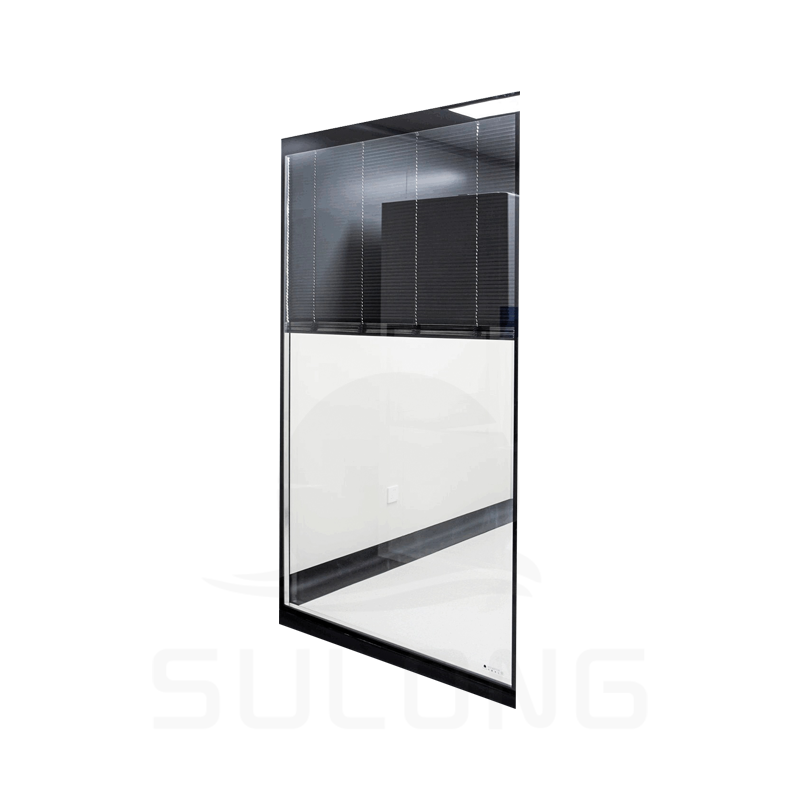
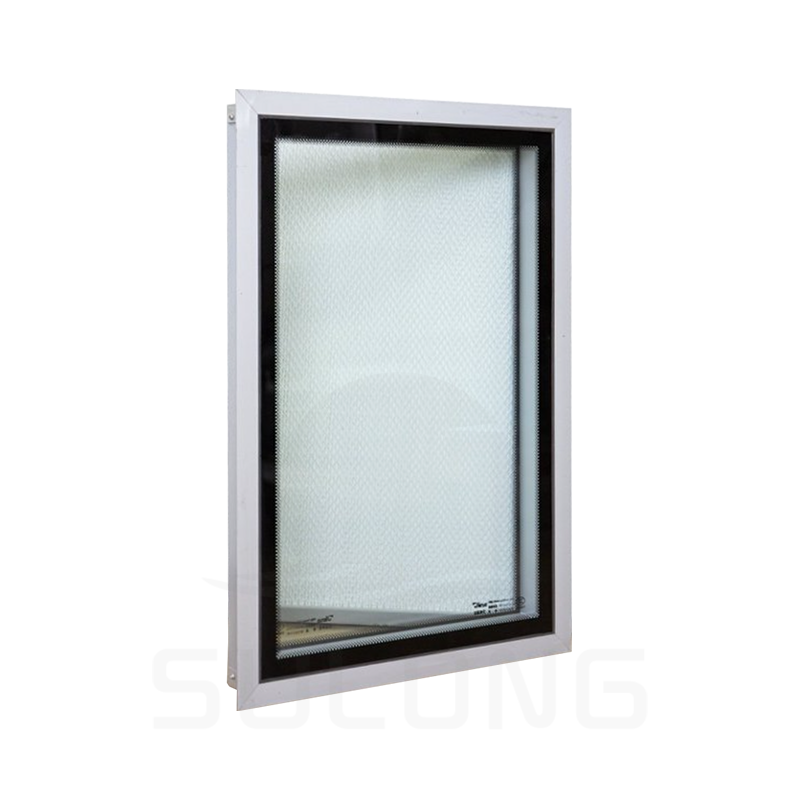
Frame Material Performance Under Cleanroom Cleaning Protocols
The three frame material categories available for cleanroom windows — aluminum alloy, stainless steel, and one-piece formed steel — each respond differently to the aggressive disinfection cycles that cleanroom environments demand. Choosing a frame material based solely on upfront cost or appearance without accounting for chemical compatibility and surface degradation over time is one of the most common specification errors in cleanroom fit-out projects.
Aluminum alloy frame windows are the most widely used option across ISO Class 6–8 environments in electronics and general pharmaceutical manufacturing. Anodized aluminum resists corrosion well under standard isopropyl alcohol and quaternary ammonium cleaning agents, and the anodized layer — typically 15–25 microns thick for architectural applications — provides a hard, non-porous surface that does not shed particles under wiping. However, aluminum alloy frames are vulnerable to prolonged exposure to strongly alkaline cleaning agents (pH above 11) and to chlorine-based disinfectants at high concentrations, both of which can strip the anodized layer and expose the base metal. Facilities that routinely use hypochlorite solutions should either specify a protective powder coating over the anodized layer or switch to stainless steel frame windows at those locations.
Stainless steel frame windows, typically fabricated from grade 304 or 316L, are the correct choice wherever aggressive disinfectants are standard protocol — including hydrogen peroxide vapor (HPV) decontamination cycles, which are increasingly common in isolator suites and aseptic filling rooms. Grade 316L offers superior chloride resistance compared to 304, making it the preferred specification in coastal facilities or anywhere sodium chloride-based cleaning agents are used. The surface finish matters as much as the alloy grade: a No. 4 brushed finish (Ra ≤ 0.8 µm) is the practical minimum for cleanroom use, while an electropolished finish (Ra ≤ 0.4 µm) is specified in the most demanding aseptic applications because it eliminates micro-crevices where biofilm could establish.
One-piece formed steel frame windows offer a structural advantage that neither aluminum nor stainless steel profiles can easily replicate: because the frame is formed from a single piece of sheet steel rather than assembled from extruded profiles, there are no corner joints, mitre welds, or mechanical connections in the frame perimeter. In a cleanroom context, this matters because every joint in a window frame is a potential particle trap and a potential leak path. The seamless formed construction is particularly well suited to pressure-differential environments where the window must resist repeated flexing without opening micro-gaps at corner connections over time.
Rounded Corner vs. Square Corner Windows: Cleanability and Structural Implications
The choice between rounded corner and square corner cleanroom windows is frequently treated as an aesthetic decision, but it has measurable consequences for contamination control and long-term structural integrity that should drive the specification in high-classification environments.
Cleanability at the Frame Corner
Square internal corners in window frames — and in wall panels more generally — are the locations most likely to accumulate particulate and microbial contamination. A 90-degree internal corner cannot be thoroughly wiped with a flat cleaning cloth; the cloth bridges across the corner rather than making contact with the full surface area, leaving a zone that is nominally cleaned but practically difficult to decontaminate. Rounded corners eliminate this dead zone entirely. In pharmaceutical Grade A/B and ISO Class 4–5 environments, regulatory guidance documents (including EU GMP Annex 1 for aseptic manufacture) explicitly reference coved and rounded junctions as a design requirement precisely because of this cleanability advantage. Specifying rounded corner cleanroom windows in these environments is therefore both an operational best practice and a compliance consideration.
Stress Concentration at Frame Corners
From a structural mechanics perspective, sharp square corners in a framed assembly are stress concentration points. When a window panel is subjected to repeated differential pressure cycling — which occurs every time the cleanroom HVAC system ramps up or a door is opened — the stress at a 90-degree corner can be two to three times higher than at the same location with a generous radius. Over thousands of pressure cycles, this can initiate micro-cracking in the sealant at the glass-to-frame interface, eventually compromising the airtightness of the double-glazed unit. Rounded corners distribute this cyclic stress over a larger arc, reducing peak stress and extending the fatigue life of the sealant joint. This structural benefit is in addition to the cleanability advantage and reinforces the case for rounded corner specification in dynamic-pressure cleanroom environments.
Double Glazing Performance: What the Specifications Actually Mean in Practice
All cleanroom windows in current production use double glazing as the baseline construction, and for good reason: a single-pane window creates a thermal bridge between the cleanroom interior and the adjacent space that makes precise humidity control significantly more difficult. However, not all double-glazed units deliver the same thermal and sealing performance, and understanding the variables that differentiate them prevents the common experience of specifying "double glazing" and receiving a unit that still produces edge condensation or fails its air leakage test within two years of installation.
| IGU Variable | Standard Specification | Enhanced Specification | Practical Impact |
|---|---|---|---|
| Spacer Bar Material | Aluminum | Stainless steel or thermoplastic (warm-edge) | Warm-edge spacers reduce edge-zone U-value by up to 30%, lowering condensation risk at glass perimeter |
| Cavity Fill | Dry air | Argon gas fill | Argon reduces center-pane U-value by approximately 0.3–0.5 W/m²K; meaningful in cold-climate or low-dew-point cleanrooms |
| Primary Seal | Polyisobutylene (PIB) tape | PIB with secondary silicone or polysulfide seal | Dual-seal construction extends IGU service life from ~10 to 20+ years before inter-pane moisture ingress |
| Glass Thickness | 4 mm each pane | 6 mm inner pane, 4 mm outer | Thicker inner pane resists deflection under differential pressure, protecting the IGU seal from cyclic stress |
| Cavity Width | 9–12 mm | 14–16 mm (argon-filled) | Optimal cavity width for argon is 14–16 mm; narrower cavities with argon provide diminishing thermal return |
The sealing performance of the complete window assembly — IGU plus frame plus wall interface — determines whether the cleanroom window genuinely contributes to the controlled environment or simply provides a visual opening with marginal contamination benefit. Factory-produced IGUs with hermetically sealed cavities and dual-seal construction are significantly more reliable than site-assembled glazing, and specifying factory production with documented quality records is a straightforward way to reduce the risk of premature inter-pane failure in critical cleanroom applications.
Installation Details That Determine Long-Term Sealing Integrity
A well-specified cleanroom window can still underperform if the installation details at the wall interface are executed incorrectly. The frame-to-panel joint is the location most likely to develop air leakage over the operational life of the cleanroom, and the failure mode is almost always preventable with correct sealant selection and application technique at the time of installation.
- Sealant selection: Neutral-cure silicone is the correct choice for sealing cleanroom windows into panels or wall openings. Acid-cure (acetoxy) silicone releases acetic acid during curing, which can corrode metal frame components and leave a residue that attracts particulate contamination. Neutral-cure silicone achieves full cure without acidic byproducts and remains flexible across the full service temperature range of a typical cleanroom environment.
- Joint preparation: Both mating surfaces — the window frame and the panel or wall reveal — must be clean, dry, and primed before sealant application. Even a thin film of dust or release agent on the panel surface is sufficient to prevent adhesive bonding of the silicone, creating a sealant bead that appears continuous but peels away from the substrate within months. In practice, wiping both surfaces with isopropyl alcohol immediately before applying primer is the most reliable preparation sequence.
- Bead profile and tooling: The sealant bead should be tooled to produce a slightly concave profile, which maximizes the contact area between the sealant and each mating surface and reduces the surface area exposed to cleaning agents. A convex or flat bead profile is structurally weaker and more susceptible to progressive delamination under the mechanical stress of repeated cleaning wipe cycles.
- Post-installation inspection: The completed interior sealant joint should be inspected under raking light (a light source held at a low angle to the surface) to reveal voids, tool drag marks, or unbonded sections that would not be visible under normal overhead lighting. Any defect identified at this stage is straightforward to repair before the cleanroom is commissioned; the same defect discovered during a leak test or regulatory inspection requires remediation work in an operational facility, which is significantly more disruptive.
The combination of correct frame material selection, appropriate corner geometry, properly specified double-glazed units, and disciplined installation practice is what allows cleanroom windows to fulfill their fundamental function — providing unobstructed visual monitoring of the controlled environment without introducing particle infiltration pathways or thermal bridging that undermines the precision environmental control the cleanroom exists to maintain.


