
 Call us :
  Mail us to:


 English
 中文简体
中文简体

Product Knowledge
Why Aluminum Honeycomb Cores Achieve Superior Flatness Compared to Other Panel Constructions
Surface flatness in sandwich panels is not simply a cosmetic attribute — in cleanroom construction, visible waviness in wall and ceiling panels indicates internal stress distribution problems that also affect joint geometry, door frame alignment, and the integrity of airtight seals. The flatness of a sandwich panel is primarily determined by how uniformly the core resists out-of-plane deformation when the face sheets are bonded under temperature and pressure. Foam cores — polyurethane, EPS, or PIR — have heterogeneous cell structures that create local stiffness variations across the panel area, meaning that differential thermal expansion or uneven adhesive curing produces localized convex or concave distortions that remain after pressure is released. These distortions manifest as oil-canning — a periodic waviness visible in raking light — that no amount of post-installation correction can fully resolve.
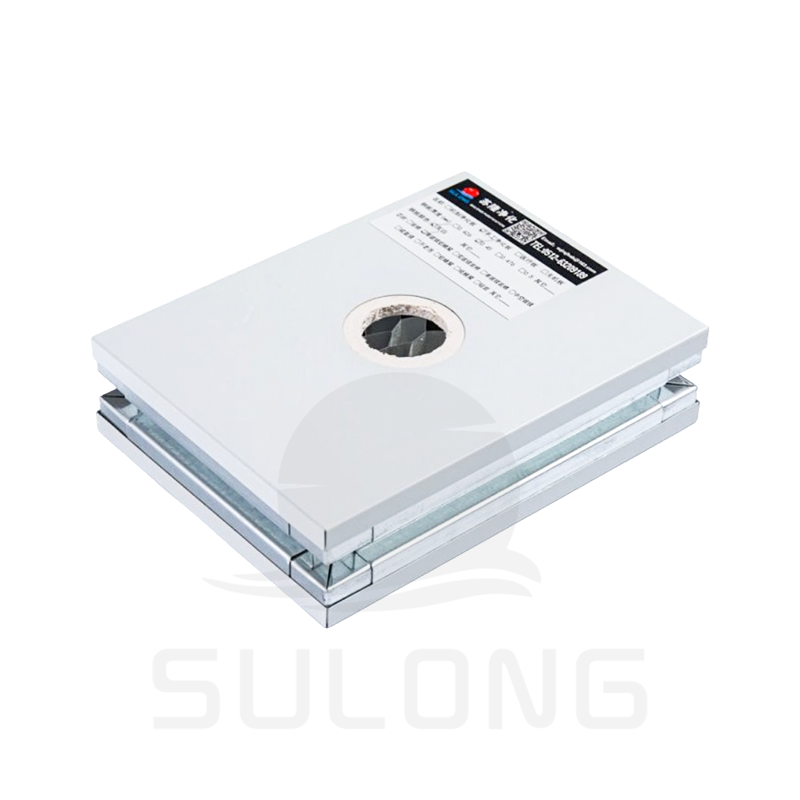
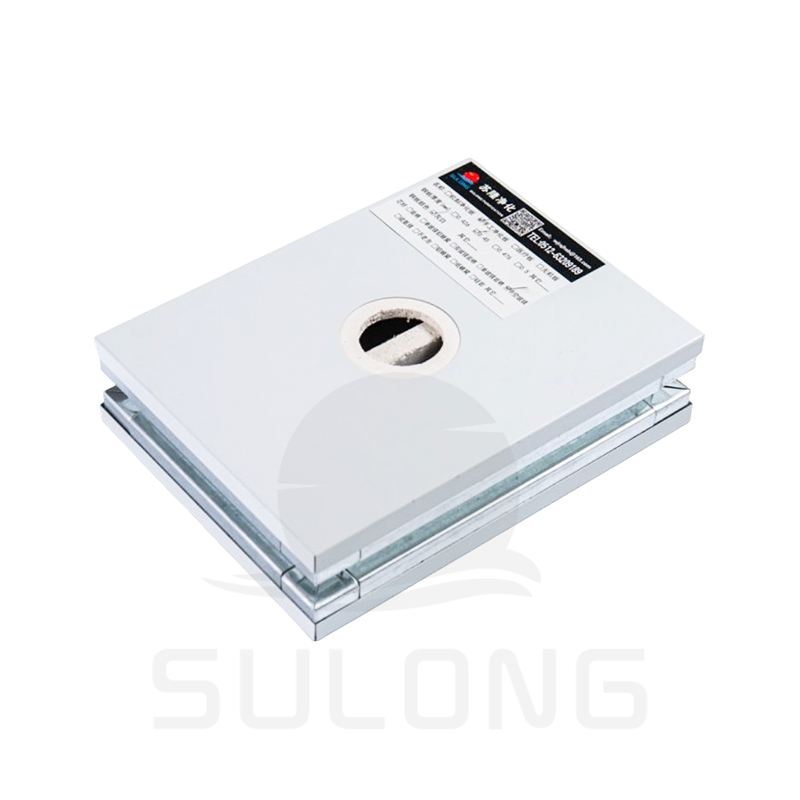
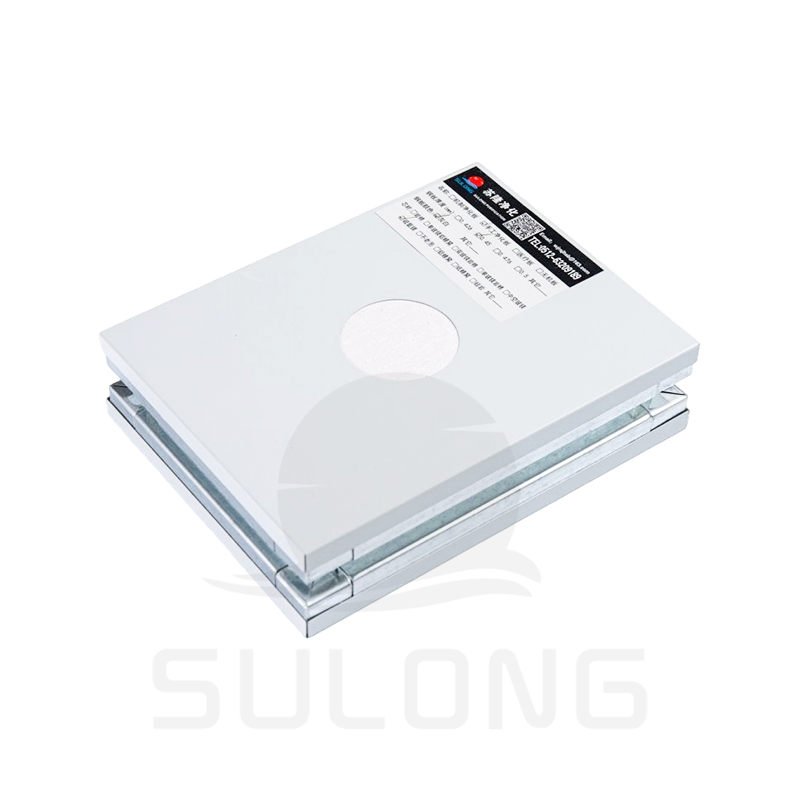
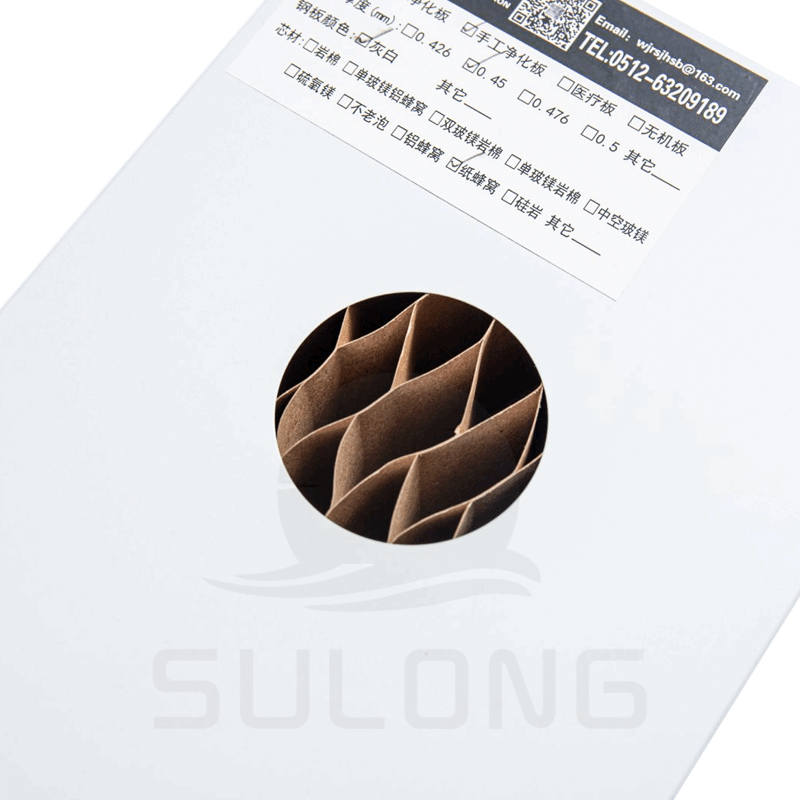
Aluminum honeycomb cores provide a fundamentally more uniform support field because the hexagonal cell geometry distributes compressive support across the full panel area at a regular, repeating pitch — typically every 6–19 mm depending on cell size. When the color steel face sheets are pressed against this uniform support lattice during the heating and curing cycle, the adhesive layer cures with consistent bond-line thickness across the entire panel, and no localized unsupported zones exist where the face sheet can deform inward or outward. The result is a panel surface planarity that consistently meets or exceeds the ±1 mm over 2 m straightedge tolerance required for ISO Class 5–7 cleanroom specifications — a standard that foam-core panels frequently struggle to achieve reliably across large production batches.
The Role of High-Strength Structural Adhesive in Determining Panel Service Life
In an aluminum honeycomb steel panel, the adhesive bond between the honeycomb core and the color steel face sheets is the most mechanically critical interface in the entire assembly. The panel's bending stiffness, impact resistance, and long-term flatness retention all depend on this bond maintaining full shear transfer between the face sheets and core throughout the service life of the installation. Adhesive failure — even partial delamination affecting a fraction of the bond area — allows the face sheet to act as an independent unsupported membrane rather than a composite element, dramatically reducing panel rigidity and creating surface deflection that opens joint gaps and disrupts cleanroom pressure boundaries.
The adhesives used in high-performance honeycomb panel manufacture are two-component epoxy or polyurethane structural adhesives, applied as a continuous film or controlled bead pattern and cured under heat and pressure to achieve a void-free, high-modulus bond line. The curing temperature and pressure profile — critical process parameters that distinguish factory manufacture from field assembly — directly determine bond line density and the elimination of micro-voids that would act as stress concentration points under cyclic loading. Cured structural epoxy adhesives typically achieve lap shear strengths of 15–25 MPa on steel substrates and maintain this strength across temperatures from -40°C to +120°C, far exceeding the service conditions of any interior panel installation. Our aluminum honeycomb steel panels are manufactured through a controlled heating, pressurization, and curing process that consistently achieves full bond area contact and eliminates the void-related failure modes associated with ambient-cure adhesive application.
Peel strength — the resistance of the bond to forces applied perpendicular to the panel face at the edge — is a separate and equally important parameter. Edge impacts, wall-mounted fixture pull-out, and panel removal for maintenance access all apply peel-type loads to the face-sheet-to-core interface near panel perimeters. Specifying adhesive with documented T-peel strength (typically measured per ASTM D1876) in addition to lap shear strength ensures that the bond performs under the diverse loading modes encountered in real building use, not just the single-mode testing that some product data sheets report.
Special Aluminum Alloy Keel Systems: Structural Function, Alloy Selection, and Thermal Considerations
The aluminum alloy keel framework supporting handmade honeycomb steel panels performs a set of functions distinct from those of the honeycomb core: it provides the primary load path from the panel assembly to the building structure, establishes the joint geometry between adjacent panels, and determines the thermal bridge magnitude at panel perimeters. Keel design is therefore a structural, geometric, and thermodynamic problem simultaneously, and the alloy and profile selection made at the design stage have consequences that persist through the full building life.
Alloy Selection and Temper
Cleanroom keel profiles are predominantly produced from 6000-series aluminum alloys — primarily 6061 and 6063 — in T5 or T6 temper. The 6063 alloy offers excellent extrudability, allowing complex profile cross-sections with tight dimensional tolerances, and achieves yield strengths of 170–215 MPa in T5/T6 temper, sufficient for the bending and shear loads imposed by panel dead weight and lateral pressure differentials. The 6061 alloy provides higher strength (yield strength up to 276 MPa in T6 temper) at a modest reduction in extrudability, and is used for keels carrying elevated loads — long-span ceiling runners, door frame surrounds, or panels in high-traffic corridors subject to impact loading.
Joint Profile Engineering
The joint profile geometry machined or extruded into the keel determines how adjacent panels connect, how cleanable the joint surface is, and how effectively the joint maintains air pressure separation between zones. Tongue-and-groove profiles create a labyrinth seal path that reduces air leakage at panel joints even before sealant is applied, and provide mechanical interlock that transfers in-plane shear between adjacent panels under lateral load. The depth of the groove, the clearance between tongue and groove, and the position of sealant application points within the joint geometry are all engineering decisions with measurable consequences for cleanroom performance — not arbitrary stylistic choices.
Thermal Bridge Management
Aluminum's thermal conductivity of approximately 160 W/m·K means that keel members running continuously from the interior face to the exterior face of a climate-controlled envelope create significant thermal short circuits around the insulating panel core. In pharmaceutical cleanrooms operating at controlled temperatures of 18–22°C adjacent to unconditioned spaces at ambient, or in cold-storage applications with larger temperature differentials, aluminum keel bridges can cause localized cold spots at panel perimeters that fall below the dew point of interior air and generate condensation. Inserting polyamide thermal break strips — typically 34 mm wide, with thermal conductivity around 0.3 W/m·K — into the keel cross-section at the insulation plane reduces the linear thermal transmittance of the keel by 60–75% and eliminates condensation risk in most interior-to-conditioned-space differential scenarios.
Fire Resistance in Steel-Faced Honeycomb Panels: Assembly Behavior and Classification Requirements
Steel-faced aluminum honeycomb panels offer a fire performance profile that differs from both organic-core panels (polyurethane, EPS) and heavy inorganic-core systems (rockwool, concrete). Understanding how the assembly actually behaves under fire exposure — rather than relying solely on classification labels — allows designers to deploy these panels appropriately and to specify the supplementary fire protection measures that may be required for specific regulatory contexts.
The color steel face sheets are non-combustible and contribute no heat of combustion, no smoke production, and no flaming droplets to a fire event — satisfying the fire reaction requirements of Class A (GB 8624) or Class A1/A2 (EN 13501-1) for the face material itself. The aluminum honeycomb core is similarly non-combustible: aluminum neither burns nor releases organic combustion products. This means the complete panel assembly can be classified as non-combustible from a fire reaction perspective, qualifying it for use in buildings where combustible insulation is prohibited by code — high-rise structures, underground facilities, and healthcare or pharmaceutical buildings with occupancy-driven insulation restrictions.
Fire resistance duration — the EI30, EI60, or EI90 rating measuring how long the assembly maintains integrity and insulation under a standard fire curve — is a separate assessment from fire reaction, and aluminum honeycomb panels require careful evaluation here. Aluminum begins losing structural yield strength above approximately 200°C and melts at 660°C. Under sustained fire exposure following the ISO 834 time-temperature curve, the fire-side steel face and the aluminum honeycomb core behind it will both be compromised within the first 30–45 minutes without supplementary fire protection. For partition applications requiring an EI60 or greater fire resistance rating, handmade aluminum honeycomb steel panels must be used as part of an assembly that includes additional fire-rated elements — intumescent seals at panel joints, fire-resistant board lining on the fire-exposed face, or a fire-rated ceiling plenum above — with the complete assembly tested per GB 9978 or EN 1364 to verify the duration claim.
Cleanroom Classification and Why Panel Specification Affects ISO Rating Maintenance Over Time
A cleanroom's ISO classification is not a fixed property of its construction — it is a dynamic condition that must be maintained continuously through the interaction of the HVAC system, personnel procedures, equipment, and the building envelope. Panel materials contribute to ISO rating maintenance in ways that extend well beyond initial certification, affecting particle counts, pressure differential integrity, and surface bioburden over the operational life of the facility. Specifying panel systems that actively support ongoing ISO compliance reduces both the frequency of re-certification corrective actions and the operational cost of maintaining classification.
Particle generation from wall surfaces is a sustained contribution to airborne particle counts that is distinct from process-generated contamination. Steel face sheets with factory-applied coatings that are hard, smooth, and resistant to cleaning abrasion shed fewer particles per cleaning cycle than softer or more porous surfaces. Surface Ra values below 0.8 µm on clean steel faces minimize particle adhesion and maximize removal efficiency during wiping procedures. As the promoted cleanroom panel material, our aluminum honeycomb steel panels deliver these surface properties consistently across panel batches, supporting the ISO particle count targets from day one of commissioning through the full facility service life.
Pressure differential maintenance between cleanroom zones — typically +12.5 Pa to +50 Pa positive pressure relative to adjacent lower-grade areas — depends on the airtightness of the panel envelope. Panel joint leakage, if not controlled, requires the HVAC system to supply additional makeup air to maintain the differential, increasing energy consumption and filter loading rate. More critically, intermittent pressure differential failures during HVAC startup, door operation, or filter changeout events create bidirectional air pulsing through joint gaps that carries particles from lower-grade areas into the controlled zone. Aluminum honeycomb panels with precision-machined keel joints and continuous perimeter sealant application provide the air barrier continuity needed to maintain differential pressure under dynamic operating conditions.
Panel Weight and Dead Load Management in Cleanroom Structural Design
The lightweight characteristic of aluminum honeycomb steel panels — typically 8–18 kg/m² depending on face sheet thickness and core depth — has structural implications that extend beyond ease of installation handling. In cleanroom projects constructed within existing buildings or on upper floors of multi-story facilities, the structural capacity of the host floor slab and the load-bearing capacity of the ceiling grid system are frequently binding constraints on partition and ceiling panel specification. Exceeding these limits triggers formal structural reassessment and potentially costly reinforcement work that disrupts project schedules and budgets.
| Panel Type | Typical Weight (kg/m²) | Linear Load on Track at 3m Height (kN/m) | Structural Review Typically Needed? |
| Aluminum Honeycomb Steel | 8 – 18 | 0.24 – 0.53 | Rarely — within standard allowance |
| Rockwool Sandwich Panel | 22 – 35 | 0.66 – 1.05 | Sometimes — near code limit |
| MgO Double-Core Panel | 28 – 45 | 0.84 – 1.35 | Often — exceeds standard limit |
| Solid Fiber Cement Board | 35 – 55 | 1.05 – 1.65 | Usually — requires reinforcement assessment |
The weight advantage also matters for ceiling panel spans. A ceiling panel spanning between grid members deflects under its own self-weight; the mid-span deflection is proportional to the panel's mass per unit area and inversely proportional to its bending stiffness. The aluminum honeycomb construction achieves an exceptionally high stiffness-to-weight ratio — a 50 mm deep honeycomb panel is substantially stiffer per kilogram than a solid panel of equivalent mass — meaning that larger spans can be covered without visible sagging even over the extended service life of the cleanroom. This is particularly relevant in pharmaceutical and semiconductor facilities where ceiling panels may remain in service for fifteen to twenty years between major refurbishments, and where sagging that develops gradually over that period is as unacceptable as sagging at initial commissioning.
Installation Precision: Setting Out, Tolerance Stacking, and Joint Quality Control
The "easy to install" characteristic of aluminum honeycomb steel panels derives from two specific design features — lightweight panels that can be positioned by a single installer and precision-machined keel joints that self-align adjacent panels — but realizing fast, high-quality installation requires methodical preparation work that is distinct from the panel installation itself. Facilities that skip or compress the setting-out and substrate preparation phase consistently experience tolerance accumulation problems that produce slow, costly corrections during the installation phase rather than efficient production-rate panel fixing.
Setting out should begin from a single reference datum — a laser-established vertical plane for wall panels, or a horizontal level plane for ceiling panels — surveyed against the structural substrate to identify any deviations that exceed the adjustment range of the panel fixing system. Floor track positions, ceiling hanger locations, and column-to-column reference lines should all be established and verified before any mechanical fixing begins. In cleanroom projects where partition walls must align with HVAC duct penetrations, electrical conduit entries, and door frame rough openings, coordinating the panel setting-out drawing with the MEP coordination drawing is a prerequisite for avoiding field modifications that slow installation and introduce non-standard edge conditions.
- Run a dimensional check after every sixth to eighth panel in a wall run to verify that accumulated joint width variation has not shifted the panel face out of plane; correcting a 3 mm accumulated error at panel 8 requires only minor joint width adjustment, whereas the same error discovered at panel 20 may require partial disassembly.
- Apply perimeter sealant to panel frame joints as a continuous bead with no gaps before the adjacent panel is engaged, rather than attempting to inject sealant into a closed joint after panels are fixed — retroactive sealant injection into closed keel joints rarely achieves full bead continuity and leaves air leakage paths that fail pressure differential testing.
- Verify keel track levelness at 600 mm intervals with a digital level before fixing panels; a track deviation of 2 mm over 3 m will produce a visible step in the panel face joint that cannot be corrected by adjusting individual panels after they are locked into the keel system.
- For ceiling panels, confirm hanger rod plumb within ±1° before final tightening; out-of-plumb hangers impose lateral load on the grid that progressively rotates main runners and misaligns panel seating surfaces over the first months of service as loads redistribute.


