 Home / News / Industry News / Practical Handmade Sandwich Panel Guide for Cleanroom Walls and Ceilings

2026-10-20
Handmade sandwich panels are a common choice for cleanroom walls and ceilings that need a precise fit, dependable sealing, and a surface that stands up to daily cleaning. Unlike machinemade panels produced on a continuous line, handmade panels are assembled in batches, which makes it easier to handle non-standard dimensions and service openings. At Suzhou Sulong Purification Technology, we have worked with project teams across electronics, pharmaceuticals, food, and medical facilities, and we have seen how the right panel construction can simplify installation and support long-term performance.
Content
A handmade sandwich panel is a composite element made from two facing sheets bonded to a core. In cleanrooms, the facings are usually pre-painted galvanized steel, stainless steel, or another cleanable surface. The core provides fire resistance, insulation, or rigidity depending on the material. The “handmade” label refers to the production method: the panel is built in a workshop using a mould or press, with adhesive and core placed under controlled conditions. This allows custom lengths, thicknesses, and edge details that are harder to achieve on a continuous line.
For cleanroom walls and ceilings, panel edges are designed to interlock or accept sealant, creating a continuous surface that resists particle accumulation. Concealed fixing details are easier to incorporate, which helps keep the clean side free of exposed fasteners.
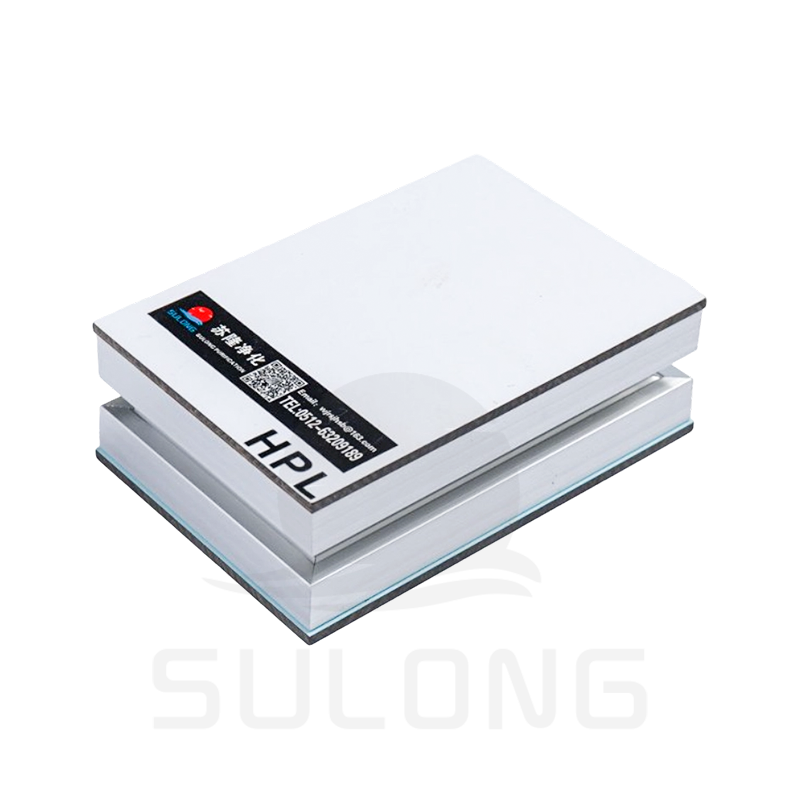 Handmade Sandwich Panels for Cleanroom Walls and CeilingsCustom-built cleanroom wall and ceiling panels with interlocking edges, concealed fixings, and project-specific sizes for non-modular pharmaceutical and food facilities.View Product →
Demand has stayed strong across Asia because many cleanroom projects are not modular. A pharmaceutical suite may need a wall panel that runs floor to ceiling with a single joint, or a food production area may require a specific thickness around drainage and washdown zones. Handmade production allows these one-off sizes without forcing the design into a standard panel width. It also helps when a project needs a small batch of replacement panels after a layout change.
Sealing is another reason. Cleanroom performance depends on controlling air leakage and particle migration at every joint. Handmade panels can be supplied with edge profiles and gasket details matched to the fixing system, reducing the risk of gaps around corners, columns, and service openings. Our article on why handmade cleanroom panels are in high demand across Asia covers the market side in more detail.
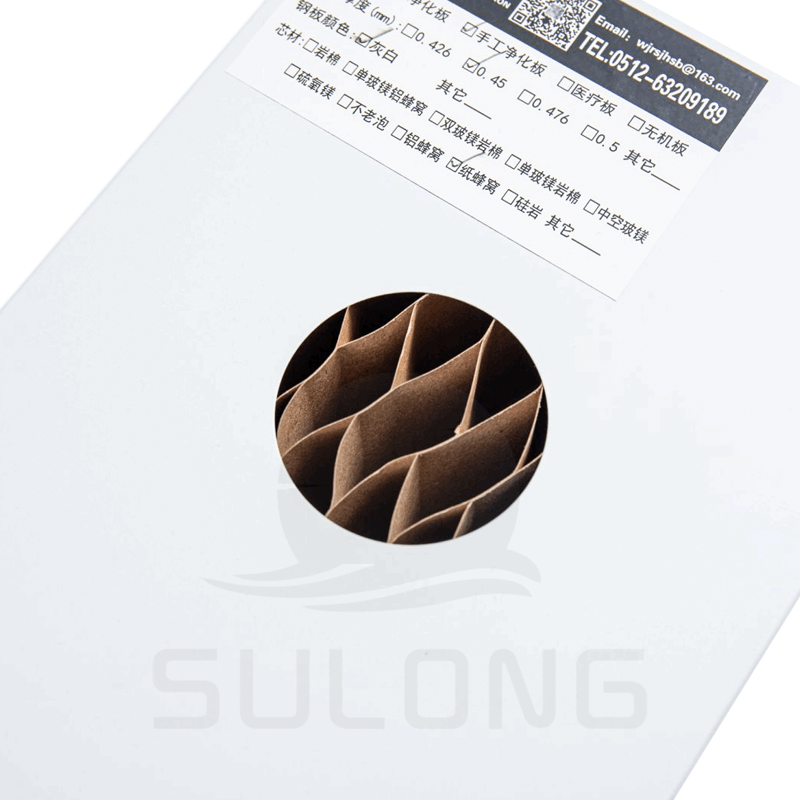
The core material drives most of the performance decisions. Rock wool offers fire resistance and sound absorption, while polyurethane (PU) provides thermal insulation at a lower weight. Glass magnesium boards are chosen for density and moisture resistance, and aluminium honeycomb delivers stiffness with relatively low mass. Paper honeycomb is a lighter option for non-load-bearing partitions, and high-pressure laminate (HPL) facings suit areas where chemical resistance and a decorative finish matter.
The table below gives a simple comparison. It is not a substitute for project-specific engineering, but it helps narrow the conversation when reviewing cleanroom wall and ceiling specifications.
| Core material | Key strength | Typical cleanroom use |
|---|---|---|
| Rock wool | Fire resistance and acoustic damping | Wall panels in GMP and industrial cleanrooms |
| PU (injected) | Thermal insulation and low weight | Temperature-controlled production areas |
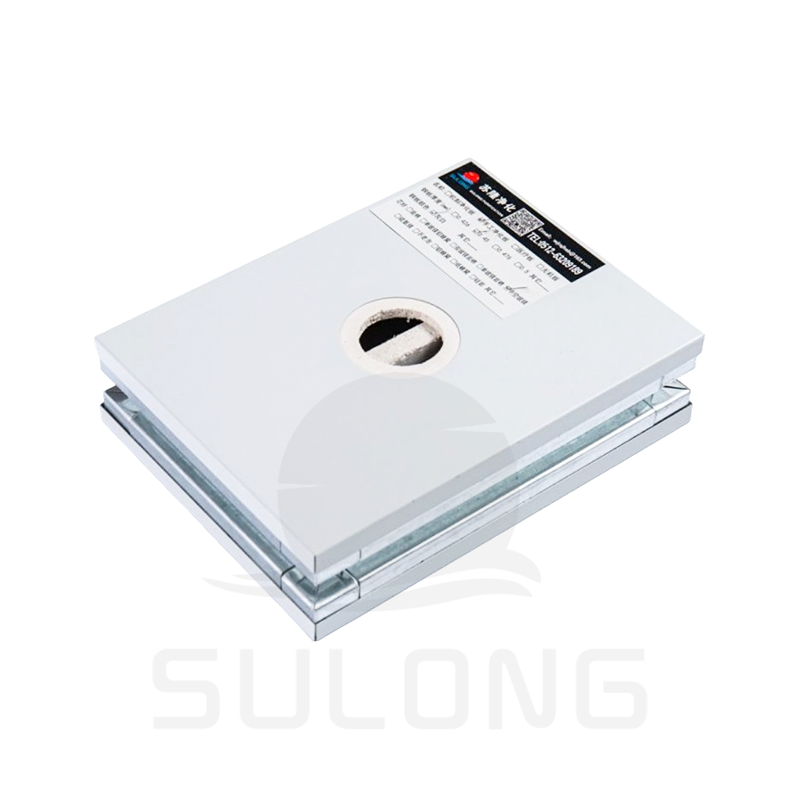
| Glass magnesium (double) | Density and moisture resistance | Wet or washdown-adjacent zones |
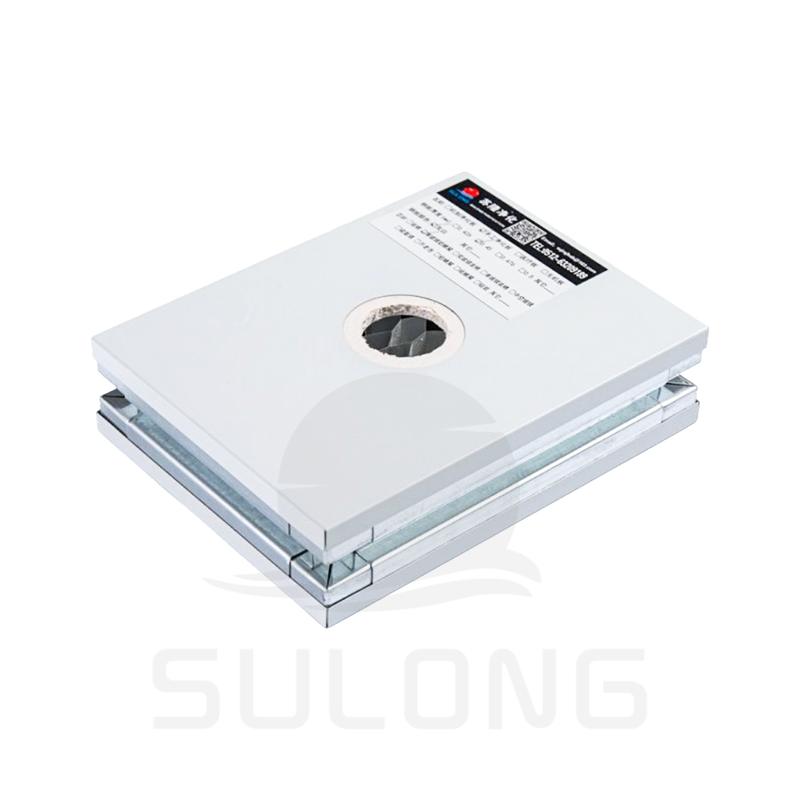
| Aluminium honeycomb | High stiffness-to-weight ratio | Large ceiling spans and partitions |
| Paper honeycomb | Lightweight and economical | Non-load-bearing internal partitions |
| HPL facing | Chemical and abrasion resistance | Laboratory and healthcare walls |
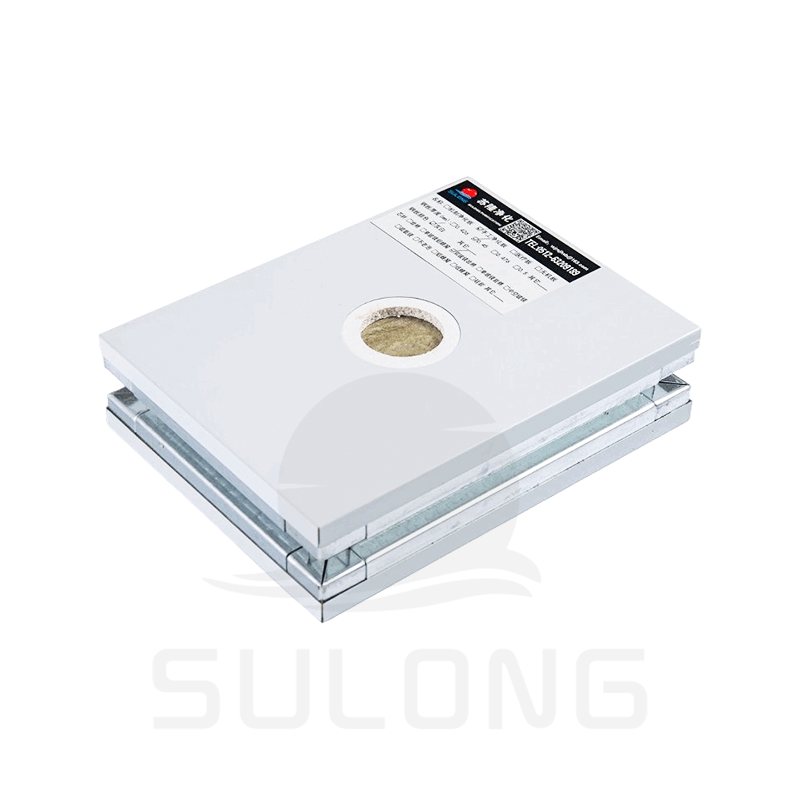
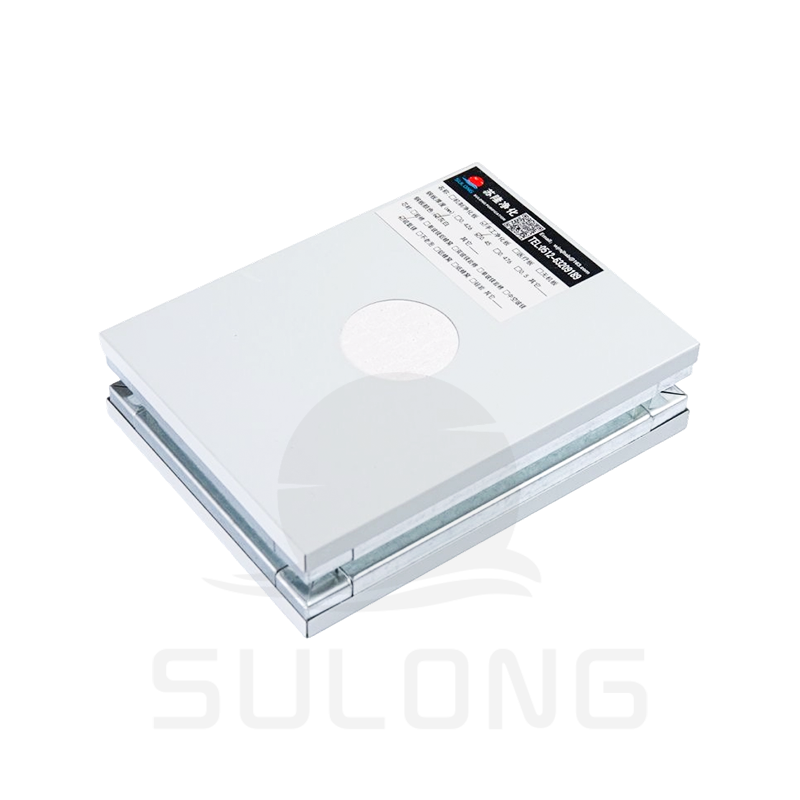
Where fire performance is the first priority, a rock wool core is often the starting point. We supply a rock wool handmade panel that can be specified with different facings.
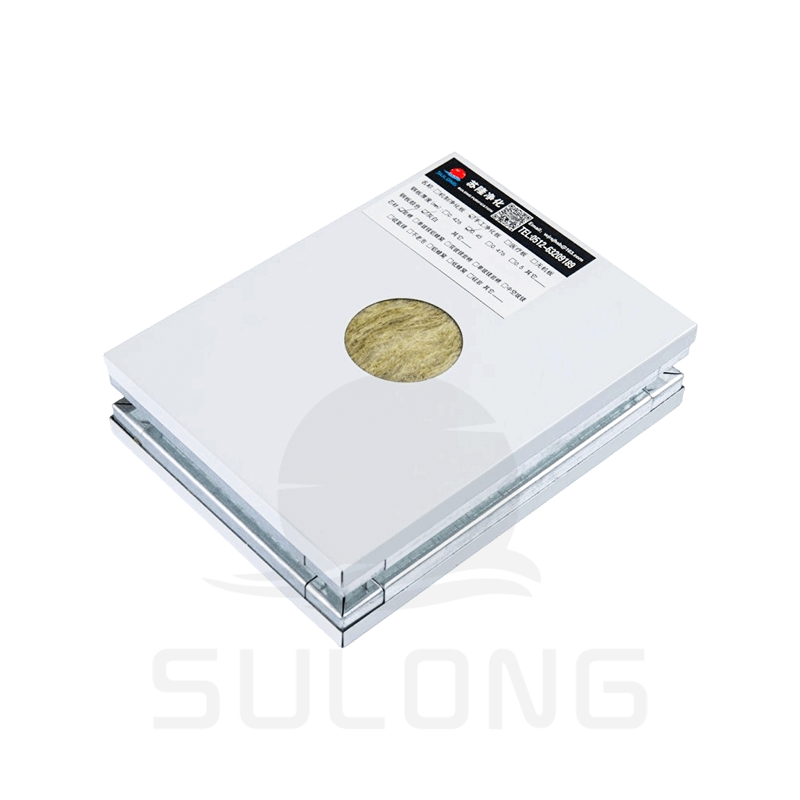 Custom Handmade Rockwool Cleanroom Sandwich PanelFire-resistant rockwool-core wall and ceiling panel with selectable steel or stainless facings for pharmaceutical, industrial, food, and controlled-environment cleanrooms.View Product →
Where insulation and weight are more important, an injected PU panel may be a better fit.
 Handmade Injected Polyurethane Cleanroom Sandwich PanelCustom PU-core wall and ceiling panel with galvanized color-coated faces, high airtightness, and thermal insulation for temperature-controlled cleanroom environments.View Product →
Selecting a handmade sandwich panel is not only about the core. The facing, coating, edge detail, and fixing method all affect how the panel performs in a classified environment. Use this checklist as a starting point:
A mock-up before full production is worthwhile. A small assembly with the chosen corner, door, and window details can reveal whether the sealing strategy works in practice, especially on projects with curved walls or many penetrations.
Handmade panels are only as good as their installation. The supporting frame must be set out accurately, because the panels are cut to size and leave less room for adjustment on site. Check the frame for plumb, level, and square before lifting any panel into place. The first panel often sets the line for the whole room.
Sealing is the next critical point. Joints between panels, and junctions with doors, windows, and ceilings, need a continuous seal that remains flexible. A neutral-cure silicone or a specified gasket system is common, but the choice should match the cleaning regime and panel coating. Avoid mixing sealant types without confirming compatibility. Where panels meet the floor, a coving detail helps prevent dirt traps and makes cleaning easier.
During installation, protect panel faces from scratches and adhesive residue. Once the room is complete, remove construction dust before commissioning.
Handmade sandwich panels are designed to last, but routine attention keeps them performing. Inspect joints and sealant lines for cracks or shrinkage, especially around doors and service penetrations. A sealant that has started to pull away can allow air and particles to bypass the panel, which may show up as a pressure imbalance or particle count issue. Small repairs are usually straightforward if handled early.
Clean surfaces with the agents specified for the coating. Abrasive pads and strong solvents can dull the finish or attack the edge seal. If a panel is damaged, replace it with a matching handmade panel rather than patching with a different material, because joint detail and fire performance depend on consistency.
Handmade sandwich panels appear in many controlled environments. In electronics and photoelectric manufacturing, they form walls and ceilings around lithography, bonding, and inspection areas. In pharmaceutical production, they are used in GMP cleanrooms, including oral solid dosage and sterile areas. Food and cosmetics facilities use them for production rooms that need washable surfaces, and medical facilities use them for operating theatres, sterile storage, and laboratories.
The common thread is the need for a cleanable, sealed envelope that can be tailored to the room. A project may need a fire-rated wall in one area and a moisture-resistant panel in another, and handmade production makes it easier to switch materials without changing the whole wall system.
For GMP projects, the wall and ceiling specification often ties directly to room classification and cleaning validation. You can see how these requirements come together in our GMP purification workshop project example.
Choosing a handmade sandwich panel is a balance of fire performance, hygiene, structural needs, and installation practicalities. A panel that suits one room may not suit the next, and the details at doors, corners, and penetrations often decide whether the room performs as intended. Our team at Suzhou Sulong Purification Technology works with clients from early design through installation and commissioning, adjusting panel specifications as the project develops.
If you are planning a cleanroom and want to compare handmade panel options, send us your room layout, cleanliness class, and any fire or chemical requirements. We will help you narrow the choice and flag the details that need attention before production begins.

Follow Us:
 Call us :
 Mail us to:


 English
 中文简体