 Home / News / Industry News / Cleanroom Windows: Applications, Selection Criteria, and Practical Guidance

2026-10-26
Walk into almost any cleanroom we have handed over and one of the first things a visitor notices is not the ceiling full of fan filter units or the seamless floor — it is the window. A viewing pane lets a line supervisor watch a filling line without gowning up, lets a customer follow the process during a site visit, and quietly turns a sealed production box into a space people do not mind spending a shift inside. It is also the element everybody has an opinion about, which is why glazing deserves more design attention than it usually receives.
Over the years we have fitted windows into Class 100 through Class 300,000 rooms for electronics, pharmaceutical, food, cosmetics and laboratory clients. The lessons have been remarkably consistent: the glass itself is rarely the problem. Sealing, frame detailing and the interface with the wall panel are where projects succeed or fail.
Content
A window is an opening in what is otherwise a continuous, sealed envelope, so it is fair to ask whether it is worth having at all. In our experience the answer is almost always yes, provided the detail is right.
The trade-off is real. Every pane adds a joint to seal, a surface to clean and a thermal bridge to think about. In cold rooms or humid climates, a poorly specified unit will show condensation on the warm face within a fortnight of operation. That is a detailing problem, not a reason to give up on the window.
Most glazing falls into a handful of families. The names vary between suppliers, but the underlying logic is simple: how does the glass meet the wall, and how easy is that junction to clean?
In a flush window the glass sits level with the panel face on the room side, so there is no ledge for particles to settle on and no frame to wipe around. Double-flush versions do the same on both faces, which matters when a partition separates two classified rooms or when the cleaner works from a corridor. These are the default choice for GMP suites, food production and any room with a written wipe-down procedure. The cost sits a little above a surface-mounted frame, and installation tolerance is tighter — get the reveal wrong and you lose the flush look you paid for.
A beveled window keeps a shallow 45-degree reveal around the glass. It cleans well, gives a softer sight line, and in pharmaceutical work it is often specified because the angled edge is easier to inspect than a square corner. It is a small detail that auditors tend to notice.
Full-height glazing turns a corridor or control room into something close to a viewing gallery. It is popular in electronics plants and in facilities where customers or regulators walk through regularly. The engineering is heavier: the glass is larger, the panels above and below must be framed properly, mullions may be needed to break up the span, and the wall system has to be designed for the opening from the start rather than cut later on site.
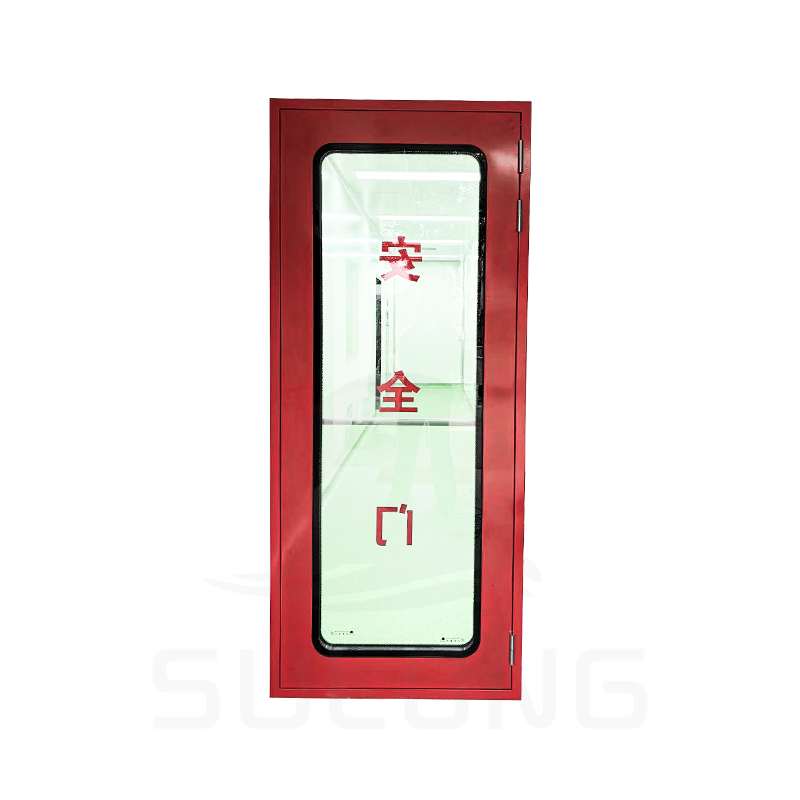
Clamp-on windows fix the glass to the frame from one side, which makes them straightforward to install and convenient when a window is added to an existing partition. Center-mounted units hold the glass within the frame profile so the pane can finish flush on both faces, and the frame reads as a clean line from either room. On doors, the center-mounted approach gives a full-height vision panel that stays flush with the door skin.
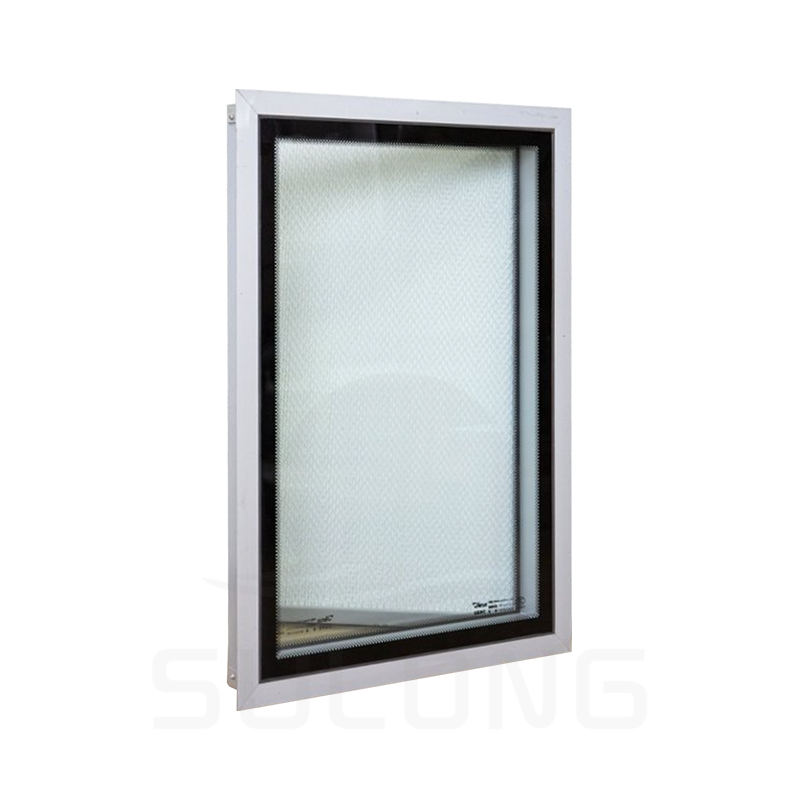 Clamp-On Insulated Glass Cleanroom WindowDouble-glazed cleanroom window with sealed spacer and clamp-on fixing, useful when adding glass to an existing partition.View Product →
In practice we choose between the two based on which side the room is cleaned from, whether the wall is new or existing, and how the panel edge is finished. When the answer is not obvious, mock-up a corner of the partition before the panels go into production; it is far cheaper than changing the order.
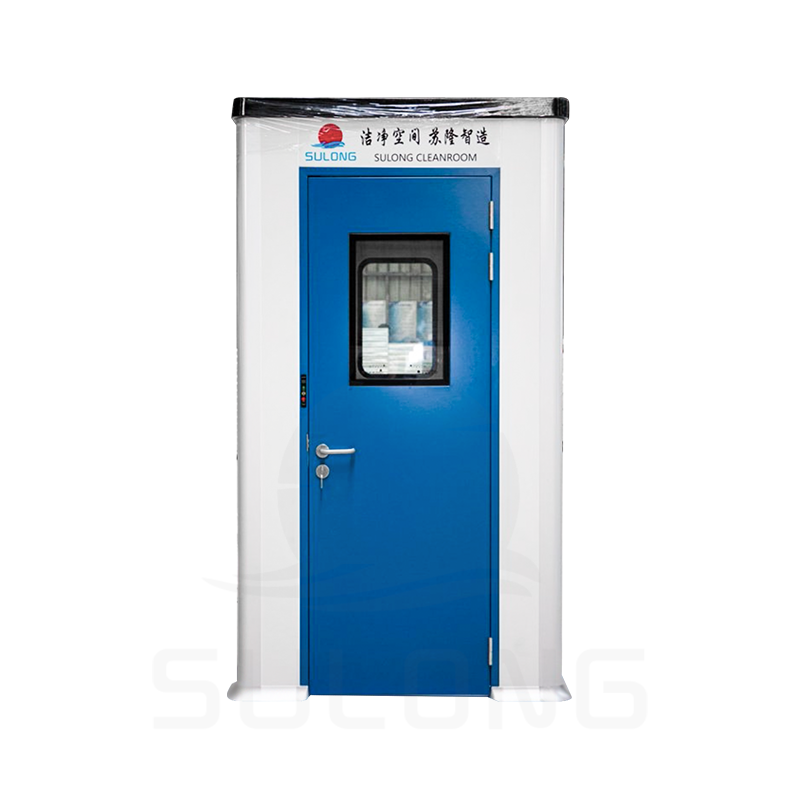
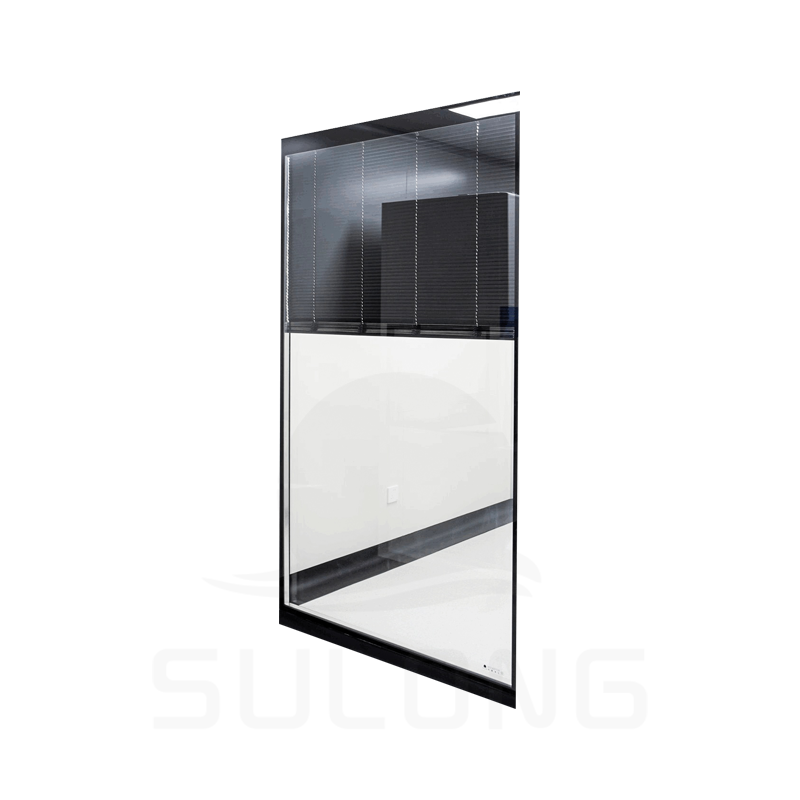 Center-Mounted Insulated Glass Cleanroom DoorDouble-glazed cleanroom door with center-mounted glass, giving flush faces and flexible pivot or swing access.View Product →
Double-glazed insulated units are the standard for anything with a temperature difference across it or a noise requirement. Single glazing still has a place in internal partitions between rooms at the same pressure and temperature. Toughened or laminated glass is usual where people work close to the pane or where impact is possible. Fire-rated glazing is a separate family with its own frame system and certification, and it should be chosen at the wall design stage rather than retrofitted after the walls are up.
Aluminium is the common choice for its straightness and its ability to take a powder-coated finish that matches the panel. Stainless steel appears in washdown areas and in rooms where chemical resistance matters. HPL and PVC profiles show up in food and laboratory projects where a non-metallic surface is preferred. Whatever the material, the profile should be designed so the gasket runs continuously and the sealant joint is a known, controlled width.
This is the part nobody photographs and everybody depends on. Neutral-cure silicone is our default for the room-side joint because it adheres well and does not discolour. EPDM gaskets handle the mechanical seal behind it. Sealant needs a clean, dry substrate and enough cure time before the room is commissioned — rushing that step is one of the most common causes of a failed particle count at handover.
The table below is a rough guide drawn from the rooms we build. Final selection always depends on cleanliness class, cleaning regime, fire strategy and the wall system in use.
| Style | Typical applications | Cleaning | Relative cost |
|---|---|---|---|
| Flush, single side | Internal partitions, supervision points | Easy on the flush face | Low |
| Double flush | GMP suites, food production, wipe-down rooms | Easiest — flat on both faces | Medium |
| Beveled reveal | Pharmaceutical and washdown areas | Easy, corners need attention | Medium |
| Floor-to-ceiling panel | Control rooms, corridors, visitor galleries | Large area, joint care required | High |
| Fire-rated window | Openings requiring fire separation | Similar to flush, heavier frame | High |
A window is only as good as its junction with the panel. On a 50 mm partition the reveal is shallow and the frame has to be slim; on a 100 mm panel there is more room to work with, but the sight line from the corridor changes. Getting the glass to line up with the horizontal panel joint rather than cutting across it is one of those details that separates a tidy room from a patched one.
We also prefer factory glazing where transport allows. Panels arrive with the frame already set and the gasket in place, the site team only has to seal the perimeter, and the risk of a scratched pane during construction drops sharply. If you would like to see how the detail works in practice, our note on how cleanroom windows are seamlessly integrated with wall panels walks through the typical sequence.
Before any window goes into production, we run through a short list with the client. It saves arguments later.
Most window complaints we hear about trace back to installation rather than product. A few habits keep glazing trouble-free:
Glazing specifications vary enormously by industry. In pharmaceutical work the room usually demands a flush or beveled detail with a fully documented seal; in electronics the emphasis shifts to large vision panels and clean sight lines across a fab; in food production the priority is a non-shedding, washable frame that survives daily chemical cleaning. Our GMP purification workshop projects show the flush detailing that regulated manufacturing tends to require, and the same principles carry across to sterile laboratories and medical facilities.
The quiet advantage of buying windows together with the wall panels and doors is that nobody can point at the other supplier when a reveal does not line up. We fabricate the panels and frames to the same drawing, glaze what can be glazed in the workshop, and send the same installation team to set the perimeter seal. It is not a dramatic selling point — it simply removes a category of problem that shows up months later as a failed particle count or a condensation stain.
If you are planning a room and are unsure whether a flush window, a beveled reveal or a full-height vision panel suits your process, send us a sketch of the partition and the cleanliness class. We will tell you honestly which option we would fit, and which details we would insist on before the panels are ordered.
Custom Cleanroom Windows by Frame and ShapeCustom double-glazed cleanroom windows in aluminum, stainless steel or formed steel frames, with rounded or square corners and sealing guidance.View Product →

Follow Us:
 Call us :
 Mail us to:


 English
 中文简体