 Home / News / Industry News / SPC Stone Crystal Panel: What It Is, How It's Made & Why It's Worth Considering
2026-05-25
Content
SPC stone crystal panel is a rigid composite building panel manufactured from a core formulation of stone powder (calcium carbonate), polyvinyl chloride (PVC) resin, and stabilizer additives, bonded together under heat and pressure to form a dense, dimensionally stable substrate. The term "stone crystal" refers to the high mineral content of the core — typically 50–70% calcium carbonate by weight — which gives the panel its characteristic rigidity, density, and temperature stability, distinguishing it from standard foam-core or soft-substrate decorative panels. A decorative surface layer — printed with photorealistic wood, stone, marble, or geometric patterns — and a transparent wear layer are laminated to the core, producing a finished panel that combines the hardness and stability of a mineral composite with the visual versatility of printed surface decoration.
The SPC acronym stands for Stone Plastic Composite (also rendered as Stone Polymer Composite in some markets), the same core technology that underpins SPC rigid core flooring — one of the fastest-growing flooring categories globally over the past decade. SPC stone crystal panels apply this proven rigid core technology to wall and ceiling cladding applications, delivering a product that installs faster than ceramic tile, requires no grout or adhesive in most installation systems, resists moisture without swelling or warping, and is significantly lighter than natural stone or porcelain tile of equivalent visual quality.
SPC wall and ceiling panels are used in residential renovations, commercial fit-outs, hospitality interiors, retail spaces, healthcare facilities, and wet areas including bathrooms, shower enclosures, and commercial kitchens. The product bridges the gap between luxury vinyl tile (LVT) — which is flexible and primarily used for floors — and traditional ceramic or natural stone cladding, offering a durable, waterproof, and visually premium wall surface that can be installed by a competent DIY enthusiast or professional installer without specialized tiling skills or equipment.
Understanding the layer structure of an SPC stone crystal panel explains both its performance advantages and its installation requirements. The panel is a multi-layer composite, with each layer contributing specific functional properties to the finished product.
The core is the defining layer of an SPC stone crystal panel and the source of its superior dimensional stability. It is produced by mixing calcium carbonate powder — typically 55–65% of the total formulation by weight — with PVC resin (25–35%), plasticizers, stabilizers, and processing aids in a high-shear mixer, then calendering or extruding the blend into a flat sheet at elevated temperature and pressure. The calcium carbonate acts as both a functional filler and a structural component: its high mineral density contributes rigidity and thermal mass, while its fine particle size distributes stress evenly through the matrix and prevents crack propagation. The resulting core has a density of approximately 1.8–2.2 g/cm³ — denser than standard PVC foam but lighter than ceramic tile — and a compressive strength that resists indentation under point loads without permanent deformation. Core thickness for wall panel applications typically ranges from 3.5 mm to 6 mm, with thicker cores providing greater rigidity and impact resistance for demanding commercial applications.
Above the core, a thin printed film — typically 0.07–0.10 mm thick — carries the decorative pattern that determines the panel's visual appearance. This film is produced by high-resolution rotogravure or digital printing processes that reproduce photographic-quality images of natural materials: marble veining, wood grain texture, brushed concrete, geometric tile patterns, and abstract artistic designs. The resolution and color accuracy of modern decorative print technology is sufficiently high that SPC stone crystal panels with marble or stone print designs are visually indistinguishable from natural stone at normal viewing distances. The print layer is bonded to the core under heat and pressure during panel lamination and is protected from abrasion and UV degradation by the wear layer above it.
The wear layer is a transparent PVC or polyurethane film laminated over the print layer that protects the decorative surface from abrasion, scratching, staining, and UV fading. Its thickness is the primary determinant of surface durability and is expressed in mils (thousandths of an inch) or millimeters. For wall panels in residential applications, wear layer thicknesses of 0.12–0.20 mm (approximately 5–8 mil) are typical. Commercial and high-traffic applications specify thicker wear layers of 0.30–0.50 mm (12–20 mil) for improved scratch and abrasion resistance. Some premium SPC stone crystal panels feature a UV-cured ceramic bead or aluminum oxide coating applied to the wear layer surface, further enhancing hardness and scratch resistance — a technology borrowed from premium LVT and laminate flooring products. The wear layer surface is typically embossed in register with the print pattern below — wood grain panels have a tactile wood texture, marble panels have a smooth polished or lightly textured surface — creating a visual and tactile match between the image and the surface feel.
Many SPC stone crystal panels incorporate a backing layer on the reverse face of the core, serving one or more functional purposes. An IXPE (irradiation cross-linked polyethylene) foam backing of 0.5–1.0 mm thickness improves the panel's acoustic performance by damping sound transmission through the panel surface, which is particularly valuable on wall panels in shared residential buildings and hotel rooms. Some panels use a rigid balancing layer of PVC or fiberglass on the back face to equalize the thermal expansion stresses across the panel thickness and prevent bowing or cupping as temperature changes. In click-lock panel systems, the tongue and groove profile is typically machined or extruded directly into the SPC core edges, with the backing layer stopping short of the locking mechanism to avoid interference with the click-lock function.
SPC stone crystal panels deliver a combination of performance characteristics that collectively exceed those of most competing wall cladding materials in practical installation and use conditions. These are the properties that most directly affect specification decisions.
| Property | SPC Stone Crystal Panel | Ceramic Tile | Standard PVC Panel |
| Waterproof | 100% — core does not absorb water | Tile yes; grout joints may absorb | Yes, but substrate may not be |
| Dimensional Stability | Excellent — low thermal expansion | Excellent | Poor — warps with heat |
| Weight (approx.) | 3–6 kg/m² | 15–25 kg/m² | 1–2 kg/m² |
| Installation Method | Click-lock, adhesive, or clip system | Tile adhesive + grouting required | Adhesive or clip |
| Impact Resistance | Good — dense core resists denting | Brittle — cracks under impact | Poor — dents and punctures easily |
| Fire Rating | Class B or C (EN 13501-1 typical) | Class A1 (non-combustible) | Class C–D |
| Repairability | Individual panels replaceable | Difficult — matching tile hard to source | Individual panels replaceable |
The SPC core's calcium carbonate and PVC composition is inherently impermeable to water — it does not absorb moisture, swell, delaminate, or support mold growth regardless of sustained water exposure. This makes SPC stone crystal panels genuinely suitable for wet area wall cladding: direct shower walls, bath surrounds, swimming pool changing rooms, commercial kitchen splash zones, and laundry rooms. Unlike ceramic tile installations where the tile itself is waterproof but the grout joints are a known weakness for moisture penetration and mold growth over time, SPC panel installations with tight click-lock joints or properly sealed adhesive joints present a continuous waterproof surface with no grout matrix to degrade. For full wet area waterproofing compliance in regulated markets, a continuous waterproof membrane behind the panels may still be required by local building codes regardless of the panel's own waterproof properties — always verify local code requirements before specifying SPC panels as the sole waterproofing element in a shower enclosure.
The high calcium carbonate content of the SPC core significantly reduces the thermal expansion coefficient compared to standard PVC — the mineral filler constrains polymer chain movement as temperature changes. Typical linear thermal expansion for SPC panels is 0.04–0.07 mm/m/°C, compared to 0.15–0.20 mm/m/°C for standard PVC panels. In practical terms, a 3-meter run of SPC wall panels will expand approximately 0.12–0.21 mm for every 1°C of temperature rise — a manageable movement that can be accommodated by standard perimeter expansion gaps. Standard PVC panels over the same run would move 0.45–0.60 mm per °C, requiring larger gaps and more careful joint design. SPC panels are stable in service temperature ranges from approximately -20°C to +60°C — suitable for all normal interior applications including rooms with radiant heating systems behind the wall surface, though temperatures above 70°C (near industrial heat sources or in steam rooms) should be avoided as they approach the softening range of the PVC binder.
One of the strongest commercial arguments for SPC stone crystal panels is the breadth of decorative options available from a single product platform. The digital and gravure printing technology applied to the decorative layer can reproduce virtually any visual pattern with photographic fidelity, and the embossing applied to the wear layer surface can be varied independently to create different tactile textures across the same visual design range.
Marble-effect SPC stone crystal panels are among the highest-selling designs in the product category, driven by demand for the luxury appearance of marble at a fraction of the cost, weight, and maintenance requirement of natural stone. High-resolution printing reproduces the complex veining, color variation, and translucency of popular marble varieties — Calacatta, Carrara, Statuario, and Emperador among others — with sufficient accuracy to create convincing large-format wall surfaces. The smooth or lightly textured wear layer surface of marble-print panels closely mimics the polished surface finish of real marble. Unlike natural marble, which requires sealing, is susceptible to acid etching from cleaning products, and is prone to cracking under impact, SPC marble panels require only routine cleaning with mild detergent, resist acid-based bathroom cleaning products, and do not crack from normal impact loads.
Wood-effect SPC stone crystal panels provide the warmth and visual character of timber cladding in spaces where real wood would be impractical — wet areas, high-humidity environments, and spaces requiring fire-rated wall finishes that exclude combustible natural materials. Embossed-in-register (EIR) texture processing creates a tactile wood grain surface whose raised and recessed texture aligns precisely with the printed grain pattern below, producing a product that reads as convincingly wood-like to both sight and touch. Wide-plank oak, reclaimed barn wood, brushed walnut, and bleached ash designs are among the most popular wood-effect options for contemporary residential and hospitality interiors.
Beyond natural material reproductions, SPC stone crystal panels are available in polished concrete effects, oxidized metal textures, geometric tile patterns, abstract color gradients, and solid colors with matte or gloss surface finishes. These designs address the growing commercial interior market for industrial-aesthetic and minimalist spaces where large-format, grout-free wall surfaces with bold graphic impact are preferred. Large-format SPC panels — 1200 mm × 2800 mm or larger — in polished concrete or solid color finishes produce a seamless, high-impact wall surface with minimal visible joints that is practically impossible to achieve economically with tile or natural stone.
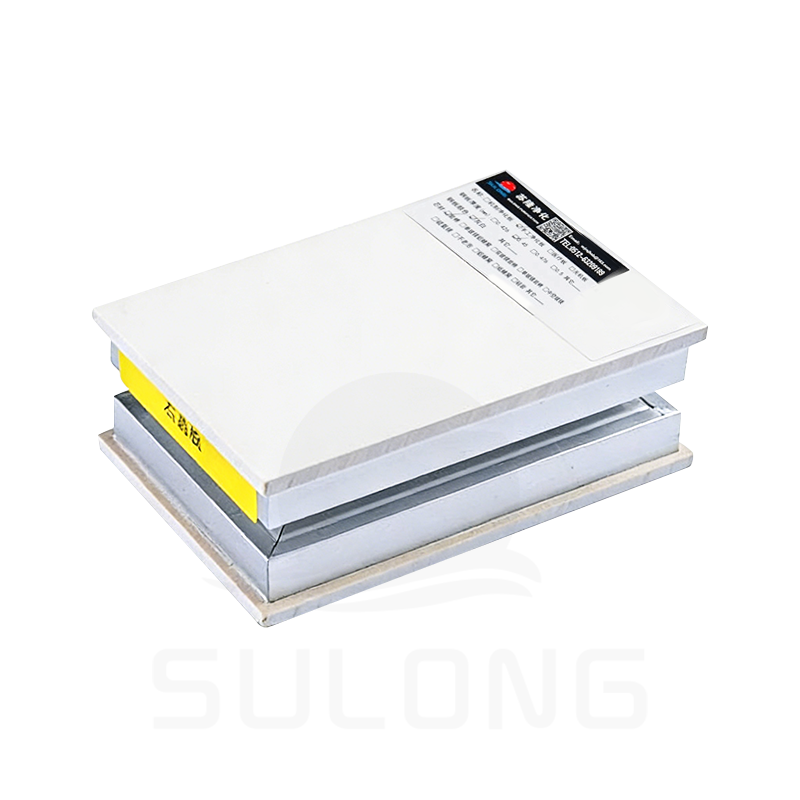
SPC stone crystal panels are manufactured in a range of panel formats — from narrow plank widths similar to LVT flooring to large-format wall sheets — to accommodate different installation systems and design intentions. Panel format selection affects both the visual character of the finished wall and the installation method and tools required.
SPC stone crystal panels can be installed using several methods depending on panel format, substrate condition, application environment, and whether future disassembly is desirable. Selecting the appropriate installation method is as important as selecting the right panel specification.
Click-lock SPC panels have precision-machined tongue and groove profiles on their long and short edges that snap together under hand pressure to form a tight, self-supporting joint. The installed panels float as an assembly against the wall surface without adhesive or mechanical fixings through the face, attached only at the perimeter by starter strips, corner trims, and finishing profiles that conceal the panel edges and provide a small expansion gap around the perimeter. This installation method is the fastest of the available options — an experienced installer can cover 20–30 m² per hour — and produces a wall surface that can be fully disassembled and reinstalled elsewhere, making it popular for commercial fit-outs and rental properties where reversibility has value. Click-lock installation requires a substrate that is flat within 3 mm over 2 meters — any significant undulation in the wall surface prevents the click-lock joints from engaging fully and creates visible gaps or loose areas. Substrate preparation with skim coat or filler compound is essential before click-lock panel installation on older or uneven walls.
SPC panels can be bonded directly to the substrate using construction adhesive — MS polymer, PU adhesive, or purpose-formulated panel adhesive — applied to the back of the panel in a full-coverage or grid pattern. Direct adhesive bonding produces the most rigid, permanent installation, eliminates any risk of panel movement or click-lock joint failure, and tolerates slightly more substrate variation than click-lock systems because the adhesive bed can bridge minor undulations. It is the preferred method for large-format panels, for tile-format panels without click edges, and for wet area installations where watertight bonding at the panel perimeter is required. The adhesive must be compatible with both the SPC core material (PVC and calcium carbonate) and the substrate — solvent-based adhesives can attack PVC surfaces and must be avoided; confirm adhesive compatibility with the panel manufacturer's technical data sheet before specifying. Allow full adhesive cure time (typically 24–48 hours) before exposing bonded panels to water or mechanical stress.
For installation over uneven substrates, through heavily insulated wall assemblies, or where a ventilated cavity behind the cladding is required to manage interstitial condensation, SPC stone crystal panels can be fixed to a system of horizontal or vertical timber or aluminum battens using hidden clip fixings that engage with grooves in the panel edges. The batten system creates a flat, plumb reference surface independent of the underlying wall condition and allows panels to be individually removed without disturbing adjacent panels — a significant advantage in commercial applications where access to wall services (pipes, cables) may be required periodically. Batten systems add installation time and material cost compared to direct adhesive or click-lock methods, but provide superior long-term performance on challenging substrates and in high-moisture environments where direct adhesive bonding may eventually fail.
Regardless of installation method, substrate preparation is the single most important factor in the long-term performance of an SPC stone crystal panel installation. The substrate must be structurally sound — any loose, crumbling, or hollow-sounding plaster or render must be removed and made good before panel installation begins. The surface must be clean, dry, and free from dust, grease, release agents, and existing paint or coating that could prevent adhesive bonding. For direct adhesive installations, the surface must achieve a flatness tolerance of 3 mm per 2-meter straightedge. Existing ceramic tile can be left in place as a substrate for SPC panel installation — provided it is fully bonded, not hollow, and has no more than one layer of tile — saving significant time and waste compared to tile removal. Prime porous substrates (bare plasterboard, new concrete, or sand-cement render) with a bonding primer recommended by the adhesive manufacturer to ensure adequate adhesion.
One of the practical advantages of SPC stone crystal panels over natural stone, ceramic tile, and grout-based wall finishes is the simplicity of routine maintenance. The wear layer surface resists staining, is non-porous, and requires no sealing or special treatment products.
With a wide range of SPC stone crystal panel products available at different quality levels, specifications, and price points, a structured selection approach ensures the chosen product matches the application requirements without over-specifying — or under-delivering on performance.

Follow Us:
 Call us :
  Mail us to:


 English
 中文简体
中文简体