 Home / News / Industry News / Clean Room Ceiling Panels: How to Choose the Right Material and Avoid Hidden Risks
2026-09-03
Facility engineers often discover the real performance floor of a cleanroom only when they map pressure differentials across the ceiling grid. When a pharmaceutical grade room fails its airborne particle count, the likely leak paths are not only in the HVAC supply air but also in the joints between ceiling panels and wall panels, around pass boxes, and at the edges of light fixtures. In a properly designed ceiling, the panel itself becomes the first barrier against particle shedding, and the joint system becomes the second. A wrong panel selection can force higher air changes per hour, increase energy consumption, and complicate cleaning schedules. The right selection, by contrast, is a direct input to achieving a stable, certifiable cleanliness class with lower operating cost.
Content
Clean room ceiling panels are not ordinary suspended ceiling tiles. They must support the weight of FFU systems, lighting fixtures, air diffusers, and sometimes sprinkler heads while maintaining a gastight barrier that separates the clean space from the plenum above. Their purpose is to stop contaminated air from entering the cleanroom, prevent condensation from forming on cold surfaces, and provide a surface that is smooth, easy to clean, and resistant to common disinfectants and cleaning solutions.
For many projects, the ceiling is also the structural anchor for high-efficiency particulate air (HEPA) filters or fan-filter units. If the panel flexes under load or the joint seal fails, the pressure differential between the clean side and the plenum side can shift, causing a measurable drop in cleanliness performance. In ISO Class 5 or Grade A environments, where airborne particles must be kept below 3,520 particles per cubic meter at 0.5 micrometers, even a small gap can make certification impossible to achieve on the first attempt.
The choice of ceiling panel material usually starts with the core. Two construction methods dominate the market: handmade panels, which are densely assembled and often used for higher fire or structural loads, and machinemade panels, which are continuously produced and offer a more cost-effective solution for standard cleanrooms. The face material is typically galvanized steel or prepainted galvanized steel (PPGI), with an optional HPL laminate for washable, impact-resistant surfaces.
| Core Material | Key Advantages | Main Limitations | Typical Applications |
|---|---|---|---|
| Rockwool | Non-combustible, good acoustic absorption, moderate thermal insulation | Requires sealed edges to resist moisture; heavier than some foams | Pharmaceutical, electronics, food processing |
| Magnesium oxide | Fireproof, moisture tolerant, cost-effective | Brittleness under repeated impact; cut edges need protective sealing | General cleanrooms, laboratories, medium-grade areas |
| Aluminum honeycomb | Lightweight, high rigidity, excellent flatness, low particle shedding | Higher material cost; insulation is not as efficient as rockwool or PU | High-tech electronics, cleanrooms with stringent vibration control |
| PU / PIR | Excellent thermal insulation, lightweight, easy to machine into complex profiles | Limited fire rating compared with rockwool; smoke development must be reviewed | HVAC-heavy projects, cold-storage adjacent clean areas, non-critical zones |
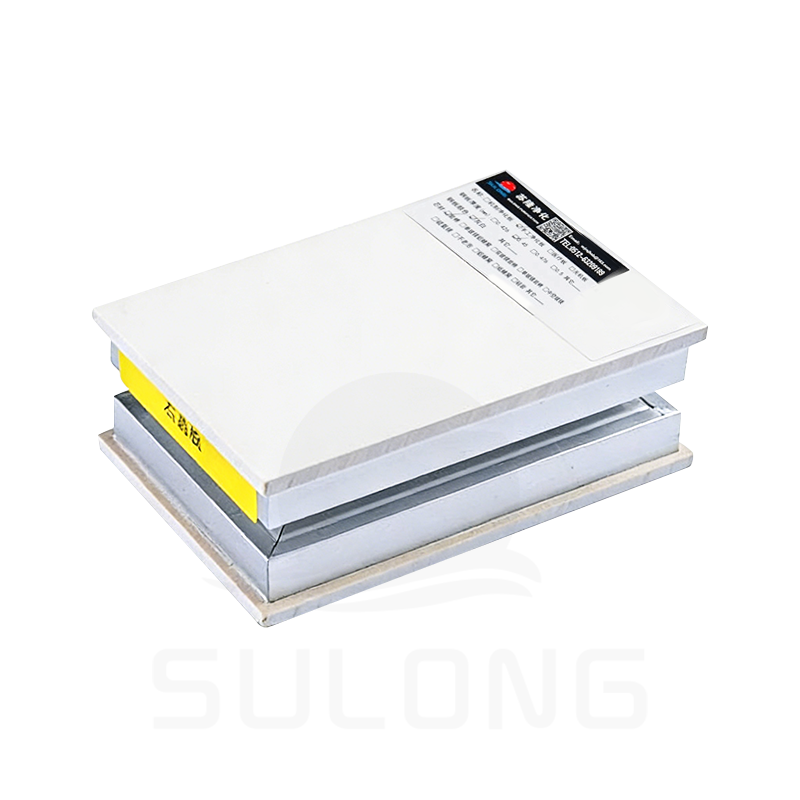
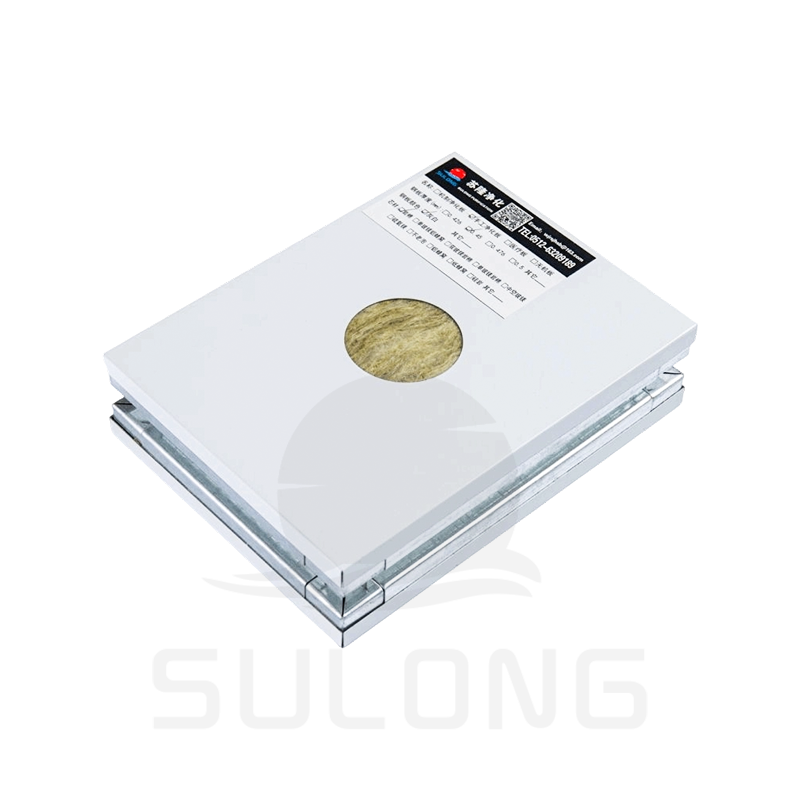 Handmade Rockwool Sandwich Panel for Pharmaceutical CleanroomsA handmade panel with fire-resistant rockwool core and steel facings, suitable for high-cleanliness areas. Its aluminum alloy frame adds durability, making it a reliable choice where fire safety and sound insulation are critical.View Product →
Rockwool cores are a common default for high-cleanliness and high-fire-safety environments because they combine excellent fire resistance with sound absorption. Machinemade rockwool panels are especially useful for large repetitive ceilings where the budget requires a balance between cost and performance. Yet the decision is not simply about the core. The panel thickness, the skin gauge, the joint profile, and the sealing strip quality all influence the final airtightness and the panel's ability to withstand daily cleaning chemicals.
When specifying a clean room ceiling panel, start with the performance requirements rather than the visual appearance. The following standards and practical criteria should be part of the purchasing checklist:
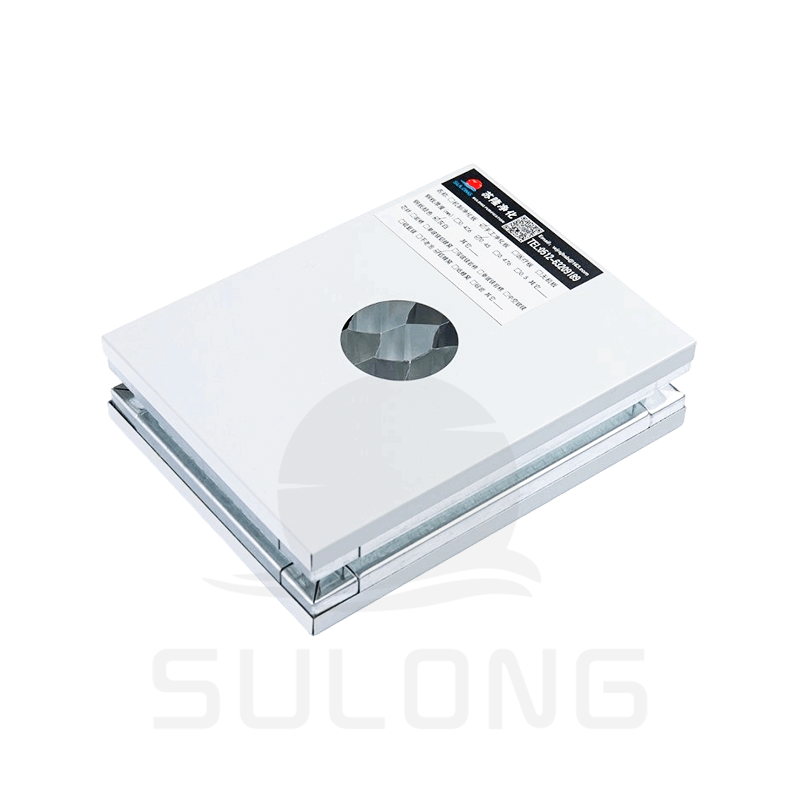 Handmade Aluminum Honeycomb Steel Panel for High-Cleanliness AreasThis lightweight panel offers high flatness and rigidity, ideal for large cleanrooms needing deformation resistance and stable surfaces. It suits environments with strict fire and cleanliness requirements, supporting precision processes.View Product →
For highly sensitive electronics or optical manufacturing, an aluminum honeycomb panel can be worth the extra investment. Its high rigidity and stable surface reduce the risk of micro-vibrations and particle shedding, which directly protects the product yield in lithography, semiconductor, and precision coating lines.
The best panel material will still underperform if the installation sequence ignores the ceiling’s role as a pressure boundary. One common mistake is using a ceiling panel system that is designed only for room partition walls. Wall panels are usually installed vertically, while ceiling panels require a different tensioning and support approach. When a panel is used on the ceiling with only its perimeter edges held, the center can bow under negative pressure and open a gap at the joint.
Specify the ceiling support grid independently from the wall structure. In many cleanrooms, a C-shaped or T-shaped membrane rail forms a continuous line around the ceiling perimeter, allowing the ceiling panels to sit inside a fixed channel rather than being squeezed between wall panels. During installation, the sequence should start from the most critical corner, align the first row carefully, and then advance in both directions. The sealant must be applied only in the designated recesses, not on the entire seam, to avoid contaminating the panel surface and creating a cleanroom cleaning problem later.
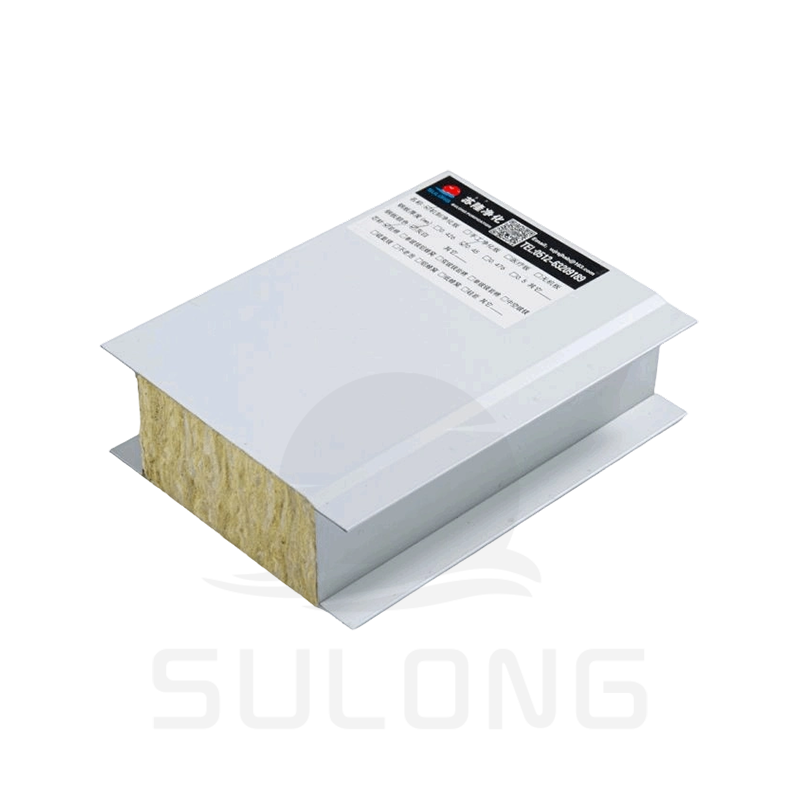 Machine-made Rockwool Sandwich Panel for Industrial CleanroomsA cost-effective panel made by continuous molding, with rockwool core and steel skins. It provides thermal insulation and fire resistance, widely applied in standard industrial cleanroom ceilings and walls.View Product →
Regular maintenance should include a visual inspection of the ceiling panel joints every six months, with a focus on any sign of rust, discoloration, or sealant cracking where penetrating wires or anchor bolts have been installed. If a panel becomes deformed due to accidental impact or water damage, replace it immediately. A damaged panel surface can release particles that cannot be fully captured by the HVAC system, and it also harbors bacteria and mold in humid pharmaceutical environments.
Clean room ceiling panels serve a broad range of industries, but the performance requirements differ meaningfully between them. In electronics and optoelectronics, the priority is often very low particle shedding, high flatness, and stable dimensional tolerance. For a high-tech electronics cleanroom project, the ceiling panel selection directly impacts the defect rate in wafer handling and display module production. You can review the specifics in our electronic and optoelectronic dustfree workshop project to see the practical implementation of these criteria.
In pharmaceutical and GMP facilities, the ceiling must support a washable, non-porous surface that can survive daily disinfection with hydrogen peroxide or isopropyl alcohol. Food and beverage plants often require a different balance, with strong moisture resistance and the ability to tolerate frequent washdowns. The panel thickness and the joint system are the two parameters that most often determine whether the facility can pass a third-party cleanliness audit after months of operation.
Before you finalize a panel brand or core material, compare the total lifecycle cost, not just the unit price. A cheaper panel that creates a small air leak can force a higher air change rate, increase the energy bill for the life of the building, and add the cost of rescheduling the cleanroom certification. Raising the panel specification by one level in fire resistance or material finish usually costs less than a single day of failed certification testing. For a detailed comparison of panel types and their buying considerations, read our clean room wall panel material buying guide. That guide goes deeper into the material sequence, procurement risks, and how to interpret vendor claims before placing an order.

Follow Us:
 Call us :
  Mail us to:


 English
 中文简体
中文简体