 Home / News / Industry News / Cleanroom Doors: Types, Materials and How to Choose the Right One for Your Facility
2026-09-30
A cleanroom door looks simple from the outside, but it is one of the few components in a controlled environment that every operator touches dozens of times a day, and it can quietly undo a carefully designed pressure regime. A gasket that has hardened, a hinge that has dropped a couple of millimetres, a leaf that no longer sits flush with the wall panel — any one of these is enough to let particles travel where they should not.
Suzhou Sulong Purification Technology builds cleanroom envelopes: wall panels, ceilings, doors, windows and the equipment that goes with them, for electronics, pharmaceutical, food, cosmetics and laboratory clients. What follows is the practical part of what we have learned about specifying and installing cleanroom doors.
Content
An ordinary commercial door is judged on looks, security and how easily it opens. A cleanroom door is judged on five things at once:
Most projects end up with three or four door types rather than one, because a gowning room, a material airlock and a production corridor see completely different traffic. The table below is the map we use in early design conversations.
| Door type | How it operates | Where it fits best |
|---|---|---|
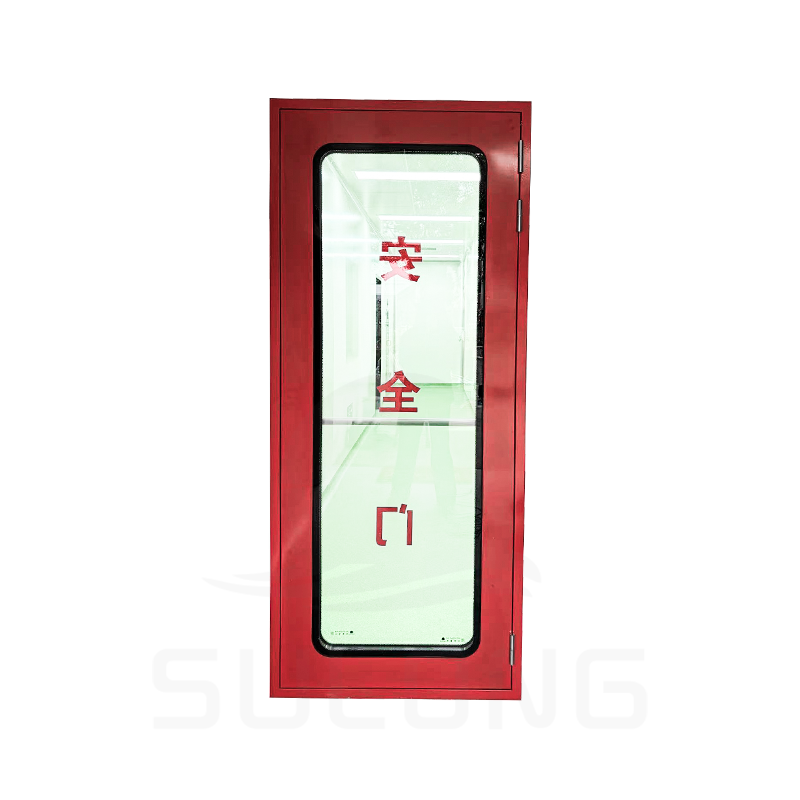
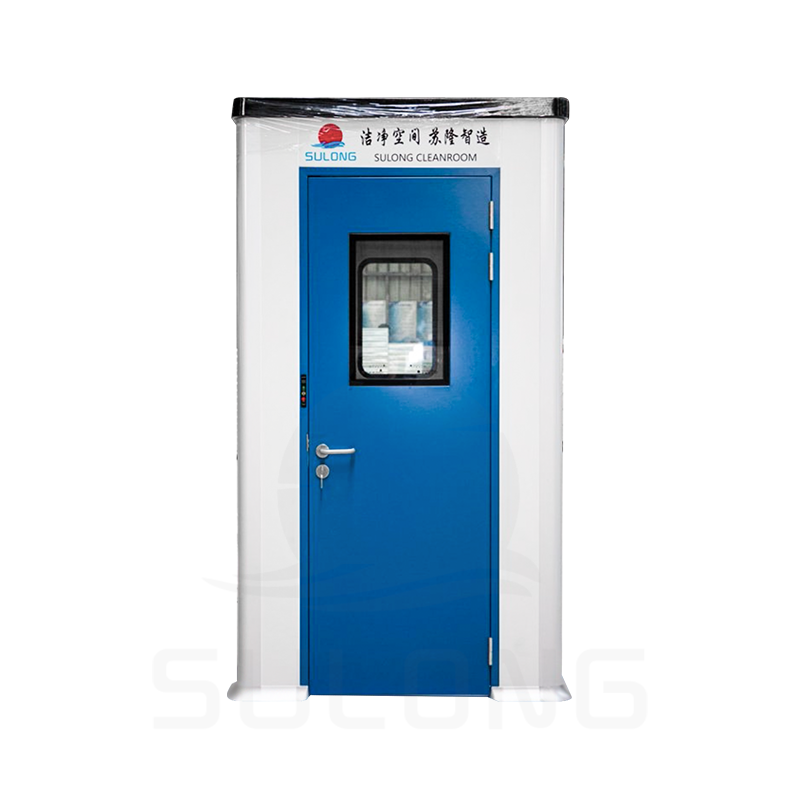
| Single swing safety door | Manual leaf, closes onto a continuous gasket | Personnel entry, gowning rooms, small airlocks |
| Double swing door | Two leaves, wider clear opening | Moving equipment without widening the wall |
| Free swing anti-collision door | Leaf swings both ways and self-centres | Trolley routes and busy production corridors |
| Electric sliding door | Motor driven, sensor or push-button control | Main airlocks with high personnel throughput |
| PVC rolling shutter door | Flexible curtain running in side tracks | Service corridors and wheeled traffic between zones |
| Pass box door | Small hinged or interlocked leaves on a transfer box | Material transfer without opening the room |
| HPL door | High-pressure laminate face on a compact core | Wipe-down walls, food, cosmetics and wet areas |
| Stainless steel door | Framed or welded leaf in 304 or 316 grade | GMP suites, sterile areas and washdown zones |
Among the automated options, the sliding solution is the one we specify most often for main personnel airlocks, because it removes the door swing from the traffic path entirely and keeps the opening under automatic control.
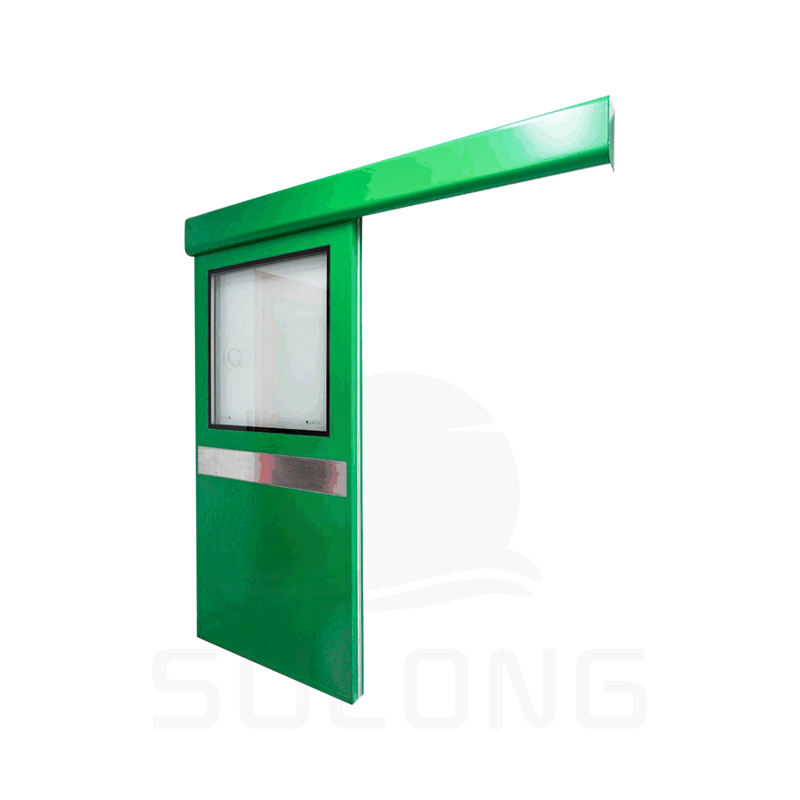 Electric Cleanroom DoorAutomatic operation, Excellent air-tight sealing, Smooth silent operation.View Product →
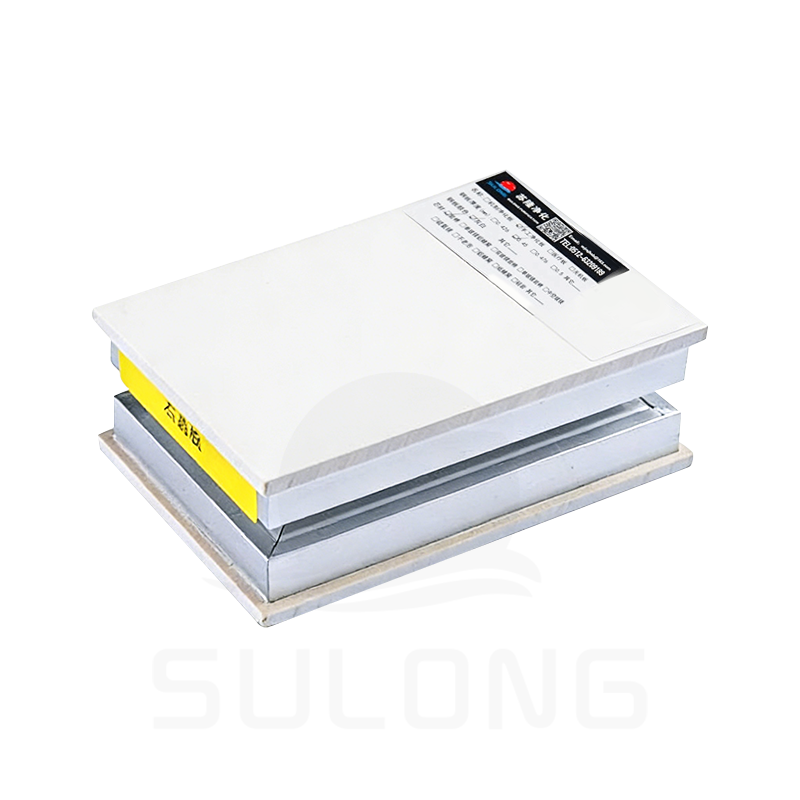
A door leaf is usually a steel, stainless steel, HPL or PVC construction over a solid or honeycomb core. The facing matters more than most buyers expect, because it decides how the door behaves against cleaning chemicals and impact.
Steel gives the best balance of cost, rigidity and finish consistency, and it is the default choice for dry production and electronics areas. Thin coatings do not tolerate aggressive disinfectants, so the specification should say clearly which cleaning agents the surface must survive.
For GMP suites, sterile laboratories and any area that is washed down, stainless steel is the standard answer. A brushed 304 finish hides handling marks, and 316 grade is worth the extra cost where chlorides or acidic residues are present.
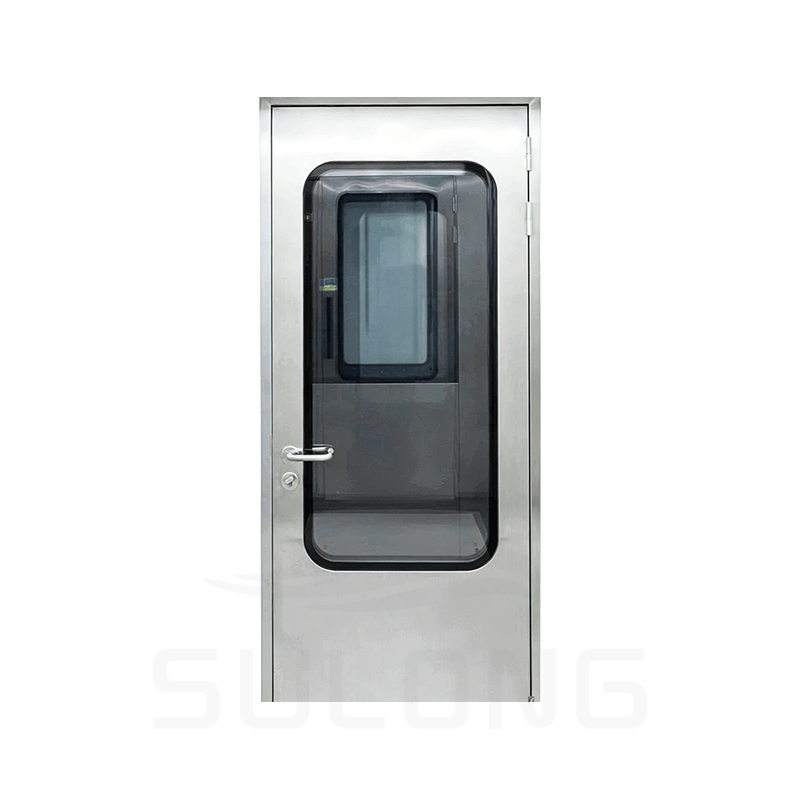 Stainless Steel Cleanroom DoorCorrosion resistant, Easy sanitation, High-humidity use.View Product →
High-pressure laminate offers a dense, non-porous face that stands up well to chemical wiping and to the kind of scuffing that happens in food and cosmetics plants. PVC suits lighter internal doors and areas where a soft, impact-tolerant surface is preferred over a rigid one.
The most expensive mistakes we see are not material mistakes; they are traffic mistakes. A door chosen for appearance rather than for how it is used will be the first thing on site to fail.
Here the door mainly protects a pressure cascade, so a single swing leaf with a good gasket, a self-closer and a glazed panel is usually enough. Interlocks are essential where gowning is staged through several rooms.
Anything that passes through a wall on a trolley will eventually hit the leaf. Pass boxes handle small items, while double swing doors handle the rest and keep the corridor clear.
Large tooling and machinery need a wide clear opening and hardware that can be adjusted afterwards. Plan these doors before the wall layout is frozen, not after.
Where staff and carts flow continuously, a bidirectional free-swing leaf keeps the opening usable from both sides and absorbs the knocks that would destroy a standard hinge within a year.
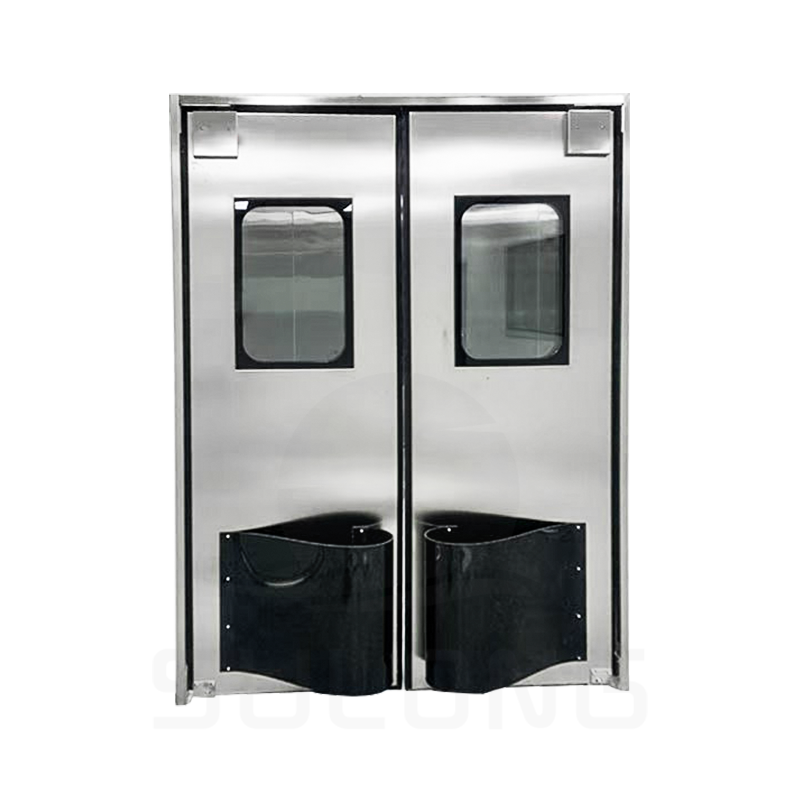 Free Swing Anti-Collision Cleanroom DoorTell Us Your MessageView Product →
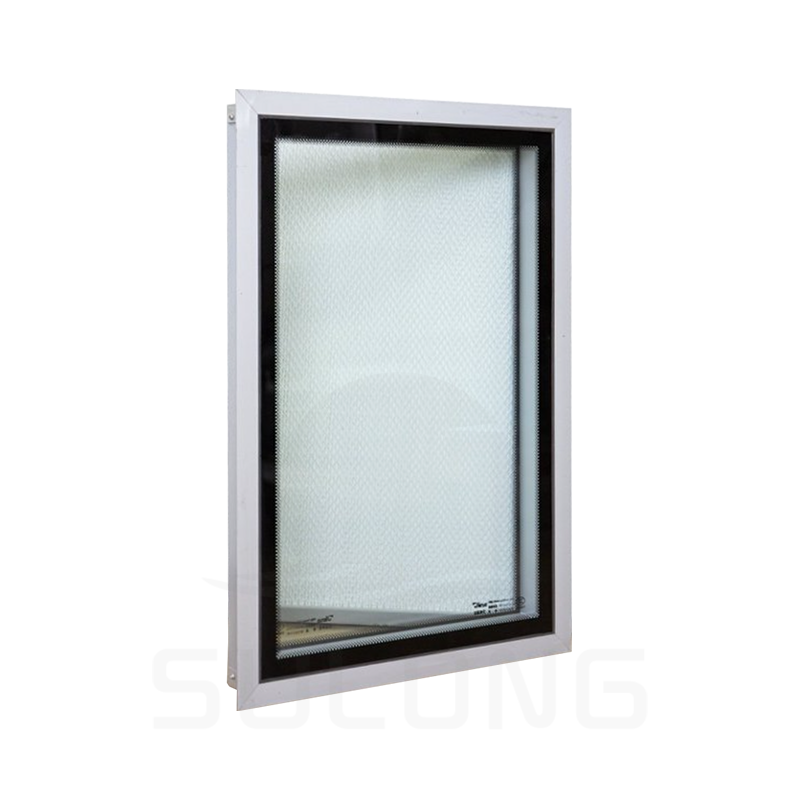
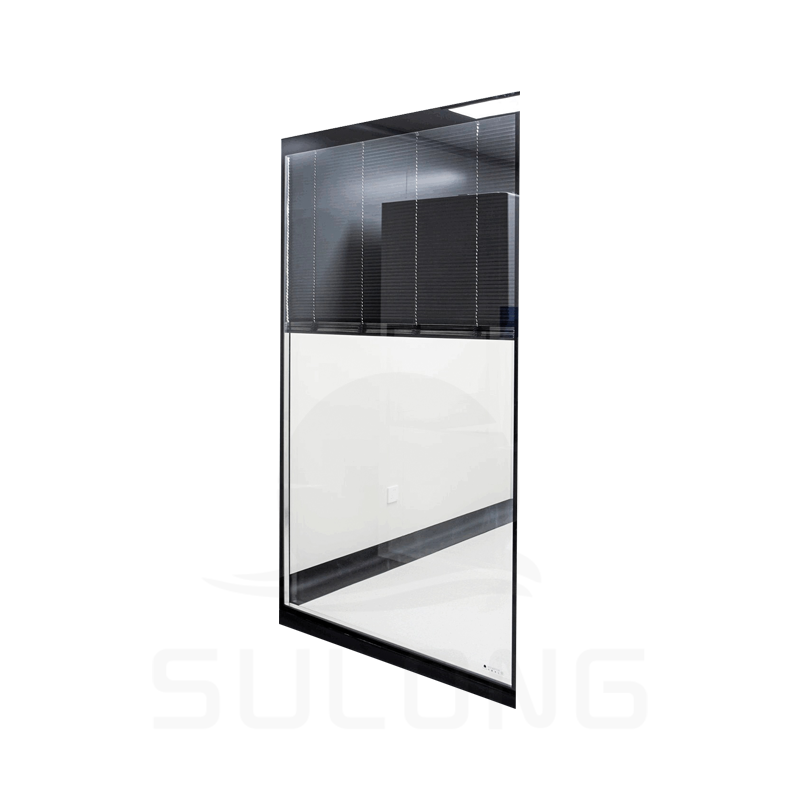
A door is a system, not a leaf. The frame, the threshold, the gasket line, the glazing and the floor finish all have to agree with each other, and in our experience that is where the visible quality of a cleanroom is really decided. Where an observation panel is part of the doorway, the glazing should be detailed so it is flush with the wall face and sealed the same way as the panels beside it, and our technical guide on insulated glass cleanroom doors and windows covers those junctions in more detail.
Beyond the leaf itself, remember the small parts of the system: a clean sweep threshold instead of a raised sill, a floor finish that can support the traffic without chipping, and hardware that can be adjusted from the clean side during routine maintenance.
Most complaints about cleanroom doors trace back to installation rather than to the product. A door hung out of plumb, or a frame set before the floor level was confirmed, will never seal properly no matter how good the gasket is.
Cleanroom doors are one of the cheapest line items in a project and one of the most frequent causes of complaints after handover. Getting the schedule right at design stage costs a few hours; correcting it later means removing wall panels, disrupting production and re-certifying a room that was already running well.
If you are planning a new build or a renovation, working through the opening schedule with the enclosure supplier early usually settles the door types, materials and automation in a single conversation. It is also the stage where our team is most useful, since we supply the panels, doors, windows and equipment that have to fit together — as we have done across GMP purification, sterile laboratory and electronics projects.

Follow Us:
 Call us :
  Mail us to:


 English
 中文简体
中文简体