 Home / News / Industry News / Hot-dip Galvanized Steel Sheet: A Practical Guide to What It Is and How to Use It
2026-05-12
Content
Hot-dip galvanized steel sheet — often abbreviated as HDG steel sheet or simply referred to as GI sheet (galvanized iron sheet) — is cold-rolled or hot-rolled steel sheet that has been coated with a layer of zinc by immersion in a bath of molten zinc at temperatures of approximately 450°C to 460°C. This metallurgical bonding process creates a coating that is not merely applied on top of the steel surface but is actually integrated with it at a molecular level, forming a series of zinc-iron alloy layers between the steel substrate and the outer pure zinc surface. The result is a protective coating that adheres far more tenaciously than paint or electroplated zinc and provides exceptional resistance to corrosion over extended service lives.
The continuous hot-dip galvanizing process used for steel sheet and coil is a highly controlled industrial operation. Steel strip is first cleaned thoroughly — through alkaline degreasing, acid pickling, and flux treatment — to remove mill scale, rust, oil, and other surface contaminants that would prevent proper zinc adhesion. The cleaned strip then passes continuously through the molten zinc bath, where the immersion time and strip speed control the amount of zinc deposited. After exiting the bath, the coated strip passes through air knives — pressurized air jets on each side — that blow off excess molten zinc and precisely control the final coating thickness. The strip is then cooled, inspected, and either coiled or cut into sheets for dispatch. The entire sequence from entry to exit is managed by sophisticated automation to ensure coating consistency across the full width and length of every coil produced.
Understanding why hot-dip galvanized steel sheet performs so well in corrosive environments requires a brief look at what happens at the coating's microstructure. The zinc coating on HDG steel sheet is not a single uniform layer — it is a stratified structure consisting of several distinct intermetallic layers formed during the galvanizing process, each with different zinc and iron contents.
Starting from the steel substrate outward, the typical layer sequence in a hot-dip galvanized coating consists of: the Gamma layer (the thinnest, closest to the steel, containing approximately 75% zinc), the Delta layer (moderately hard, columnar crystals), the Zeta layer (harder, pillar-shaped crystals), and the Eta layer (the outermost pure zinc surface layer). The inner alloy layers provide hardness and metallurgical bonding, while the outer zinc layer provides the primary corrosion protection. On continuous galvanized steel sheet, the alloy layers are kept relatively thin by controlling cooling rates, which preserves the ductility of the coating needed for forming and fabrication. This is in contrast to batch hot-dip galvanizing (used for fabricated structural components), where thicker alloy layers develop and the coating is harder but less formable.
Zinc protects the underlying steel through two mechanisms operating simultaneously. First, it acts as a physical barrier, isolating the steel from moisture and oxygen that drive corrosion reactions. Second — and critically — zinc provides galvanic (cathodic) protection: because zinc is more electrochemically active than iron, it preferentially corrodes when both metals are in electrical contact in a corrosive environment, sacrificing itself to protect the steel. This cathodic protection effect means that even small areas of bare steel — scratches, cut edges, minor coating damage — are protected by the surrounding zinc coating rather than immediately rusting, as long as the exposed area is not too large relative to the surrounding zinc surface.
Coating thickness is the primary variable that determines the corrosion life of hot-dip galvanized steel sheet. Thicker zinc coatings provide longer protection but also increase material cost and may affect formability. International and regional standards specify coating thickness requirements in terms of coating mass per unit area (g/m²) or minimum coating thickness (μm), and products are available in a range of designations to suit different application environments.
EN 10346 is the primary European standard for continuously hot-dip coated steel flat products and uses a coating designation system based on total coating mass on both surfaces combined. Common designations include Z100 (100 g/m² total, approximately 7 μm per side), Z140 (140 g/m², approximately 10 μm per side), Z200 (200 g/m², approximately 14 μm per side), Z275 (275 g/m², approximately 20 μm per side), and Z350 (350 g/m², approximately 25 μm per side). The Z275 designation is the most widely specified in construction and general engineering applications, providing a practical balance between corrosion life and formability. Z350 and higher designations are used in more demanding environments or when extended service life is required without additional coating or painting.
In North America, hot-dip galvanized sheet is specified primarily under ASTM A653/A653M, which uses coating designation designations such as G30, G60, G90, G115, G140, G165, G185, G210, and G235 — where the number represents the total coating weight in grams per square meter (approximately). G90 (90 g/m²) is the most common general-purpose designation for construction applications. G60 is used where minimal corrosion protection is sufficient and maximum formability is needed. G185 and higher designations are used for demanding outdoor structural and agricultural applications.
Japanese Industrial Standard JIS G 3302 (SGCC for commercial quality, SGCD for drawing quality) and Chinese national standard GB/T 2518 are widely referenced in Asia-Pacific markets. ISO 3575 and ISO 4998 provide international standards for commercial quality and structural quality HDG sheet respectively. Despite different naming conventions, the coating thickness principles and zinc metallurgy are consistent across all major standards, and cross-referencing between standards is generally straightforward using coating weight equivalents.
The table below provides a comparison of the most commonly specified hot-dip galvanized steel sheet coating designations across the main standards, showing approximate equivalent coating weights and typical service environments:
| EN 10346 | ASTM A653 (approx.) | Total Zinc (g/m²) | Thickness per Side (μm) | Typical Application |
| Z100 | G30 / G40 | 100 | ~7 | Interior, painted, appliances |
| Z140 | G60 | 140 | ~10 | Light exterior, painted panels |
| Z275 | G90 | 275 | ~20 | General construction, roofing, cladding |
| Z350 | G115 / G140 | 350 | ~25 | Demanding exterior, agriculture |
| Z450 / Z600 | G185 / G210 | 450–600 | ~32–43 | Severe environments, long service life |
Hot-dip galvanized steel sheet is available in a range of steel substrate grades offering different mechanical property profiles to suit structural, forming, and drawing applications. The galvanizing process does not significantly alter the mechanical properties of the steel substrate under normal continuous galvanizing conditions, so the steel grade can be selected independently of the zinc coating designation.
Commercial quality (CQ) galvanized sheet — designated DX51D in EN 10346 or CS Type B in ASTM A653 — is the baseline grade intended for bending, moderate forming, roll forming, and general fabrication that does not involve severe drawing. It typically has a minimum yield strength of around 140–300 MPa depending on thickness, and is the most widely used and cost-effective grade for roofing sheets, cladding panels, ductwork, and general sheet metal components. Drawing quality (DQ, DX52D/DX53D in EN, or DS in ASTM) and deep drawing quality (DDQ, DX54D, or DDS) grades have progressively lower yield strength, higher elongation, and better formability, making them suitable for pressed parts, stamped components, and applications requiring deep drawing without tearing or excessive thinning.
Structural grade hot-dip galvanized steel sheets — S220GD, S250GD, S280GD, S320GD, S350GD, and S550GD under EN 10346 — offer defined minimum yield strengths from 220 MPa to 550 MPa, providing the mechanical performance needed for load-bearing applications such as purlins, structural roofing profiles, floor decking, framing systems, and racking structures. High-strength structural grades (S350GD and above) allow thinner gauge material to carry equivalent loads, reducing total steel tonnage in structural applications. The specific combination of steel grade, thickness, and zinc coating must be matched to the requirements of the application — a structural roof purlin and a decorative cladding panel have very different requirements even though both may use galvanized steel sheet as the base material.
Hot-dip galvanized steel sheet is available in several surface finish options that affect appearance, paintability, and the visibility of spangle — the characteristic crystalline surface pattern formed when zinc solidifies after the galvanizing bath. Understanding these options is important when specifying galvanized sheet for applications where appearance or downstream painting is relevant.
Hot-dip galvanized steel sheet can be fabricated using most standard metalworking processes, but the zinc coating introduces some specific considerations that should be accounted for in production planning to achieve good results and maintain coating integrity.
Galvanized sheet can be sheared, plasma cut, laser cut, and waterjet cut using standard equipment. Cut edges are uncoated bare steel — the cathodic protection of the zinc coating provides protection to small cut edges, but for edges in corrosive environments, cut edge sealing with zinc-rich paint or cold galvanizing compound is recommended for optimal protection. The zinc coating does not significantly affect cutting tool wear compared to uncoated steel of the same substrate hardness.
Commercial and drawing quality HDG steel sheet bends well without cracking the zinc coating, provided that minimum bend radii appropriate for the coating thickness are observed. Very tight bend radii — particularly at high coating weights — can crack the zinc coating at the outer bend radius, creating uncoated lines that may corrode preferentially in service. EN 10346 specifies minimum bend test requirements for each coating designation and steel grade, and these should be verified against the bending requirements of the application. Roll forming for roofing and cladding profiles is a major end use for galvanized sheet, and standard commercial quality grades perform well in high-speed roll forming lines.
Welding galvanized steel requires precautions not necessary with uncoated steel. The zinc coating vaporizes at temperatures reached during welding, producing zinc oxide fumes that are a serious health hazard — ventilation or respiratory protection is mandatory when welding galvanized sheet. MIG/MAG welding is the most common process, requiring higher wire feed and heat input adjustments compared to bare steel to overcome the vaporization of zinc at the weld zone. Resistance spot welding can be performed but electrode wear is accelerated by zinc, requiring more frequent electrode dressing. Post-weld touch-up of damaged zinc in and around the weld area with cold galvanizing compound or zinc-rich primer restores corrosion protection at the weld zone.
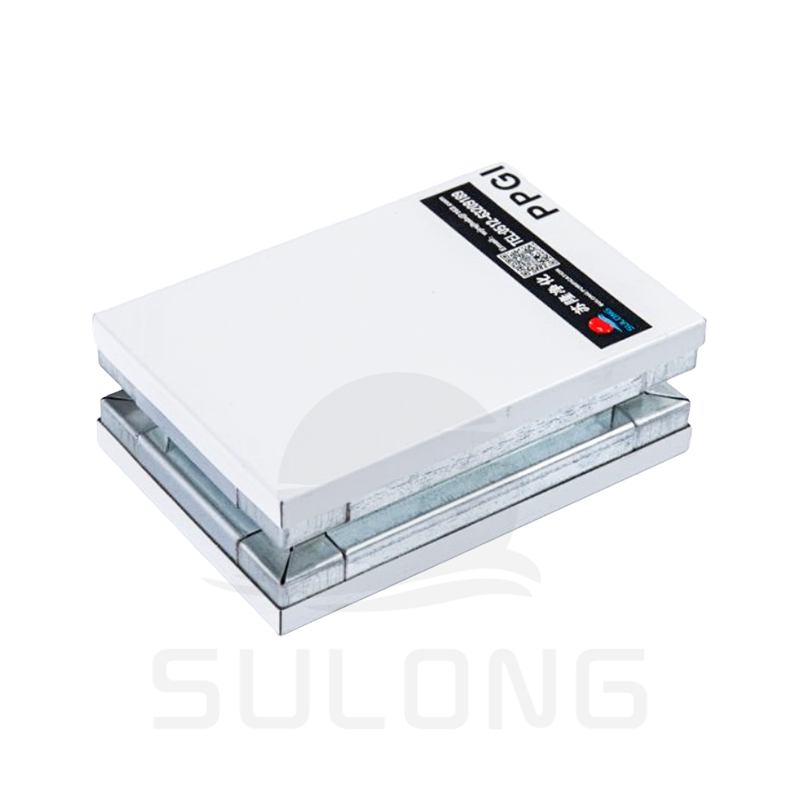
Galvanized steel sheet accepts paint coatings well, but surface preparation is important for adhesion. New galvanized steel has a smooth, low-energy zinc surface that requires either a chemical pre-treatment (phosphating, T-wash, or chromate conversion coating) or a primer specifically formulated for zinc adhesion before topcoat application. Attempting to apply standard paint directly to bare galvanized steel without appropriate pre-treatment is a common cause of paint delamination in service. Prepainted galvanized steel (also known as PPGI or coil-coated steel) — where the paint system is applied to the galvanized coil in a factory setting — provides superior and more consistent paint adhesion than field-applied painting and is widely used for building cladding, roofing, and domestic appliances.
The service life of hot-dip galvanized steel sheet depends primarily on the zinc coating thickness and the corrosivity of the exposure environment. ISO 9223 classifies atmospheric corrosivity into five categories from C1 (very low — dry indoor environments) to C5 (very high — industrial or coastal marine environments), and published zinc corrosion rate data for each category allows service life to be estimated for any given coating weight.
As a practical guide, a Z275 (275 g/m² total) coating — 20 μm per side — provides a time to first maintenance (defined as the time until 5% of the surface shows rust) of approximately 34 years in a C2 low-corrosivity suburban environment, 14 years in a C3 medium-corrosivity urban or light industrial environment, and 7 years in a C4 high-corrosivity industrial or coastal environment. Heavier coatings extend these periods proportionally. In completely sheltered indoor environments (C1), galvanized sheet effectively does not corrode within practical product lifetimes. These figures are for bare galvanized steel; additional paint or organic coating systems — such as PPGI — substantially extend service life in all corrosivity categories by providing a barrier layer over the zinc.
White rust — the white powdery zinc hydroxide corrosion product that forms on new galvanized steel in wet, poorly ventilated storage conditions — is a common cosmetic concern but is generally not structurally damaging if it develops and stops early. The zinc surface naturally converts to zinc carbonate (a dense, stable patina) over time in normal atmospheric exposure, which actually provides better long-term corrosion resistance than freshly galvanized zinc. White rust that develops in transit or storage should be evaluated for coating loss before use in a critical application.
HDG steel sheet is one of the most broadly used industrial materials globally, with applications spanning construction, manufacturing, agriculture, transportation, and consumer products. Its combination of structural performance, corrosion resistance, formability, and cost-effectiveness is difficult to match with any alternative material in its target applications.
Specifying hot-dip galvanized steel sheet correctly ensures you receive material that meets your application's requirements and avoids costly misspecification. A complete specification should define the following parameters clearly:

Follow Us:
 Call us :
  Mail us to:


 English
 中文简体
中文简体